

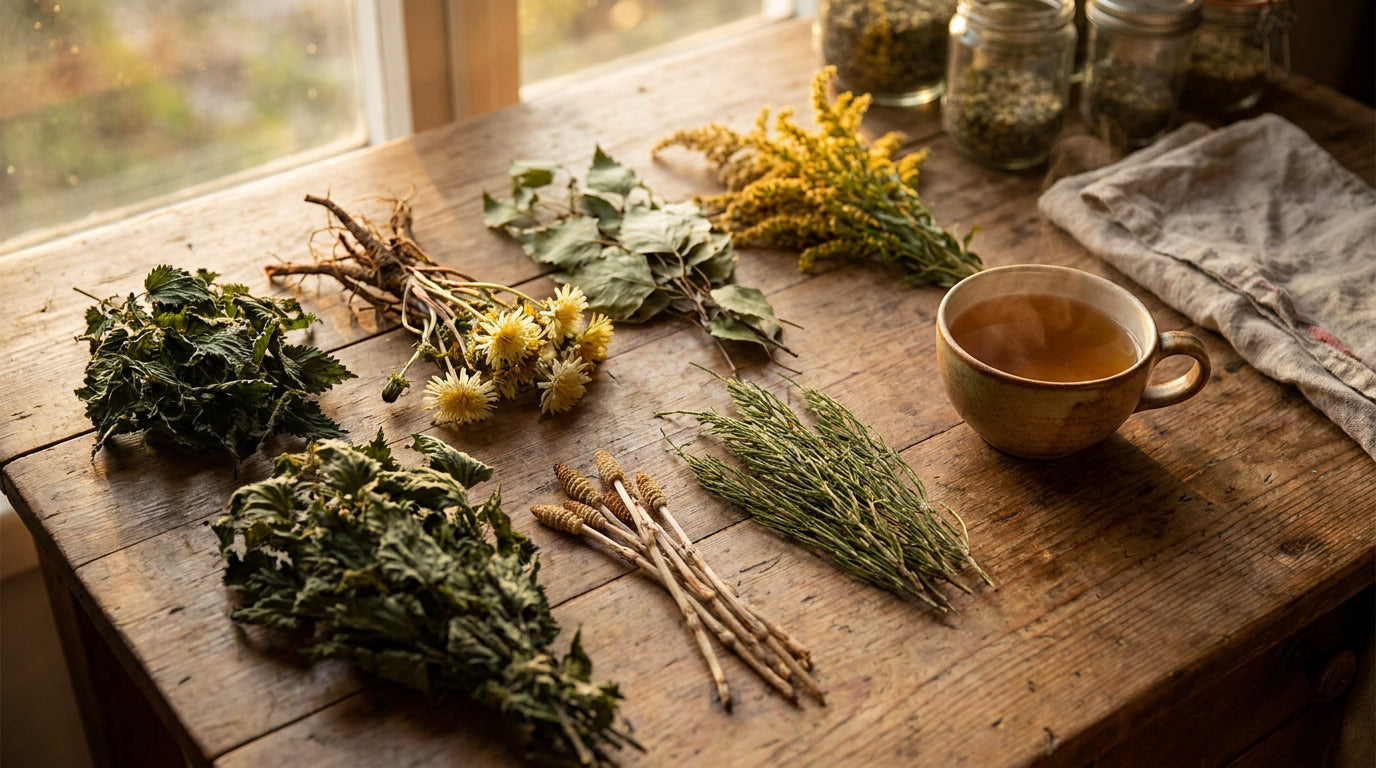
Wenn sich der Körper schwer und gedunsen anfühlt, wenn Ringe am Finger drücken oder Schuhe am Abend plötzlich eng werden – dann denken viele Menschen zuerst an Wassereinlagerungen. Was viele nicht wissen: Schon in der mittelalterlichen Klostermedizin und im Kräuterwissen Hildegards von Bingen wurden bestimmte Pflanzen gezielt genutzt, um das natürliche Gleichgewicht im Körper zu unterstützen. Die gute Nachricht: Diese jahrhundertealte Weisheit lässt sich auch heute noch ganz einfach in Form von Kräutertee in den Alltag integrieren. In diesem Artikel stellen wir dir die fünf Kräuter vor, die in der traditionellen Heilkunde seit jeher für ihre entwässernden Eigenschaften geschätzt werden – und erklären, wie du sie als wohltuendes Tee-Ritual für dich nutzen kannst.
Was steckt hinter dem Wunsch nach Entwässerung? Wissen aus Natur und Tradition
Unser Körper besteht zu einem Großteil aus Wasser – und das ist auch gut so. Wasser ist der wichtigste Bestandteil jeder Körperzelle, es transportiert Nährstoffe, reguliert die Temperatur und ist an nahezu jedem Stoffwechselprozess beteiligt. Doch manchmal gerät dieses empfindliche Gleichgewicht ins Wanken: Salzreiche Ernährung, wenig Bewegung, hormonelle Schwankungen oder lange Sitzphasen können dazu beitragen, dass sich Flüssigkeit im Gewebe ansammelt. Das Ergebnis ist ein unangenehmes Schweregefühl, das viele Menschen kennen und das ihrer Lebensqualität im Alltag spürbar schaden kann.
In der Naturheilkunde betrachtet man dieses Phänomen ganzheitlich. Anstatt nur ein einzelnes Symptom in den Blick zu nehmen, steht das allgemeine Wohlbefinden im Mittelpunkt. Hildegard von Bingen, die große Universalgelehrte des 12. Jahrhunderts, beschrieb in ihren Werken zahlreiche Kräuter und deren traditionelle Anwendung – stets eingebettet in ein umfassendes Verständnis von Natur, Mensch und Gleichgewicht. Ihre Schriften gelten bis heute als wichtige Quelle des europäischen Kräuterwissens und erleben in der modernen Naturheilkunde eine bemerkenswerte Renaissance. Hildegard von Bingen Produkte
Kräutertees sind in diesem Zusammenhang eine der zugänglichsten und angenehmsten Möglichkeiten, traditionelles Pflanzenwissen in den Alltag zu integrieren. Sie wärmen, riechen gut, geben Momente der Ruhe – und sie bringen gleichzeitig wertvolle Pflanzenstoffe mit, die in der Volksmedizin seit Generationen geschätzt werden. Wichtig dabei: Kräutertee ist kein Medikament, sondern ein Genuss- und Begleitmittel im Rahmen einer bewussten Lebensweise. Das Prinzip lautet: Hinzufügen statt Weglassen – mit jedem Tässchen etwas Gutes ergänzen, anstatt zu entbehren.
Entwässernde Kräutertees werden seit Jahrhunderten in der europäischen und asiatischen Volksmedizin verwendet – nicht als Heilmittel, sondern als wohltuende Begleiter einer bewussten, naturnahen Lebensweise.
Hildegard von Bingen schrieb in ihrem Werk „Physica": „Die Kräuter sind dem Menschen gegeben, damit er sie kenne und gebrauche, denn Gott hat in sie Kraft gelegt." Dieses Verständnis von Pflanzen als natürliche Begleiter – nicht als Allheilmittel – prägt die traditionelle europäische Kräutermedizin bis heute.
Die 5 traditionellen Entwässerungs-Kräuter im Porträt
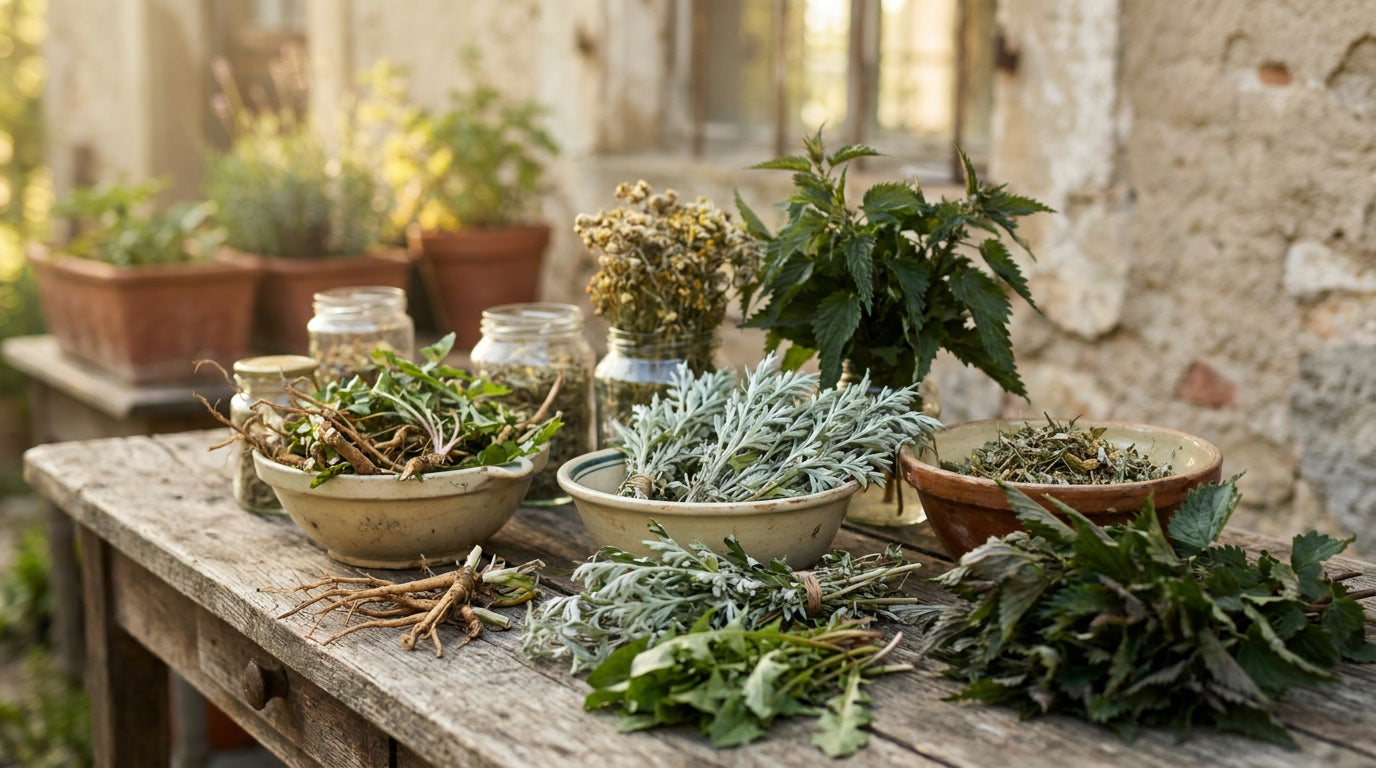
Nicht alle Kräuter sind gleich, und das traditionelle Pflanzenwissen unterscheidet sehr genau zwischen verschiedenen Arten und ihren charakteristischen Eigenschaften. Die folgenden fünf Pflanzen haben in der Geschichte der Naturheilkunde einen besonderen Ruf erworben – sie werden in Kräuterbüchern, Klosterapotheken und Überlieferungen aus ganz Europa und darüber hinaus immer wieder als wertvolle Begleiter bei Schweregefühl und Wassereinlagerungen erwähnt. Jede dieser Pflanzen hat ihre eigene Geschichte, ihren eigenen Geschmack und ihre eigene Tradition.
Es lohnt sich, diese Kräuter nicht nur als funktionale Zutat zu betrachten, sondern auch als kulturelles Erbe – als Teil eines Wissensschatzes, der über Generationen weitergegeben wurde und heute in der modernen Naturheilkunde alle Bitterkraft Produkte neue Aufmerksamkeit erfährt. Wer Tee trinkt, verbindet sich so mit einer langen Reihe von Menschen, die vor uns dieselben Pflanzen in denselben dampfenden Tassen genossen haben.
Beachte bitte, dass die folgende Aufstellung auf traditionellem Gebrauch basiert und keine medizinischen Aussagen enthält. Bei gesundheitlichen Beschwerden empfehlen wir immer, ärztlichen oder heilpraktischen Rat einzuholen. Die hier vorgestellten Kräuter sind als Ergänzung zu einem gesunden Lebensstil gedacht – als wohltuendes Ritual, das deinen Alltag bereichert.
Diese 5 Kräuter werden traditionell zum Entwässern verwendet:
- Brennnessel (Urtica dioica): Eines der bekanntesten Wildkräuter Europas – in der Volksmedizin seit dem Mittelalter als „Frühlingskur" geschätzt und traditionell für seine belebenden Eigenschaften bekannt.
- Löwenzahn (Taraxacum officinale): Das goldgelbe „Unkraut" aus dem Garten wurde schon in mittelalterlichen Klostergärten kultiviert und zählt zu den meistgeschätzten Frühlingskräutern der europäischen Naturheilkunde.
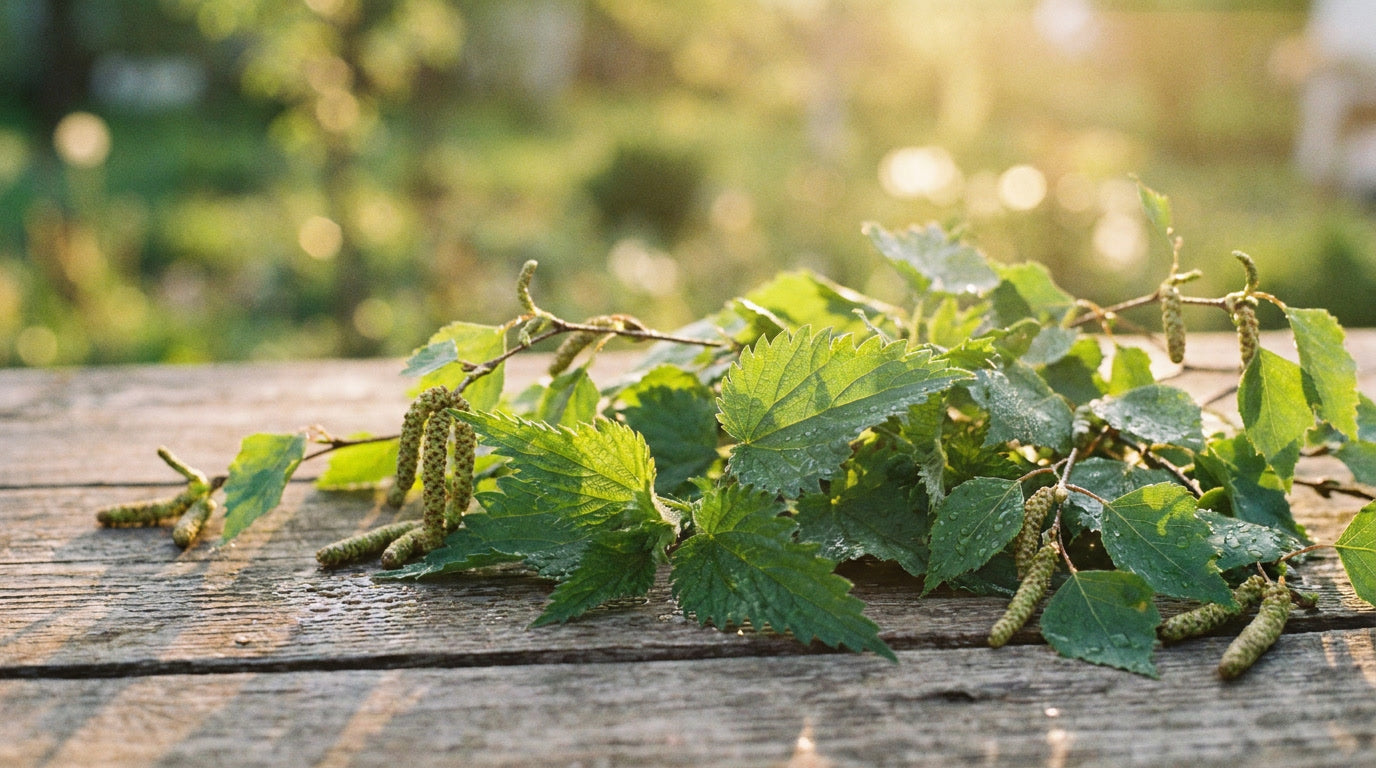
- Birkenblätter (Betula pendula): In der nordischen und deutschen Volksmedizin seit Jahrhunderten traditionell verwendet – die Birke gilt als Symbol des Frühlings und der Erneuerung.
- Schachtelhalm (Equisetum arvense): Eine der ältesten Pflanzen der Erde, die bereits in der Antike bekannt war und in der traditionellen Naturheilkunde seit Generationen eine wichtige Rolle spielt.
- Goldrute (Solidago virgaurea): Historisch in der Klostermedizin geschätzt und im berühmten Kräuterbuch von Hieronymus Bock aus dem 16. Jahrhundert erwähnt – traditionell als wertvolles Heilkraut angesehen.
Was steckt hinter diesen Kräutern?
Alle fünf Pflanzen enthalten eine Vielzahl sekundärer Pflanzenstoffe – darunter Flavonoide, ätherische Öle, Bitterstoffe und Mineralsalze. Diese Inhaltsstoffe sind Gegenstand wissenschaftlicher Forschung, auch wenn die traditionelle Verwendung weit vor jeder modernen Analytik liegt. In der Naturheilkunde wird das Zusammenspiel dieser Stoffe als „synergistisch" betrachtet: Nicht ein einzelner Wirkstoff, sondern das gesamte Pflanzengemisch macht den Tee zu einem wertvollen Begleitmittel.
Kräutertee als tägliches Ritual: So integrierst du die Tradition in deinen Alltag
Der vielleicht größte Vorteil von Kräutertee ist seine Einfachheit. Kein kompliziertes Equipment, keine aufwendige Zubereitung – eine Handvoll getrockneter Kräuter, heißes Wasser und ein paar Minuten Ruhe genügen. Doch genau diese Schlichtheit birgt eine tiefe Weisheit, die in der Klostermedizin schon immer bekannt war: Das Ritual des Teetrinkens ist genauso wertvoll wie der Tee selbst. Innehalten, atmen, wärmen lassen – das gehört genauso zur traditionellen Kräuterpraxis wie die Pflanze im Tässchen. Fasten-Produkte
Für eine traditionell orientierte Kräuterteekur empfiehlt die Naturheilkunde in der Regel, über mehrere Wochen hinweg täglich zwei bis drei Tassen zu trinken – am besten zu festen Zeiten, um den Körper an das Ritual zu gewöhnen. Morgens, kurz nach dem Aufstehen, hat eine lange Tradition als guter Startzeitpunkt. Die Kräuter entfalten so ihre Wirkung als Teil einer bewussten Morgenroutine, die Körper und Geist gleichermaßen anspricht. Abends hingegen bieten sich beruhigendere Mischungen an, die das Einschlafen unterstützen können – hier empfiehlt es sich, auf die aufregenden Harntreiber-Kräuter zu verzichten. Schlaf- und Entspannungsprodukte
Ein weiterer traditioneller Tipp aus der Klostermedizin: Kräuter der Saison bevorzugen. Brennnessel und Löwenzahn im Frühling, Birkenblätter im Frühsommer, Goldrute und Schachtelhalm im Herbst – so wie die Natur selbst ihren Rhythmus hat, können auch wir unser Kräuterritual dem jahreszeitlichen Kreislauf anpassen. Hildegard von Bingen sprach stets von der Verbindung des Menschen mit dem Rhythmus der Erde als Grundlage des Wohlbefindens. Dieses Prinzip ist heute so aktuell wie im 12. Jahrhundert.
Das tägliche Teeritual – morgens zwei Tassen, bewusst getrunken – ist in der traditionellen Naturheilkunde nicht nur eine Methode zur Kräuterzufuhr, sondern ein Moment der Achtsamkeit, der Körper und Geist gleichermaßen stärken kann.
Zubereitungstipps aus der Klostermedizin:
Wassertemperatur: Für zarte Blätter und Blüten (Birke, Löwenzahn) empfiehlt sich Wasser bei ca. 85–90 °C, um die feinen ätherischen Öle zu schonen. Härtere Teile wie Schachtelhalm können kurz mitgekocht werden.
Ziehzeit: 8–10 Minuten abgedeckt ziehen lassen – abdecken ist wichtig, damit sich keine wertvollen Inhaltsstoffe mit dem Dampf verflüchtigen. Diesen Hinweis findet man bereits in mittelalterlichen Kräuterbüchern.
Mischungen: Traditionell wurden Kräuter oft kombiniert, um Geschmack und Wirkung zu ergänzen. Ein Klassiker: Brennnessel + Birkenblätter + eine Prise Pfefferminze für Frische.
Der Teekonsum in Europa hat eine jahrtausendealte Geschichte. In Klöstern des Mittelalters waren Kräutergärten (sogenannte „Hortuli") fester Bestandteil des Alltags – die Mönche und Nonnen bauten gezielt Heil- und Gewürzpflanzen an, deren Überlieferungen bis heute in der Naturheilkunde Hildegard von Bingen Produkte nachwirken. Hildegards Kräuterlisten umfassten über 200 Pflanzen, darunter viele der heute noch verwendeten Entwässerungskräuter.
Brennnessel, Birke und Löwenzahn: Drei Kräuter mit langer Geschichte
Unter den fünf vorgestellten Kräutern stechen drei besonders durch ihre historische Bedeutung und ihre Verbreitung in der europäischen Volksmedizin hervor: Brennnessel, Birkenblätter und Löwenzahn. Diese drei Pflanzen sind nicht nur in deutschen Kräutergärten und Apotheken seit Jahrhunderten bekannt – sie finden sich auch in den Schriften mittelalterlicher Gelehrter, in Volksüberlieferungen aus dem Alpenraum und in den Klosterapotheken der Benediktiner und Zisterzienser. Sie sind, man könnte sagen, die Klassiker unter den entwässernden Kräutern.
Die Brennnessel gilt als eines der vollständigsten Wildkräuter Europas. Bereits im Mittelalter wurde sie nicht nur als Nahrungspflanze geschätzt, sondern auch als wichtiger Bestandteil von Frühlingskuren, die nach dem langen, gemüsearmen Winter das Wohlbefinden wieder stärken sollten. Ihr Eisengehalt, ihre Mineralsalze und ihr charakteristischer, leicht erdiger Geschmack machten sie zum Liebling der Kräuterkundigen. Hildegard von Bingen erwähnte die Brennnessel in ihren Werken als Pflanze mit vielfältigen Eigenschaften, die in der rechten Weise angewendet dem Menschen zugutekommen kann. Darm- und Verdauungsprodukte
Der Löwenzahn ist heute vor allem als gelbes „Unkraut" auf Wiesen bekannt – doch seine Geschichte als Heilpflanze reicht mindestens bis ins Mittelalter zurück. Arabische Ärzte des 10. Jahrhunderts beschrieben ihn, und im Europa des 14. und 15. Jahrhunderts war er fester Bestandteil jeder Klosterapotheke. Besonders Blätter und Wurzel wurden traditionell genutzt; der Frühjahrslöwenzahn galt als besonders wertvoll. Die Birke wiederum ist tief in der nordeuropäischen Symbolik verwurzelt – als erster Baum, der im Frühling austreibt, gilt sie als Symbol der Erneuerung. Ihre jungen Blätter wurden traditionell gesammelt und als Tee aufgegossen, besonders in der deutschen, skandinavischen und osteuropäischen Volksmedizin.
Brennnessel, Löwenzahn und Birkenblätter gehören zu den traditionsreichsten europäischen Kräutern überhaupt – ihre Verwendung in der Volksmedizin lässt sich über mehr als 1.000 Jahre zurückverfolgen.
Pflanzenstoff-Profil der drei Klassiker:
Brennnessel: Reich an Flavonoiden (u. a. Quercetin, Rutin), Kieselsäure, Eisen, Magnesium und Kalium. Enthält außerdem Chlorophyll und verschiedene organische Säuren.
Löwenzahn: Enthält Bitterstoffe (Taraxacin, Taraxacerin), Inulin, Flavonoide, Kalium sowie ätherische Öle. Besonders Blätter und Wurzel sind reich an diesen sekundären Pflanzenstoffen.
Birkenblätter: Bekannt für ihren hohen Flavonoidgehalt (Hyperosid, Myricetin), Saponine, ätherische Öle und Gerbstoffe. Kaliumreiche Pflanzen wie die Birke sind in der traditionellen Naturheilkunde besonders geschätzt.
Schachtelhalm und Goldrute: Die unterschätzten Schätze der Naturheilkunde
Während Brennnessel, Löwenzahn und Birke inzwischen auch einem breiteren Publikum bekannt sind, führen Schachtelhalm und Goldrute noch ein etwas versteckteres Dasein – obwohl beide Pflanzen in der traditionellen Naturheilkunde seit Jahrhunderten einen festen Platz haben. Es lohnt sich, diese beiden Kräuter etwas näher zu beleuchten, denn ihre Geschichte ist mindestens ebenso beeindruckend wie die der bekannteren Entwässerungskräuter. Leber-Produkte von Bitterkraft
Der Schachtelhalm (auch Zinnkraut oder Duwock genannt) ist eine der evolutionär ältesten Pflanzen der Erde – er existierte bereits vor über 300 Millionen Jahren, als Dinosaurier die Erde bevölkerten. Heute wächst er in zierlicher Form an Wegrändern, Wiesen und feuchten Stellen. In der Volksmedizin war er vor allem in Mitteleuropa bekannt: Das berühmte Kräuterbuch von Sebastian Kneipp aus dem 19. Jahrhundert erwähnt ihn ausdrücklich, und auch in der Sebastiansmedizin sowie der Hildegard-Tradition findet er seinen Platz. Besonders bekannt ist der Schachtelhalm für seinen außergewöhnlich hohen Kieselsäuregehalt – eine Eigenschaft, die ihn zu einem einzigartigen Kräuter macht.
Die Goldrute hingegen leuchtet jeden Spätsommer und Herbst mit ihren goldgelben Rispen – und hat schon dadurch eine heilsame Wirkung auf das Gemüt. Ihr wissenschaftlicher Name Solidago virgaurea leitet sich vom lateinischen „solidare" (festigen, heilen) ab, was ihre historische Wertschätzung bereits im Namen trägt. Im 16. Jahrhundert wurde sie von Hieronymus Bock als „edel Kraut" beschrieben, im 17. und 18. Jahrhundert war sie eine der teuersten Heilpflanzen Europas und wurde aus Amerika importiert, bevor man erkannte, dass eine einheimische Art dieselben Eigenschaften besitzt. Heute wächst sie wieder in vielen Kräutergärten und Naturheilapotheken. Immunsystem-Produkte
In einem historischen Kräuterbuch des 16. Jahrhunderts (Hieronymus Bock, „Kreutterbuch", 1539) heißt es über die Goldrute: „Dieses Kraut ist über alle Maßen gut zu den Wunden … und tröstet die müden Glieder." Die damalige Verwendung als stärkendes und reinigendes Kraut spiegelt eine Tradition wider, die bis in die heutige Naturheilkunde reicht – auch wenn die Interpretation sich gewandelt hat.
Besonderheiten von Schachtelhalm und Goldrute:
Schachtelhalm: Mit einem Kieselsäuregehalt von bis zu 10 % der Trockenmasse ist er eine der kieselsäurereichsten Pflanzen überhaupt. Darüber hinaus enthält er Flavonoide (u. a. Isoquercitrin), Alkaloide und organische Säuren. In der Naturheilkunde wird er traditionell für Bindegewebe, Haut und Nährstoffversorgung geschätzt.
Goldrute: Enthält Diterpene, Saponine, Flavonoide (Rutin, Quercetin) und ätherische Öle. In der traditionellen europäischen Kräutermedizin zählt sie zu den wichtigsten Kräutern für das Wohlbefinden im Herbst und wird in vielen klassischen Kräuter-Mischungen verwendet.
Was beide Pflanzen verbindet, ist ihre Verwurzelung in einer europäischen Kräutertradition, die sich nicht auf ein einzelnes Symptom fokussiert, sondern den Menschen als Ganzes im Blick hat. Wer seinen Kräutertee um Schachtelhalm oder Goldrute ergänzt, fügt seinem täglichen Ritual etwas hinzu, das Generationen vor ihm bereits schätzten – und das allein kann schon ein gutes Gefühl sein. In Kombination mit Brennnessel oder Birkenblättern ergeben beide Kräuter aromareiche, harmonische Teemischungen, die sowohl geschmacklich als auch rituell begeistern.
Mischen, genießen, wiederholen: Deine persönliche Entwässerungs-Teeroutine
Nachdem du nun die fünf wichtigsten traditionellen Entwässerungskräuter kennst, stellt sich die praktische Frage: Wie bringst du sie am besten in deinen Alltag? Die Antwort liegt in der Kombination aus Tradition und persönlichem Geschmack. In der Klostermedizin wurden Kräuter selten einzeln, sondern meist in sorgfältig abgestimmten Mischungen angewendet – ein Prinzip, das die moderne Naturheilkunde teilt. Fertige Kräutertee-Mischungen haben den Vorteil, dass die Proportionen bereits aufeinander abgestimmt sind; wer lieber selbst mischt, kann seine Lieblingsaromen betonen.
Wer täglich 1,5 bis 2 Liter Flüssigkeit zu sich nehmen möchte, kann einen Teil davon wunderbar in Form von Kräutertee aufnehmen. Dabei ist es wichtig, auch ausreichend reines Wasser zu trinken, denn Kräutertees ersetzen kein Wasser – sie ergänzen es. Ein bewährtes Ritual aus der Naturheilkunde: Morgens ein großes Glas Wasser, anschließend zwei Tassen Kräutertee, mittags eine Tasse, nachmittags noch eine – so kommt man spielend auf die empfohlene Flüssigkeitsmenge und genießt dabei gleichzeitig die Vorzüge der traditionellen Kräuterheilkunde. Fasten-Produkte
Für Menschen, die sich intensiver mit der Naturheilkunde und der Hildegard-Tradition beschäftigen möchten, empfiehlt sich eine saisonale Teekur: Je eine Woche im Frühling (Brennnessel, Löwenzahn), im Sommer (Birke) und im Herbst (Schachtelhalm, Goldrute). Diese Art der jahreszeitlichen Kräuteranwendung entspricht dem Rhythmusdenken der alten Kräutermedizin und gibt dem Ritual eine tiefere Bedeutung. Natürlich kann man die Kräuter auch das ganze Jahr über genießen – doch das bewusste Folgen der Jahreszeiten hat seinen eigenen Reiz und bringt eine wertvolle Portion Achtsamkeit in den Alltag. Hildegard von Bingen Produkte
Die Kombination aus täglich 1,5–2 Liter Flüssigkeit, einem festen Teeritual und saisonaler Kräuterauswahl entspricht dem Grundprinzip der traditionellen europäischen Klostermedizin: Gleichgewicht durch Rhythmus und Natur.
Drei klassische Teemischungen aus der Tradition:
Frühlingsfrische (März–Mai): Brennnessel 40 % + Löwenzahn 40 % + Pfefferminze 20 % – belebend, leicht bitter, erfrischend.
Sommerbrise (Juni–August): Birkenblätter 50 % + Brennnessel 30 % + Zitronenmelisse 20 % – mild, harmonisch, leicht zitronig.
Herbstkraft (September–November): Goldrute 40 % + Schachtelhalm 40 % + Thymian 20 % – würzig, kräftig, wärmend.
Abschließend sei noch ein Hinweis gegeben: Kräutertees sind wertvolle Begleiter eines gesunden Lebensstils, aber kein Ersatz für ausreichend Schlaf, ausgewogene Ernährung und regelmäßige Bewegung. In der ganzheitlichen Naturheilkunde werden diese Bereiche als untrennbar verbunden betrachtet. Wenn du Kräutertee als tägliches Ritual einführst, wirst du vielleicht feststellen, dass er nicht nur dein körperliches Wohlbefinden, sondern auch deine Beziehung zur Natur und zu dir selbst bereichert – und das ist, wie Hildegard von Bingen wusste, der wichtigste Aspekt jeder Kräuterpraxis. Wer tiefer in die Welt der Naturheilkunde eintauchen möchte, findet bei alle Bitterkraft Produkte weitere inspirierende Themen und Produkte aus dem Bereich der traditionellen Pflanzenheilkunde.

Hinterlasse einen Kommentar
Diese Website ist durch hCaptcha geschützt und es gelten die allgemeinen Geschäftsbedingungen und Datenschutzbestimmungen von hCaptcha.