

Wer zum ersten Mal fastet, ist oft überrascht: Schon in den ersten Tagen zeigt die Waage deutlich weniger an – manchmal ein, zwei oder sogar drei Kilogramm weniger als noch am Vortag. Was steckt dahinter? Der Körper beginnt beim Fasten damit, Wasser loszulassen – ein physiologischer Vorgang, der seit Jahrhunderten bekannt ist und in der Naturheilkunde als reinigender Bestandteil des Fastens geschätzt wird. Doch dieser Prozess will verstanden und begleitet sein. Wer weiß, was im Körper vorgeht, kann sich gezielt und achtsam durch die Fastenzeit führen – mit Pflanzenwissen, das uns Hildegard von Bingen und andere Kräuterkundige überliefert haben.
Was passiert im Körper, wenn wir auf Nahrung verzichten?
Fasten ist weit mehr als bloßes Weglassen. Sobald der Körper merkt, dass keine neue Nahrung zugeführt wird, beginnt er, seine eigenen Energiereserven zu mobilisieren. Zunächst greift er auf Glykogen zurück – den Zuckerspeicher in Leber und Muskeln. Glykogen ist an Wassermoleküle gebunden: Auf jedes Gramm gespeicherter Kohlenhydrate kommen etwa drei Gramm Wasser. Sobald diese Glykogenreserven aufgebraucht werden, wird dieses gebundene Wasser freigesetzt und über Nieren, Haut und Atemluft ausgeschieden. Das erklärt, warum der erste deutliche Gewichtsverlust beim Fasten fast immer Wasser ist – kein Fett, kein Muskeleiweiß, sondern gebundene Flüssigkeit.
Dazu kommt ein hormoneller Effekt: Wenn weniger Kohlenhydrate und damit weniger Zucker aufgenommen werden, sinkt der Insulinspiegel im Blut. Insulin ist nicht nur ein Blutzuckerregulator – es signalisiert den Nieren auch, Natrium zu speichern. Sinkt der Insulinspiegel, geben die Nieren mehr Natrium ab, und Wasser folgt dem Natrium. Dieser Effekt verstärkt die entwässernde Wirkung des Fastens erheblich und erklärt, warum manche Menschen in den ersten Fastentagen einen deutlich häufigeren Harndrang erleben. Das ist kein Zeichen einer Störung, sondern ein natürlicher Regulationsprozess, den der Körper seit der Frühgeschichte der Menschheit kennt.
Schließlich spielt auch die veränderte Ernährungsweise eine Rolle: Viele Menschen essen im Alltag deutlich mehr Salz als nötig. Salz bindet Wasser im Gewebe und kann zu einem Gefühl von Schwere und Aufgedunsenheit führen. Beim Fasten – besonders beim Heilfasten mit klaren Brühen und Kräutertees – sinkt die Salzaufnahme drastisch. Der Körper gibt das überschüssig eingelagerte Wasser aus dem Bindegewebe und dem Zellzwischenraum frei. In der traditionellen Naturheilkunde wurde dieser Vorgang stets als eine Art innere Reinigung beschrieben – der Körper befreit sich von dem, was er nicht länger braucht. Fasten-Produkte
Beim Fasten verliert der Körper in den ersten Tagen vor allem Wasser – gebunden an Glykogen und Natrium. Bis zu drei Kilogramm Gewichtsverlust in der ersten Fastenwoche sind häufig reines Wasser, kein Fettgewebe.
Wenn Entwässern zum Problem wird: Elektrolyte und das innere Gleichgewicht
So natürlich der Wasserverlust beim Fasten ist – er bringt auch eine Herausforderung mit sich. Mit dem Wasser verliert der Körper Elektrolyte: Mineralien wie Natrium, Kalium, Magnesium und Kalzium, die für unzählige Körperfunktionen unverzichtbar sind. Ein Mangel an diesen Stoffen kann sich in Müdigkeit, Kopfschmerzen, Muskelkrämpfen oder einem Gefühl von Schwäche äußern – Beschwerden, die viele Fastende als „Fastenkrise" kennen. Diese Krise ist oft nicht der Hunger selbst, sondern der Elektrolytmangel, der durch die verstärkte Ausscheidung entsteht.
Magnesium nimmt dabei eine besondere Stellung ein. Es ist an Hunderten von Stoffwechselprozessen beteiligt und wird beim intensiven Wasserlassen besonders schnell ausgeschwemmt. Viele Menschen sind bereits im Alltag nicht optimal mit Magnesium versorgt – beim Fasten kann dieser Mangel sich deutlicher bemerkbar machen. Ähnliches gilt für Kalium, das vor allem in pflanzlichen Lebensmitteln steckt, die beim strengen Fasten wegfallen. Eine bewusste Zufuhr über Gemüsebrühen, Kräutertees oder – nach Rücksprache mit einem Heilpraktiker – geeignete Nahrungsergänzungen kann helfen, das Gleichgewicht zu halten.
Natrium ist ebenfalls wichtig, auch wenn es beim Fasten bewusst reduziert wird. Eine kleine Menge Meersalz in der Morgenbrühe oder im Kräutertee kann helfen, den Salzspiegel stabil zu halten, ohne die reinigende Wirkung des Fastens zu untergraben. Die traditionelle Naturheilkunde empfiehlt hier die goldene Mitte: nicht zu viel, nicht zu wenig – ein Prinzip, das Hildegard von Bingen als "discretio", die Tugend der Maßhaltung, lehrte und das gerade beim Fasten von zentraler Bedeutung ist. Hildegard von Bingen Produkte
Hildegard von Bingen schrieb in ihrem Werk "Physica" über die heilende Kraft des Fastens und des bewussten Verzichts: Sie verstand Fasten nicht als Entbehrung, sondern als Zeit der Reinigung und Erneuerung – begleitet von Kräutern, Gebet und Achtsamkeit gegenüber dem eigenen Körper.
Ein Elektrolytmangel – besonders an Magnesium und Kalium – ist die häufigste Ursache für Fastenkrisen wie Kopfschmerzen und Muskelkrämpfe. Gemüsebrühen und Kräutertees können traditionell zur Mineralstoffversorgung beitragen.
Heilkräuter und Pflanzen: Was die Klostermedizin für die Fastenzeit bereithält
Hildegard von Bingen und die Mönche der mittelalterlichen Klöster wussten genau, welche Pflanzen den fastenden Körper begleiten sollten. Sie unterschieden zwischen Kräutern, die den Geist klärten, solchen, die das Wohlbefinden pflegten, und jenen, die den Körper in seiner natürlichen Reinigung unterstützten. Dieses Wissen ist in der modernen Naturheilkunde lebendig geblieben und erlebt gerade in Zeiten des Heilfastens eine echte Renaissance. Die Verbindung aus tradiertem Kräuterwissen und naturwissenschaftlichem Verständnis macht es möglich, Fastende heute ganzheitlich zu begleiten. BitterKraft Original
Besonders geschätzt werden in der Klostermedizin sogenannte Bitterpflanzen. Sie wurden seit Jahrhunderten als Begleiter in Zeiten des Verzichts und der inneren Einkehr verwendet. Bitterstoffhaltige Kräuter gelten in der Tradition als belebend für Körper und Geist – sie regen die Sinne an und werden als Stärkungsmittel beschrieben, das Körper und Geist in der Fastenzeit wach und vital hält. Hildegard selbst schätzte Enzian, Wermut und Schafgarbe als besondere Fastenkräuter und verwendete sie in verschiedenen Zubereitungen. alle Bitterkraft Produkte
Gleichzeitig spielen traditionell entwässernde Pflanzen eine wichtige Rolle beim Fasten. Sie unterstützen den Körper dabei, überschüssige Flüssigkeit auf natürlichem Wege abzugeben – ein Vorgang, der in der Volksmedizin seit Generationen bekannt ist und der beim Fasten besonders wertvoll sein kann. Wichtig ist dabei immer die begleitende Flüssigkeitszufuhr: Wer mit Kräutertees entwässert, muss gleichzeitig ausreichend trinken, um den Kreislauf nicht zu belasten. Stilles Wasser, schwache Kräutertees und mineralreiche Brühen sind die klassischen Fastentrinker-Begleiter aus der Klosterküche.
Diese traditionellen Heilkräuter werden in der Fastenzeit geschätzt:
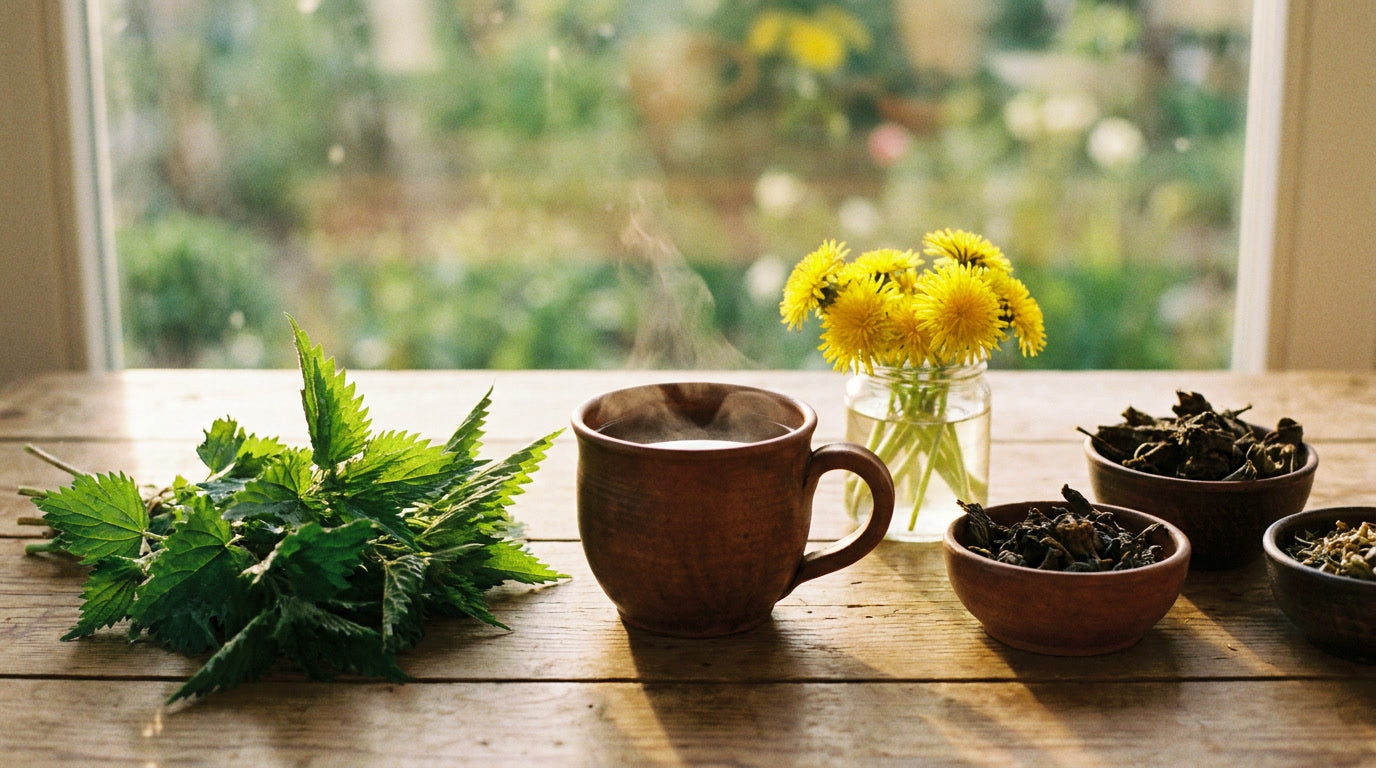
- Brennnessel (Urtica dioica): Die Brennnessel wird seit Jahrhunderten in der Volksmedizin als Frühjahrskraut geschätzt und traditionell zur Begleitung von Fastenkuren verwendet. Als Tee zubereitet ist sie ein klassisches Fastenkraut der Klostermedizin.
- Löwenzahn (Taraxacum officinale): Löwenzahn zählt zu den bekanntesten Fastenkräutern überhaupt – in der Naturheilkunde historisch bekannt als Begleiter der Frühjahrskur und in der traditionellen Verwendung für seine entwässernden Eigenschaften geschätzt.
- Schafgarbe (Achillea millefolium): Hildegard von Bingen beschrieb die Schafgarbe als wertvolles Kraut für Körper und Gemüt. Seit Jahrhunderten traditionell verwendet, gilt sie als klassisches Klosterkraut für Fastenzeiten.
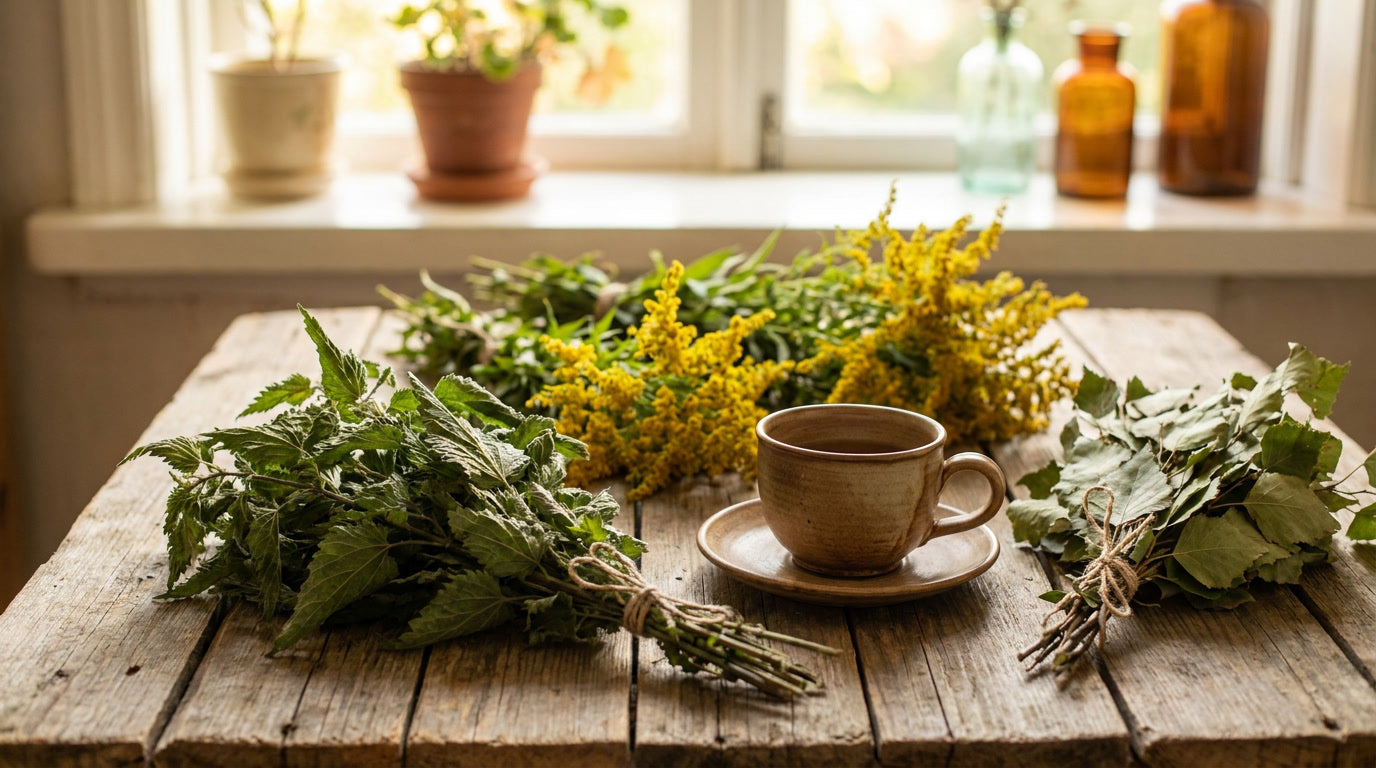
- Goldrute (Solidago virgaurea): Die Goldrute wird in der europäischen Volksmedizin seit langer Zeit traditionell verwendet und zählt zu den bekanntesten heimischen Kräutern für die Nieren- und Blasengesundheit.
- Birkenblätter (Betula pendula): Birkenblättertee ist ein klassischer Bestandteil der traditionellen Frühjahrskur in der mitteleuropäischen Volksmedizin und wird seit Generationen als mildes, gut verträgliches Fastenkraut geschätzt.
- Wermut (Artemisia absinthium): Hildegard von Bingen widmete dem Wermut besondere Aufmerksamkeit in ihrem Kräuterwissen. Als Bitterkraut wird er seit Jahrhunderten traditionell als Fastenstärkung und Begleiter der Klostermedizin eingesetzt.
Was steckt hinter Bitterkräutern beim Fasten?
Bitterstoffhaltige Kräuter wie Wermut, Enzian oder Schafgarbe enthalten sekundäre Pflanzenstoffe – sogenannte Bitterstoffe (Sesquiterpenlactone, Iridoide u. a.) –, die dem Pflanzenkörper als Schutz dienen. In der traditionellen Klostermedizin wurden diese Kräuter als besonders wertvoll während des Fastens angesehen: Sie wurden in der Volksüberlieferung mit Wachheit, innerer Klarheit und der Stärkung des Geistes verbunden. Bitterkraft.com hat sich dieser Tradition verschrieben und bietet Produkte an, die auf diesem jahrhundertealten Pflanzenwissen aufbauen – als Ergänzung, nicht als Ersatz für eine ausgewogene Lebensweise.
Richtig trinken beim Fasten: Flüssigkeitsbedarf und Alltagstipps
Beim Fasten ist ausreichendes Trinken keine Option – es ist eine Grundvoraussetzung. Der Körper scheidet nicht nur durch den Urin Wasser aus, sondern auch über die Haut und die Atemluft. Gerade wenn die Entwässerung aktiv ist und gleichzeitig entwässernde Kräutertees getrunken werden, muss die Flüssigkeitszufuhr stimmen. Empfohlen werden beim Heilfasten in der Regel mindestens zwei bis drei Liter Flüssigkeit täglich – verteilt auf stilles Wasser, Kräutertees und klare Gemüsebrühen. Wer zu wenig trinkt, riskiert Kreislaufprobleme, Kopfschmerzen und eine unnötige Belastung der Nieren.
Die Qualität der Flüssigkeit spielt ebenfalls eine Rolle. Stilles, mineralstoffreiches Wasser ist beim Fasten dem kohlensäurehaltigen vorzuziehen, da Kohlensäure den Magen belasten kann. Kräutertees sollten nicht zu stark konzentriert sein – ein heller Aufguss ist bekömmlicher als ein starkes Dekokt. Gemüsebrühen, traditionell aus Sellerie, Lauch, Karotten und Petersilienwurzel gekocht, liefern nicht nur Flüssigkeit, sondern auch Mineralien und geben dem Fastenden ein wohltuendes Wärmegefühl von innen. In der Klosterfastenküche waren solche Brühen fester Bestandteil der täglichen Routine.
Timing ist beim Trinken während des Fastens ebenfalls wichtig. Viele erfahrene Fastende empfehlen, den Tag mit einem großen Glas Wasser oder einem milden Kräutertee zu beginnen – noch vor dem ersten Gang ins Bad, noch vor dem Frühstück, das beim Fasten eben ausbleibt. Dieses morgendliche Trinken hilft, den Körper nach der Nachtruhe wieder in Schwung zu bringen und die Ausscheidung zu unterstützen. Abends hingegen sollte die Flüssigkeitszufuhr etwas reduziert werden, um den Schlaf nicht zu stören – auch das ist ein alter Rat aus der Naturheilkunde, der sich bewährt hat. Schlaf- und Entspannungsprodukte
Traditionelle Fastenkuren wie die Buchinger-Methode, die auf naturheilkundlichen Prinzipien des frühen 20. Jahrhunderts basiert, empfehlen bis heute explizit die Kombination aus Kräutertees, mineralreichen Brühen und ausreichend Wasser als Grundlage jeder Fastenwoche – ein Ansatz, der auf Jahrhunderten volksmedizinischer Erfahrung aufbaut.
Ein häufig unterschätzter Aspekt: die Wärme der Flüssigkeiten. In der Hildegard-Medizin und in der traditionellen chinesischen Heilkunde gleichermaßen wird kaltes Wasser beim Fasten als ungünstig betrachtet. Warme Flüssigkeiten – ob Tee, Brühe oder einfach warmes Wasser mit einer Scheibe Ingwer – werden als bekömmlicher angesehen und sollen das innere Gleichgewicht wahren. Ob man diesen Gedanken aus der Tradition übernimmt oder nicht: Das Ritualisieren des Trinkens – ein warmer Tee zur bestimmten Uhrzeit, ein Moment der Stille mit der Tasse in der Hand – gibt der Fastenzeit eine Struktur und kann das Wohlbefinden spürbar bereichern.
Fasten als ganzheitliche Praxis: Körper, Geist und die Kraft der Pause
Fasten war niemals nur eine körperliche Angelegenheit – das zeigt uns schon der Blick in die Geschichte. Ob in der christlichen Klostertradition, der ayurvedischen Medizin oder der traditionellen chinesischen Heilkunde: Überall auf der Welt wurde der Nahrungsverzicht stets mit einer inneren Haltung verbunden. Zeit für Stille, Reflexion, Gebet oder Meditation. Hildegard von Bingen verstand Fasten als eine Form der Einkehr, bei der Körper und Seele gleichermaßen gereinigt und gestärkt werden sollten. Diese ganzheitliche Perspektive hat bis heute nichts von ihrer Relevanz verloren – im Gegenteil. Immunsystem-Produkte
Die Entwässerung beim Fasten ist in diesem Sinne mehr als ein physiologischer Vorgang. Sie ist ein Symbol für das Loslassen – von Überflüssigem, von Angesammeltem, von dem, was der Körper nicht länger braucht. Viele Fastende berichten, dass sie sich nach den ersten herausfordernden Tagen leichter, klarer und wacher fühlen. Ob diese Empfindungen mit dem Wasserverlust zusammenhängen, mit dem sinkenden Insulinspiegel, mit veränderten Gehirnaktivitäten oder schlicht mit der Entschleunigung des Alltags – das lässt sich im Einzelfall kaum trennen. Das Zusammenspiel all dieser Faktoren macht die Fastenzeit zu einer besonderen Erfahrung.
Wer Fasten als ganzheitliche Praxis versteht, wird auch den Umgang mit dem Körper in dieser Zeit anders gestalten. Sanfte Bewegung wie Spazierengehen oder Yoga ersetzt intensiven Sport. Früh ins Bett gehen statt Abende vor dem Bildschirm. Morgens kurz in die Natur, abends ein Tagebuch führen – das sind kleine Rituale, die die Fastenzeit bereichern und dem Körper helfen, die innere Reinigung zu vollziehen. Pflanzenwissen, wie es Hildegard und die Klostermedizin überliefert haben, fügt sich in dieses Bild ein: als sanfte, respektvolle Begleitung eines Prozesses, den der Körper ohnehin kennt und in dem er nur eine achtsame Unterstützung braucht. Leber-Produkte von Bitterkraft
Fasten ist eine der ältesten Gesundheitspraktiken der Menschheit. Wer Körper und Geist beim Fasten achtsam begleitet – mit ausreichend Flüssigkeit, traditionellen Kräutern und bewusster Stille – kann diese Zeit als tiefe Erneuerung erleben.
Am Ende einer Fastenzeit steht das behutsame Aufbauen der Ernährung – auch diesen Übergang kennt die Naturheilkunde als eigenständige Phase. Doch das Bewusstsein, das man in den Fastentagen für den eigenen Körper entwickelt hat – für seinen Durst, seinen Hunger, seine Signale –, bleibt. Und vielleicht ist das die wertvollste Mitgabe: ein neu geschärftes Gespür für das, was der Körper wirklich braucht. Nicht mehr, nicht weniger. Ganz im Sinne von Hildegards "discretio" – der Kunst des Maßhaltens, die nie aus der Mode kommt.

Hinterlasse einen Kommentar
Diese Website ist durch hCaptcha geschützt und es gelten die allgemeinen Geschäftsbedingungen und Datenschutzbestimmungen von hCaptcha.