





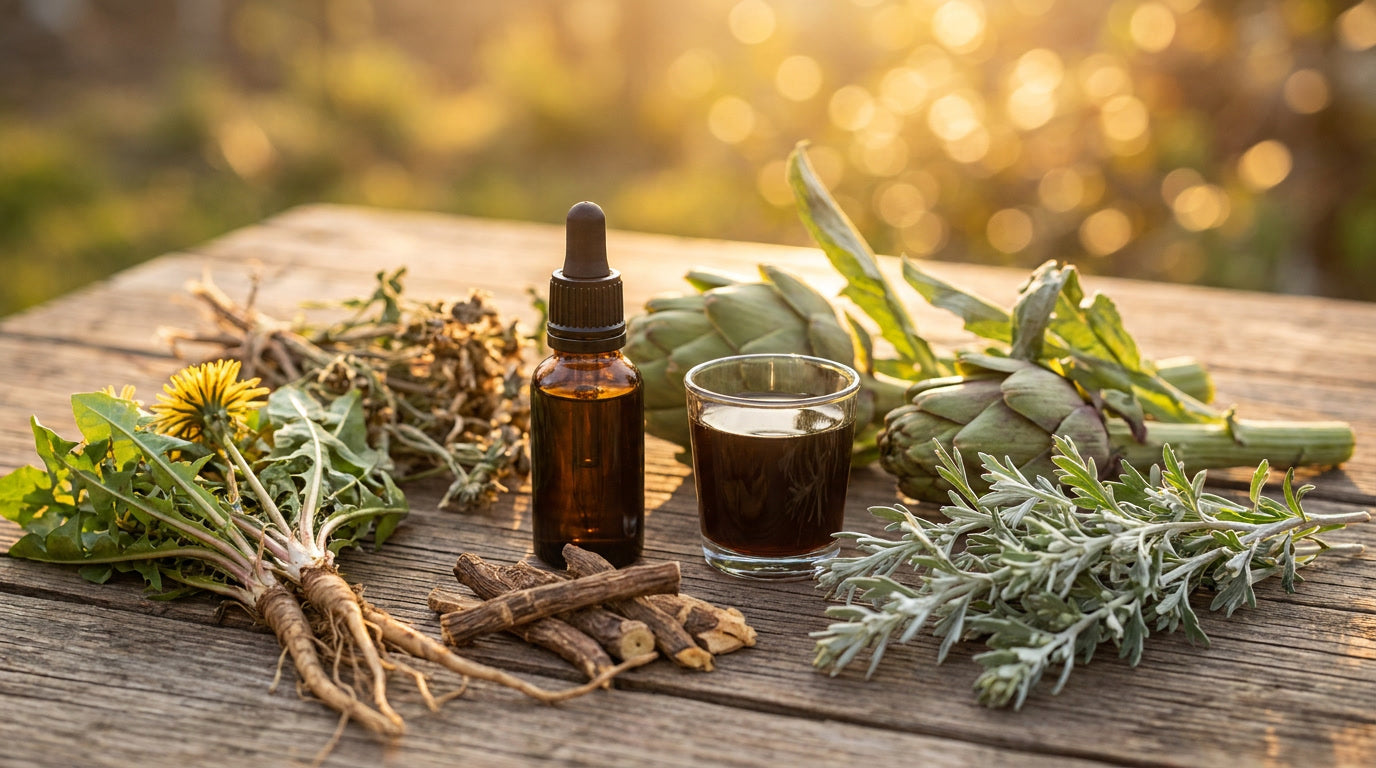
Who doesn’t know it: the craving for sweets that seemingly appears out of nowhere, the energy slump after lunch, or the feeling of never really being full. Much of this is related to how our body handles sugar – and this is where ancient knowledge comes into modern awareness: the power of bitter substances. Hildegard of Bingen already studied plants in the 12th century that were meant to bring the body into balance. Today, bitter substances are experiencing a renaissance – not as medicine, but as part of a conscious, natural lifestyle. In this article, we dive into the fascinating interplay between bitter plants and sugar metabolism – viewed historically, culturally rooted, and with a clear focus on what nature has offered for centuries.
Why bitter taste and sugar metabolism are more connected than you might think
In our modern diet, bitterness has almost completely disappeared. Vegetables have been bred over decades to taste as mild and sweet as possible. Coffee is drunk with sugar, beer is brewed increasingly sweet, and even salads often end up under sweet dressings. Yet bitterness was a natural part of human nutrition for thousands of years – and for good reason. Our ancestors ate wild herbs, roots, and leaves naturally rich in bitter substances. This variety of taste stimuli was part of a complex interaction with the body.
Interestingly, bitter receptors are not only located on the tongue. Research in recent years has shown that so-called bitter receptors (TAS2R) are also found in the digestive tract, pancreas, and other tissues. What this means in detail is the subject of lively scientific discussion – but the observation that people who regularly consume bitter foods and herbs often report a more balanced body perception is well documented culturally. Traditional medicine – from Ayurvedic medicine to Chinese phytotherapy to European monastic medicine – has always described bitter plants in the context of balance.
Bitter taste was a daily companion in traditional diets – and many cultures worldwide traditionally associate it with a balanced body feeling and a healthy relationship with food.
Hildegard of Bingen wrote in her “Physica” about numerous herbs she described as “cooling” and “balancing” – terms that today show interesting parallels to what we know about the body’s handling of sugar. Of course, she did not speak of blood sugar in the modern sense. But the descriptions of many medicinal plants she recommended strikingly correspond to those plants still used in naturopathy today to support sugar metabolism. This is no coincidence – it is accumulated experiential knowledge passed down through generations.
An overview of the most important bitter plants in monastic medicine
Medieval monasteries were not only spiritual centers but also places of intense nature observation and healing knowledge. Monks and nuns cultivated elaborate herb gardens, documented their observations, and passed this knowledge down through generations. Hildegard of Bingen was one of the most significant voices of this tradition – but by far not the only one. Benedictine and Cistercian monasteries had extensive knowledge of herbal medicine, and many of the bitter plants used then are still present in naturopathy today.
“Wormwood is hot and moderately dry and has great power within it. It is useful against many ailments of humans.” – Hildegard of Bingen, Physica (12th century)
What Hildegard meant by “power” was to be understood in the context of her time: an effect on the inner balance, on what she called “juices.” Today we would say: wormwood is rich in bitter substances like absinthin and artabsin, which have been traditionally used for centuries to support general well-being. The same applies to a whole range of other monastic plants cultivated in herb gardens from Bingen to St. Gallen.
These bitter plants have been traditionally known for centuries:
- Wormwood (Artemisia absinthium): One of the oldest medicinal plants in European tradition, valued in monastic medicine for centuries. Hildegard of Bingen explicitly recommended it as a “balancing herb.”
- Dandelion (Taraxacum officinale): Historically known throughout Europe, dandelion was traditionally used in folk medicine as a spring plant – a symbol of renewal and balance.
- Gentian (Gentiana lutea): The yellow gentian is considered one of the most bitter plants of the Alps and has been valued in European herbal medicine since antiquity. It is a fixed component of many traditional herbal blends.
- Artichoke (Cynara scolymus): Cultivated already in ancient Greece, artichoke was grown in medieval monastery gardens as a noble medicinal vegetable and traditionally regarded as a “balancing plant.”
- Centaury (Centaurium erythraea): Its very name points to the high value of this plant in ancient medicine. In European monastic medicine, it was known for its bitterness and traditionally prepared as herbal tea.
- Yarrow (Achillea millefolium): Known in Hildegard medicine as a versatile plant, yarrow was traditionally used in herbal blends because of its characteristic bitter notes.
These plants share one characteristic: for centuries, they were not used as single herbs but as part of a holistic nutrition and lifestyle concept. Monastic medicine understood the human being as a whole – and bitter substances as a natural building block of daily life, not as an exception or emergency solution. Hildegard of Bingen products
Traditional knowledge about bitter substances and dealing with sweetness
An intriguing aspect of traditional herbal medicine is that many cultures independently made similar observations: bitter plants were considered a counterbalance to sweetness. In Ayurvedic medicine, the bitter taste (tikta) is described as “balancing” an excess of sweetness (madhura). In Chinese medicine, bitter herbs are traditionally associated with the element fire and the heart – and considered clarifying for heat conditions. In European humoral pathology, bitter substances were regarded as “cooling” and “drying” – properties seen as balancing in the context of sugar excess.
In nearly all major healing traditions worldwide – from Europe to India to China – bitter plants were traditionally described as a natural counterbalance to sweetness and as a companion to a balanced body feeling.
What lies behind bitter substances?
Bitter substances are secondary plant compounds originally developed by plants as a defense against predators. Chemically, they form a heterogeneous group of compounds – including iridoids (as in gentian), sesquiterpene lactones (as in wormwood), flavonoids, and alkaloids. What they have in common: they activate the so-called TAS2R bitter receptors on the tongue and – according to recent findings – also in other parts of the body. Over 25 different bitter receptors have been identified in humans, showing how evolutionarily important this taste system is. Well-known bitter-rich plants: wormwood, gentian, dandelion, artichoke, centaury, yarrow, milk thistle.
Interestingly, many naturopathy followers report that those who regularly integrate bitter substances into their daily routine – whether through bitter herbal teas, wild herb salads, or bitter liqueurs after meals – often notice a decrease in cravings for sweets. This is well documented from a purely traditional perspective: even medieval apothecaries recommended a small sip of herbal bitters after a hearty meal as a “digestive aid” – not because they knew the biochemistry, but because experience over generations showed that people felt better afterward. Fasting products
Bitter substances in daily practice: how to integrate traditional plant knowledge today
The beauty of bitter substance knowledge is its everyday practicality. It requires no complicated supplementation, no strict diet plans, and no radical lifestyle changes. Instead, it’s about the principle of “adding”: bringing more bitterness into daily life – as a complement to what is already on the plate. This can start as simply as a glass of warm water with a splash of high-quality bitter concentrate in the morning, a wild herb salad at lunch, or a classic herbal tea in the evening.
Practical bitter substance rituals from monastic medicine:
Morning ritual: A small glass of warm water with 10–15 drops of bitter concentrate before breakfast – a tradition maintained in many monasteries as the start of the day.
Before meals: A small sip of herbal bitters or a cup of bitter herbal tea (e.g., gentian tea, wormwood tea) before eating – just as was customary in medieval monastic kitchens.
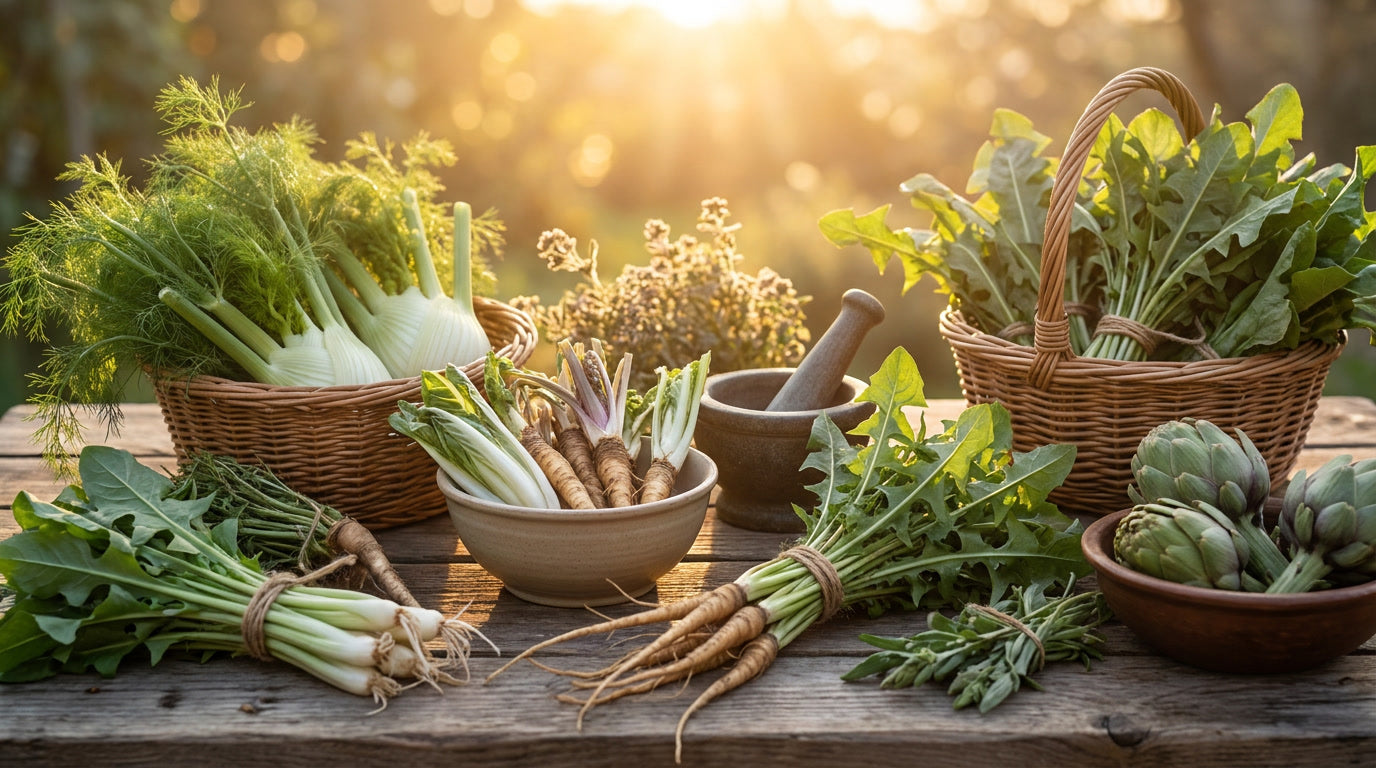
Wild herb salad: Mix dandelion, arugula, chicory, radicchio, or endive into the salad – a natural and enjoyable way to intake bitter substances.
Evening tea: An herbal tea made from yarrow, centaury, or milk thistle as an evening ritual – historically known as the “closing ritual” of monastic meals.
Hildegard of Bingen repeatedly emphasized the principle of “moderation” in her writings – in Latin, “discretio.” Not excess, but the balanced measure of all things was for her the key to a balanced life. This principle can be wonderfully applied to today’s approach to nutrition: not avoiding sugar out of prohibition, but creating a natural balance through the conscious integration of bitterness that naturally reduces cravings for extremes. Gut and digestion products
Especially for people who are already deeply engaged with their nutrition and well-being, bitter plants offer a fascinating way to make traditional knowledge practically tangible. Bitter concentrates, herbal drops, or high-quality tea blends from certified cultivation make it possible to integrate this millennia-old heritage into modern everyday life – effortlessly, but with genuine cultural depth. all BitterKraft products
What to look for in bitter substance products – and what the Hildegard tradition teaches
Not all bitter substance products are the same. Those who want to experience the full potential of traditional herbal medicine should pay attention to some important quality criteria. In monastic medicine, the origin of the plants played a central role: Hildegard of Bingen not only described which plants to use but also when to harvest them and how to process them. This knowledge of quality and care is just as relevant today as it was then.
First: plant quality. Bitter-rich herbs from organic cultivation or wild collection from controlled areas generally contain a broader spectrum of secondary compounds than conventionally grown variants. The stress factor – paradoxically – often makes wild plants richer in bitter substances because they must protect themselves against predators. Second: processing. Gentle extraction methods that do not use high temperatures preserve the natural bitter substance spectrum better than aggressive industrial processes. Third: composition. Monastic medicine almost never worked with single plants alone but with carefully composed blends. Even today, a broad spectrum of different bitter plants offers more variety than the single extract of one plant.
Quality starts with the plant: certified organic cultivation, gentle processing, and traditionally inspired plant combinations are the most important criteria when buying bitter substance products.
The European Medicines Agency (EMA) lists numerous bitter plants – including gentian, centaury, and wormwood – as “traditionally used herbal medicinal products” with a long historical use in European herbal medicine. This classification as “Traditional Herbal Medicine” recognizes the accumulated experiential knowledge passed down over centuries.
Those working with bitter plants for the first time are advised to start gently. The body – accustomed to modern, bitterness-free bred food – sometimes reacts with some surprise to real bitterness. This is normal and usually subsides after a few days. Monastic medicine knew this principle of gradual adaptation and generally recommended introducing new things with patience and consistency – rather than with radical leaps. Consistency over time is also the key here. Liver products from BitterKraft
Bitter plants as part of a holistic lifestyle – the message of monastic medicine for today
Bitter substances are not a miracle cure – that would be neither serious nor in line with tradition. Hildegard of Bingen never called a single plant a panacea. What she described was always an interplay: of nutrition, movement, mental attitude, and the conscious enjoyment of nature. Bitter plants should be understood today in exactly this spirit: as a valuable part of a larger mosaic of conscious living.
When we think about sugar metabolism and nutritional balance, a purely reductionist approach – “eat less sugar” – often falls short. Humans are complex beings with habits, emotions, cultural influences, and biological basic needs. Monastic medicine understood this intuitively: it did not work with prohibitions but with enriching life through beauty, naturalness, and enjoyment. Integrating bitter substances in this sense means gently reminding the body of a broader taste spectrum – and thus bringing back a piece of natural balance. Immune system products
The good news: bitter plants are beautiful. Gentian flowers shine in rich blue on alpine meadows, dandelions turn spring meadows into golden carpets, wormwood smells spicy-herbal, and artichokes bloom in theatrical violet. Engaging with these plants is not only health-inspiring but also aesthetically enriching – a return to nature that Hildegard of Bingen would probably have greatly appreciated. Perhaps that is the most beautiful message: in a time of overstimulation and excess, bitter plants remind us that health and enjoyment are two sides of the same coin – and that nature has held the answers we seek for thousands of years.


Leave a comment
This site is protected by hCaptcha and the hCaptcha Privacy Policy and Terms of Service apply.