

Wer kennt das nicht: Nach einem langen Interkontinentalflug fühlen sich die Beine schwer und geschwollen an, die Schuhe drücken plötzlich, und die Knöchel sehen aus, als hätten sie sich verdoppelt. Wassereinlagerungen nach Flugreisen sind ein weit verbreitetes Phänomen, das viele Reisende betrifft – von der Gelegenheitsfliegerin bis zum routinierten Vielflieger. Was steckt dahinter, und was hat die Naturheilkunde seit Jahrhunderten dagegen parat? In diesem Artikel werfen wir einen Blick auf traditionelle Kräuterwissenstraditionen, darunter das überlieferte Heilwissen der Hildegard von Bingen, und zeigen, wie man mit bewährten Pflanzenmitteln und einfachen Ritualen das allgemeine Wohlbefinden auf Reisen unterstützen kann.
Warum schwellen Beine im Flugzeug an?
Das Phänomen der geschwollenen Beine im Flugzeug hat mehrere Ursachen, die sich gegenseitig verstärken. Zum einen herrscht in der Kabine eines Flugzeugs ein künstlich erzeugter Luftdruck, der deutlich niedriger ist als auf Meereshöhe – typischerweise entspricht er dem Druck in etwa 2.400 Metern Höhe. Dieser veränderte Druck beeinflusst, wie sich Flüssigkeiten im Körpergewebe verteilen. Hinzu kommt die extrem trockene Kabinenluft mit einer relativen Luftfeuchtigkeit von oft unter 20 Prozent, die den Körper dazu veranlasst, Flüssigkeit einzusparen und in bestimmten Bereichen zu speichern.
Ein weiterer entscheidender Faktor ist die lange Sitzposition. Wer stundenlang auf einem beengten Flugzeugsessel sitzt, bewegt seine Beine kaum. Das Blut und die Gewebeflüssigkeit stauen sich in den unteren Extremitäten, weil die Muskelpumpe – also die natürliche Pumpbewegung der Waden beim Gehen – nicht aktiv ist. Der Rückfluss der Lymphflüssigkeit aus den Beinen wird so deutlich verlangsamt. Das Ergebnis ist das typische Taubheitsgefühl, die Schwere und schließlich die sichtbare Schwellung an Knöcheln und Füßen.
Dazu kommt, dass viele Reisende an Bord zu wenig Wasser trinken und stattdessen Alkohol oder koffeinhaltige Getränke konsumieren, die zusätzlich entwässernd wirken. Paradoxerweise reagiert der Körper auf den daraus resultierenden Flüssigkeitsmangel, indem er noch mehr Wasser in den Geweben zurückhält. Es ist also ein Regelkreis, der sich selbst verstärkt. Leber-Produkte von Bitterkraft Das Wissen darum ist der erste Schritt, um gezielt gegenzusteuern – sowohl während des Fluges als auch in der Erholungsphase danach.
Wassereinlagerungen nach langen Flugreisen entstehen durch das Zusammenspiel von Kabinenluftdruck, langer Sitzposition und oft mangelnder Flüssigkeitszufuhr – ein klassisches Phänomen, das nahezu jeden Langstreckenreisenden betrifft.
Hildegards Kräuterwissen und die Tradition der Entwässerungspflanzen
Hildegard von Bingen, die bedeutende Universalgelehrte und Äbtissin des 12. Jahrhunderts, hinterließ uns in ihren Werken „Physica" und „Causae et Curae" ein umfangreiches Pflanzenwissen, das bis heute fasziniert. Auch wenn Flugreisen zu ihrer Zeit freilich undenkbar waren, beschrieb sie ausführlich den Umgang mit Zuständen, die wir heute als Wasseransammlungen im Gewebe kennen würden. Sie beobachtete, dass bestimmte Kräuter und Wurzeln seit der Antike traditionell genutzt wurden, um die natürliche Balance im Körper zu unterstützen – ein Gedanke, der sich wie ein roter Faden durch die gesamte abendländische Klostermedizin zieht. Hildegard von Bingen Produkte
Besonders interessant ist Hildegards Konzept der „Feuchtigkeit" im Körper. In ihrer Vorstellungswelt, geprägt von der Vier-Säfte-Lehre, galten Ungleichgewichte in den Körpersäften als Ursache vieler Beschwerden. Sie empfahl unter anderem Fenchel, Petersilie und Brennnessel für Menschen, die unter übermäßiger „Feuchtigkeit" litten. Diese Kräuter wurden in Form von Suppen, Tees und Umschlägen genutzt – einfache Hausmittel, die in Klöstern und bäuerlichen Haushalten gleichermaßen geschätzt wurden. Dass diese Überlieferungen heute noch Bestand haben, zeigt die anhaltende Popularität dieser Pflanzen in der modernen Naturheilkunde.
„Der Fenchel ist gut für den gesunden wie für den kranken Menschen [...] er macht fröhlich und bringt angenehmen Geruch und gute Verdauung." – Hildegard von Bingen, Physica (12. Jahrhundert), überliefertes Originalzitat aus dem Kräuterbuch
Das Wissen um entwässernde Pflanzen ist jedoch keineswegs auf Hildegard beschränkt. In der chinesischen Medizin, im ayurvedischen Pflanzenwissen und in der europäischen Volksmedizin findet sich eine bemerkenswerte Übereinstimmung: Bestimmte Kräuter wurden kulturübergreifend und über Jahrtausende hinweg traditionell genutzt, wenn es darum ging, überschüssige Flüssigkeit aus dem Gewebe zu unterstützen. Diese Konvergenz unterschiedlicher Heiltraditionen ist ein starkes Indiz dafür, dass die Menschen intuitiv erkannten, was bestimmten Pflanzen innewohnt. BitterKraft Original
Heute erleben wir eine Renaissance dieses Wissens. Naturheilkundlich orientierte Menschen greifen bewusst auf diese Überlieferungen zurück – nicht als Ersatz für medizinische Begleitung, sondern als sinnvolle Ergänzung und als Weg, das allgemeine Wohlbefinden auf Reisen mit traditionellen Mitteln zu unterstützen. Gerade die „Hinzufügen statt Weglassen"-Philosophie der modernen Naturheilkunde passt perfekt zu diesem Ansatz: Man bereichert den Alltag mit bewährten Ritualen und Pflanzenbegleitern.
Diese Heilpflanzen werden traditionell bei Wassereinlagerungen genutzt
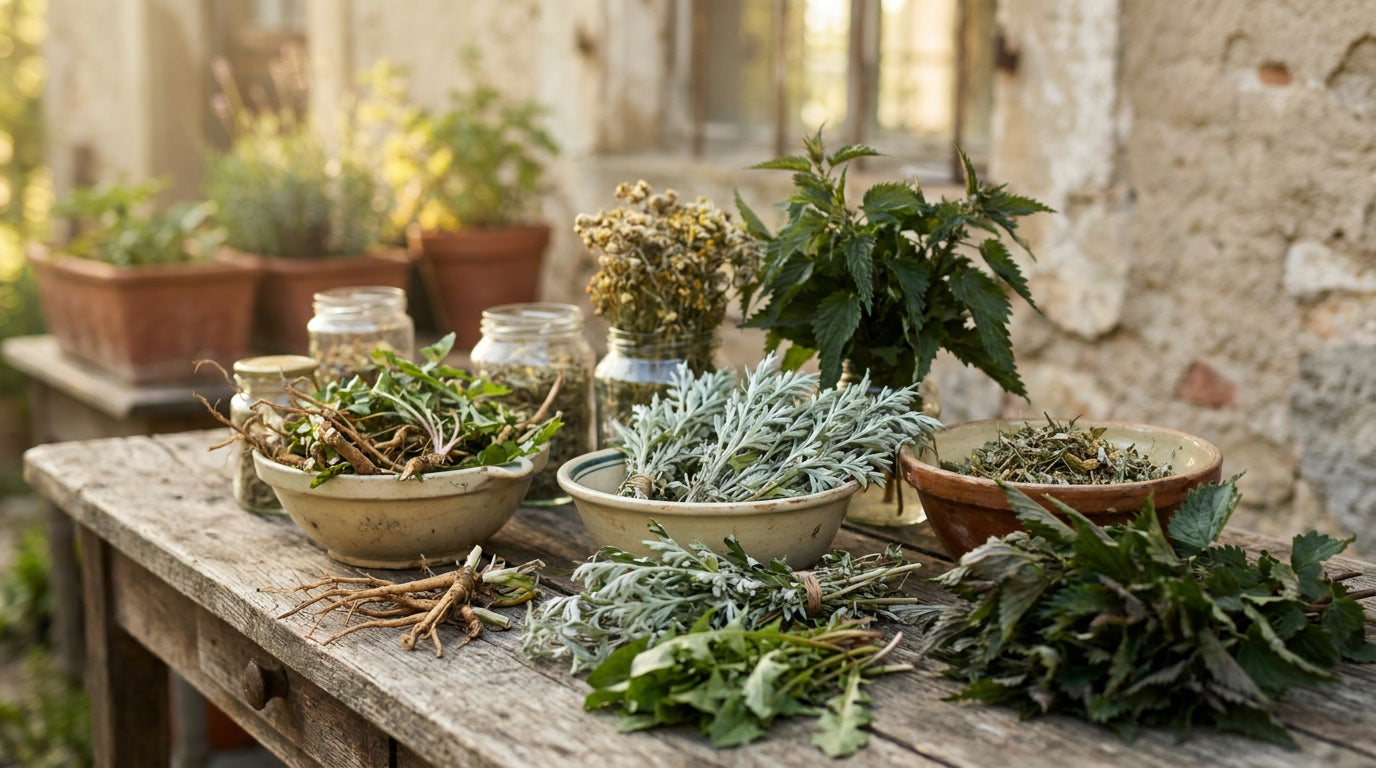
Die Naturheilkunde kennt eine ganze Reihe von Pflanzen, die seit Jahrhunderten traditionell genutzt werden, wenn es um das Gleichgewicht der Körperflüssigkeiten geht. Viele davon sind im Alltag leicht zugänglich – als Tee, als Frischpflanzensaft oder in konzentrierter Form als Extrakt. Wichtig dabei ist das Verständnis, dass diese Pflanzen keine Medikamente sind, sondern pflanzliche Begleiter, die das allgemeine Wohlbefinden unterstützen können – eingebettet in einen gesunden Lebensstil.
Traditionell genutzte Heilpflanzen bei Wassereinlagerungen nach Reisen:
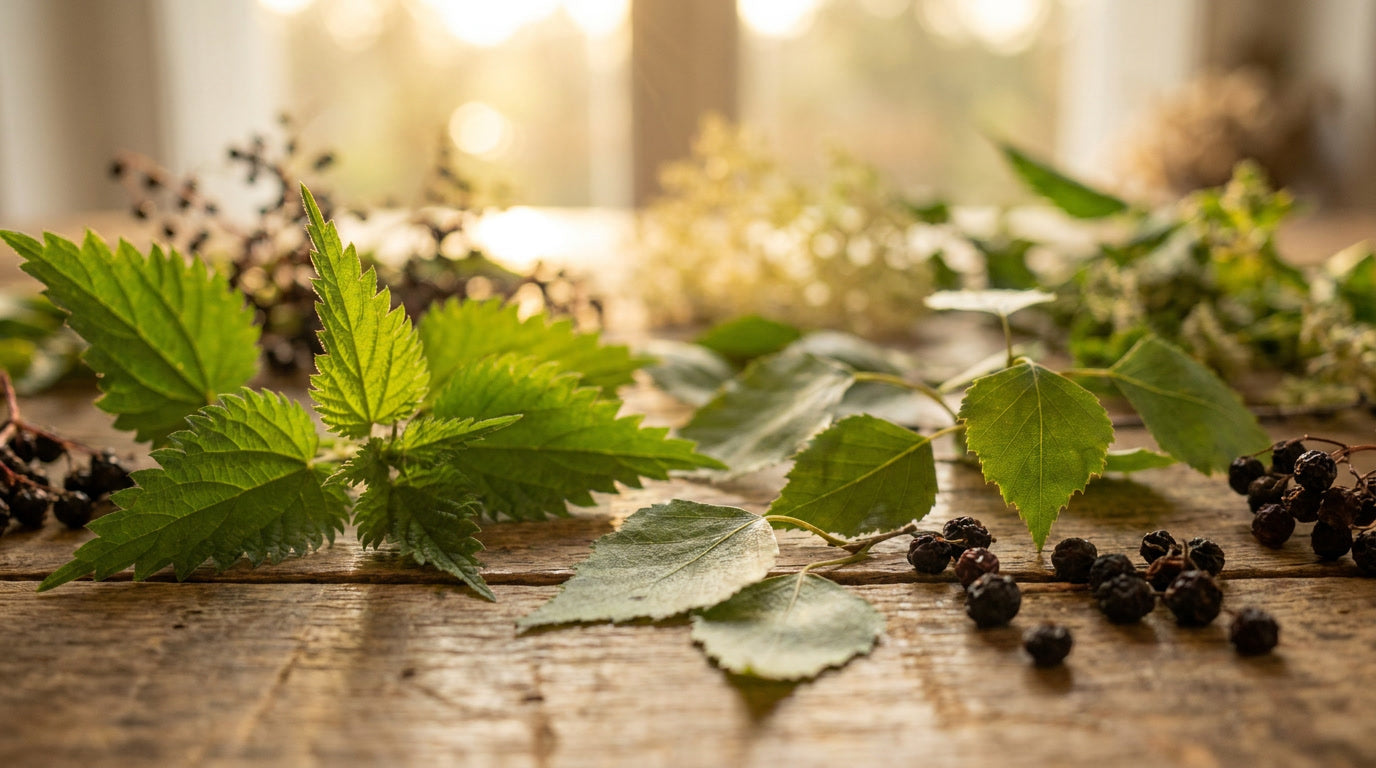
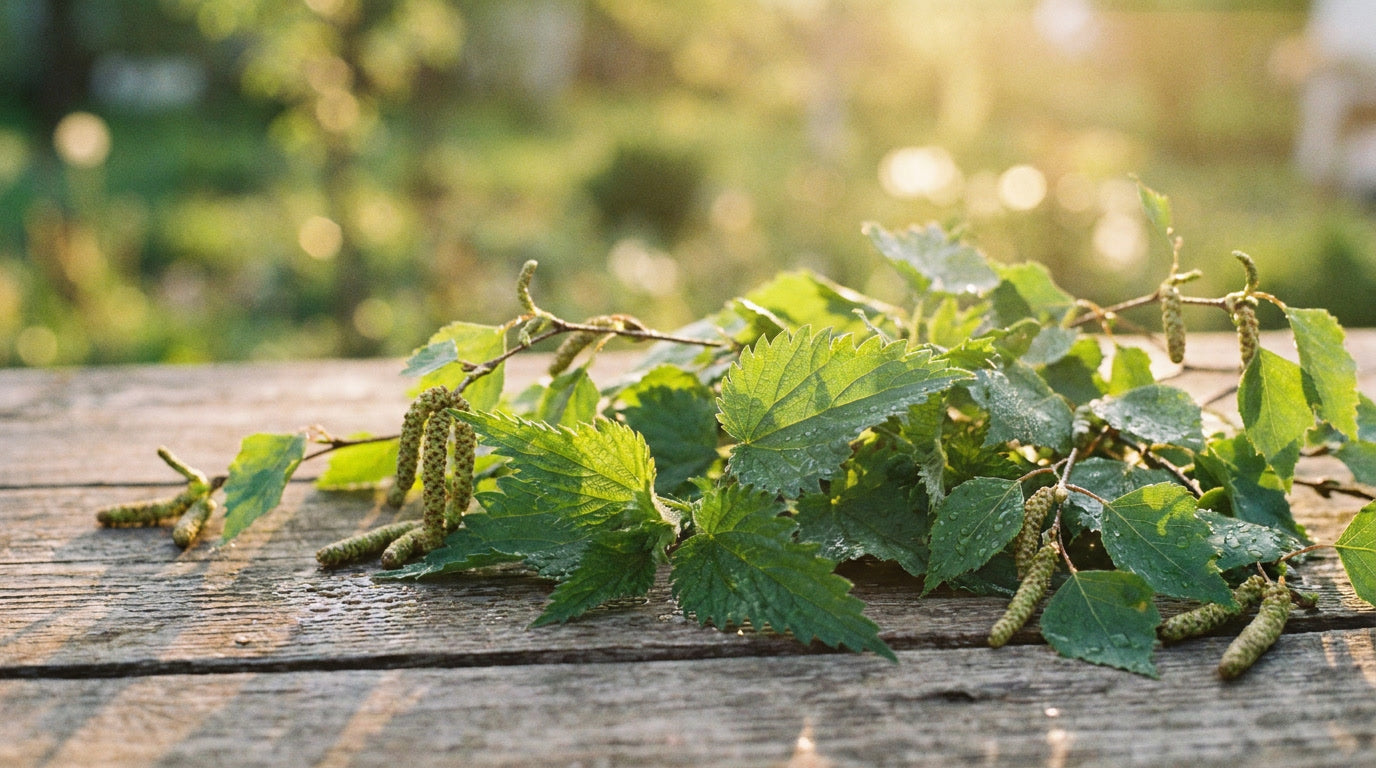
- Brennnessel (Urtica dioica): Die Brennnessel gehört zu den bekanntesten traditionellen Kräutern Europas und wird seit dem Mittelalter in Klostergärten kultiviert. In der Volksmedizin wurde sie traditionell als Frühjahrstee genutzt und gilt historisch als klassische Begleitpflanze, wenn das Wohlbefinden nach langen Reisen wieder ins Gleichgewicht gebracht werden sollte.
- Petersilie (Petroselinum crispum): Schon Hildegard von Bingen schätzte die Petersilie und beschrieb sie ausführlich in ihren Werken. Das Küchenkraut wird in der europäischen Kräutertradition seit Jahrhunderten genutzt und findet sich in zahlreichen überlieferten Rezepturen der Klostermedizin.
- Löwenzahn (Taraxacum officinale): Der Löwenzahn ist eine der meistzitierten Heilpflanzen in der europäischen Naturheilkunde. Wurzel und Kraut werden seit Generationen traditionell genutzt, und die Pflanze hat in nahezu jeder europäischen Volksmedizintradition ihren festen Platz. Leber-Produkte von Bitterkraft
- Birkenblätter (Betula pendula): Birkenblättertee ist ein klassischer Bestandteil der deutschen Volksmedizin und wird in der Kräutertradition des Nordens seit dem Frühmittelalter überliefert. In skandinavischen und mitteleuropäischen Haushalten galt er als bewährter Frühlingstrank zur allgemeinen Unterstützung des Wohlbefindens.
- Holunderbeeren (Sambucus nigra): Der schwarze Holunder war in der germanischen Volksmedizin ein heiliger Baum und wurde von Kräuterkundigen für vielfältige Zwecke genutzt. Auch Hildegard widmete ihm einen eigenen Abschnitt in ihrer Physica und schätzte ihn als Begleiter bei allgemeinen Ungleichgewichten.
- Schachtelhalm (Equisetum arvense): Der Schachtelhalm, auch Zinnkraut genannt, ist eine der ältesten Heilpflanzen der Welt und wurde bereits in der antiken Medizin genutzt. In der mittelalterlichen Klostermedizin und insbesondere in der Überlieferung Hildegards findet er sich als klassisches Kräutlein für das allgemeine Gleichgewicht des Körperwasserhaushalts.
Was steckt hinter diesen Pflanzen?
Viele der oben genannten Kräuter enthalten Flavonoide, organische Säuren und Mineralstoffe, die seit Jahrhunderten im Fokus der Kräuterforschung stehen. Die Brennnessel etwa ist reich an Kalium und Siliziumverbindungen, die in der traditionellen Medizin als relevant für das Gewebegleichgewicht galten. Löwenzahn enthält bitter schmeckende Verbindungen (sogenannte Sesquiterpenlactone) sowie Inulin – beides Stoffe, die in der Naturheilkunde seit Langem besprochen werden. BitterKraft Original Birkenblätter wiederum gelten als reich an Flavonoiden wie Hyperoside und Quercetinderivaten. All diese Inhaltsstoffe sind Gegenstand fortlaufender wissenschaftlicher Betrachtung – historisch wurden sie intuitiv entdeckt, heute werden sie systematisch erforscht.
Ein bewährtes Reiseritual vieler Naturheilkunde-Begeisterter ist es, bereits einige Tage vor dem Flug mit einem Kräutertee-Ritual zu beginnen. Eine Mischung aus Brennnessel, Birkenblättern und Löwenzahn als sanfter Tee morgens und abends kann das allgemeine Wohlbefinden unterstützen und den Körper auf die bevorstehende Reiseanstrengung vorbereiten. Das Schöne daran: Diese Kräuter sind in Bio-Qualität leicht erhältlich und lassen sich wunderbar kombinieren.
Die Kombination aus Brennnessel, Birkenblättern und Löwenzahn gilt in der europäischen Kräutertradition seit Jahrhunderten als klassisches Tee-Trio, das das allgemeine Wohlbefinden unterstützen kann – ideal als Reisebegleiter vor und nach langen Flügen.
Praktische Rituale und Begleiter für vor, während und nach dem Flug
Neben den pflanzlichen Begleitern gibt es eine Reihe von einfachen, naturheilkundlich inspirierten Ritualen, die das Wohlbefinden auf Flugreisen spürbar unterstützen können. Diese Praktiken kosten wenig, erfordern keine aufwendigen Vorbereitungen und lassen sich problemlos in jede Reiseroutine integrieren. Das Grundprinzip lautet: Den Körper bewusst begleiten, anstatt ihn den Strapazen des modernen Flugbetriebs einfach auszuliefern.
Bereits in der Vorbereitung auf eine Langstreckenreise lohnt es sich, auf eine ausreichende Flüssigkeitszufuhr zu achten. Kräutertees, stilles Wasser und frische Säfte statt Alkohol und Kaffee in den Tagen vor dem Flug – das ist eine einfache, aber wirkungsvolle Maßnahme. Traditionelle Kräuterrezepturen empfehlen zusätzlich, leichte, salzarme Mahlzeiten zu bevorzugen, da Salz bekanntermaßen dazu neigt, Flüssigkeit im Gewebe zu binden. In der Klosterküche war das eine Selbstverständlichkeit: Fastenzeiten und bewusste Ernährung galten als Vorbereitung auf besondere Beanspruchungen des Körpers. Fasten-Produkte
Während des Fluges sind regelmäßige Bewegungsübungen ein Muss. Fußkreisen, Fersenanheben, kurze Spaziergänge durch den Gang – diese kleinen Bewegungsrituale aktivieren die natürliche Muskelpumpe der Waden und können dazu beitragen, dass die Gewebeflüssigkeit besser zirkuliert. Ergänzend dazu empfiehlt die Naturheilkunde Kompressionssocken, die in der Volksmedizin traditionell durch feste Binden ersetzt wurden und dasselbe Prinzip nutzen: sanften Druck von außen, um den Rückfluss aus den Beinen zu unterstützen. Dazu viel stilles Wasser trinken – gerne auch als Kräutertee aus einer mitgebrachten Thermosflasche, wenn die Flughafenregeln es erlauben.
Eine Beobachtungsstudie der Universität Edinburgh (2001, veröffentlicht im Lancet) untersuchte das Risiko von Beinproblemen auf Langstreckenflügen und stellte fest, dass regelmäßige Bewegungsübungen und ausreichende Flüssigkeitszufuhr zu den wichtigsten Schutzmaßnahmen gehören. Kompressionstrümpfe wurden ebenfalls als unterstützende Maßnahme hervorgehoben.
Nach der Landung beginnt die eigentliche Erholungsphase. Ein traditionelles Ritual, das in vielen europäischen Kurbädern und Kneipp-Kurorten bis heute praktiziert wird, ist das Wechselfußbad: abwechselnd warmes und kühles Wasser über die Beine gießen oder die Füße einige Minuten eintauchen. Dieses einfache Wassertherapie-Ritual, das Sebastian Kneipp im 19. Jahrhundert popularisierte und das auf noch älteren Volksbräuchen basiert, kann das Wohlbefinden nach einem langen Flug merklich unterstützen. In Kombination mit einem wohltuenden Brennnessel-Birken-Tee und einem kurzen Abendspaziergang an der frischen Luft ist das ein vollständiges Regenerationsritual.
Das Wechselfußbad nach Kneipp ist eines der einfachsten und wirkungsvollsten Rituale der europäischen Naturheilkunde – und eine ideale Ergänzung nach langen Flugreisen, um die Erholung des Körpers zu unterstützen.
Ernährung, Bitterstoffe und das große Bild: Ganzheitlich reisen mit der Naturheilkunde
Die Naturheilkunde denkt immer im großen Zusammenhang. Wassereinlagerungen nach dem Fliegen sind nicht nur ein lokales Problem der Beine, sondern ein Zeichen dafür, dass der gesamte Organismus durch Stress, Schlafmangel, veränderte Zeitzone und die ungewöhnliche Umgebung des Flugzeugs aus seinem Gleichgewicht geraten ist. Dementsprechend empfiehlt die ganzheitliche Betrachtung, nicht nur die Beine zu behandeln, sondern den ganzen Körper in seiner Erholung zu begleiten. Schlaf- und Entspannungsprodukte
Ein besonders faszinierender Ansatz ist die traditionelle Bitterstoffkur. Bitterstoffe – in Pflanzen wie Enzian, Artischocke, Wermut oder Löwenzahn enthalten – waren in der Klostermedizin ein zentrales Element der Gesundheitspflege. Hildegard von Bingen beschrieb bittere Kräuter ausführlich und schätzte ihre Rolle in der ganzheitlichen Körperpflege. In der traditionellen Überlieferung galten Bitterstoffe als besonders wertvoll für die allgemeine Konstitutionspflege und als klassische Begleiter nach Perioden der Überbelastung oder des Ungleichgewichts. Eine Bitterstoffkur nach einer langen Reise kann als bewusstes Ritual verstanden werden, um den Körper wieder in seine natürliche Balance zu begleiten. BitterKraft Original
Bitterstoffe als Reisebegleiter – was die Tradition überliefert:
In der klösterlichen Medizintradition des Mittelalters gehörte ein täglicher Bitterkraut-Trunk zum festen Ritual der Mönche und Nonnen – besonders nach langen Reisen zu Fuß oder auf dem Pferd. Die Idee dahinter war einfach: Bittere Pflanzen wie Wermut, Enzian oder Schafgarbe wurden traditionell genutzt, um das allgemeine Wohlbefinden nach körperlichen Strapazen zu unterstützen. Heute erleben Bitterstoffe eine Renaissance in der modernen Naturheilkunde – als konzentrierte Tropfen, als Tee oder als Teil von Kräuterkomplexen. Das Wissen darüber, dass bittere Pflanzen seit Jahrhunderten geschätzt werden, ist eine der faszinierendsten Gemeinsamkeiten aller großen Heiltraditionen der Welt. BitterKraft Original
Auch die Ernährung spielt eine wichtige Rolle. Nach einem langen Flug empfiehlt die Naturheilkunde leichte, basenreiche Kost: frisches Gemüse, Kräutersuppen, Salate mit reichlich Kräutern. Kaliumreiche Lebensmittel wie Bananen, Avocados und Blattgemüse galten in der Volksmedizin schon lange als wertvolle Nahrungsmittel nach Erschöpfungsphasen. Im Gegensatz dazu sollte stark gesalzene, verarbeitete Kost in der ersten Zeit nach dem Flug möglichst vermieden werden. Diese Ernährungsempfehlungen sind zeitlos und finden sich in ähnlicher Form in den Schriften Hildegards wie auch in der modernen Ernährungslehre. Darm- und Verdauungsprodukte
Schließlich ist auch der Aspekt der Ruhe und Regeneration nicht zu unterschätzen. Jetlag und gestörter Schlafrhythmus sind enge Begleiter des Langstreckenfluges. Die Naturheilkunde empfiehlt, dem Körper bewusst Zeit zu geben, sich anzupassen: sanfte Bewegung an der frischen Luft, früh schlafen gehen, auf Stimulanzien verzichten und stattdessen beruhigende Kräuter wie Baldrian, Hopfen oder Passionsblume als abendlichen Tee genießen. Dieser ganzheitliche Blick – Pflanzen, Ernährung, Bewegung und Ruhe als gemeinsames Konzert – ist das eigentliche Herzstück der Naturheilkunde und das, was sie von rein symptomorientierten Ansätzen unterscheidet. Schlaf- und Entspannungsprodukte
Traditionelle Kräuterbegleiter für die Reiseerholung im Überblick:
- Enzian (Gentiana lutea): Der gelbe Enzian ist eine der bekanntesten Bitterpflanzen Europas und in der Volksmedizin der Alpenregion seit Jahrhunderten fester Bestandteil der Hausmittelküche. Als klassisches Bitter-Tonikum wird er traditionell nach körperlichen Strapazen genutzt.
- Baldrian (Valeriana officinalis): Baldrian gehört zu den meistbeschriebenen Schlaf- und Ruhekräutern der europäischen Medizingeschichte. Bereits in der Antike überliefert und in mittelalterlichen Klostergärten kultiviert, gilt er traditionell als Begleiter für erholsamen Schlaf nach belastenden Reisen. Schlaf- und Entspannungsprodukte
- Artischocke (Cynara scolymus): Die Artischocke wird in der mediterranen Volksmedizin seit der Antike genutzt und gehört zu den klassischen Bitterpflanzen der europäischen Naturheilkunde. Sie findet sich in zahlreichen überlieferten Kräuterkombinationen und wird traditionell nach Perioden der Überbelastung eingesetzt. Leber-Produkte von Bitterkraft
- Schafgarbe (Achillea millefolium): Die Schafgarbe war in der germanischen Volksmedizin eine der wichtigsten Heilpflanzen überhaupt. Hildegard von Bingen beschrieb sie ausführlich und empfahl sie für vielfältige Zwecke. Als leicht bitteres Kräutlein passt sie gut in Kräutermischungen zur allgemeinen Konstitutionspflege nach Reisen.
- Passionsblume (Passiflora incarnata): Die Passionsblume kommt ursprünglich aus Amerika und wurde nach ihrer Entdeckung durch europäische Botaniker im 17. Jahrhundert rasch in die europäische Kräutertradition aufgenommen. Als Abendtee traditionell genutzt, gilt sie als sanfte pflanzliche Begleiterin für ruhige Nächte und Entspannung nach langen Reisen.
Reisen ist bereichernd und wunderbar – aber der Körper verdient es, bewusst begleitet zu werden. Die Naturheilkunde bietet dafür ein reiches Arsenal an traditionellem Wissen, das sich über Jahrhunderte bewährt hat. Von den Klostergärten Hildegards über die Kneipp-Kurbäder des 19. Jahrhunderts bis hin zur modernen Phytotherapie zieht sich ein roter Faden: Pflanzen, Wasser, Bewegung und Ernährung als ganzheitliches Konzert für das Wohlbefinden auf Reisen. Wer das nächste Mal aus dem Flugzeug steigt und schwere Beine spürt, darf getrost in den reichen Schatz des überlieferten Pflanzenwissens greifen – und damit eine jahrtausendealte Tradition lebend halten.

Hinterlasse einen Kommentar
Diese Website ist durch hCaptcha geschützt und es gelten die allgemeinen Geschäftsbedingungen und Datenschutzbestimmungen von hCaptcha.