





Do you know the feeling of suddenly appearing bloated after a meal—even though you haven’t eaten much? Your face looks puffy, your rings feel tighter, and your feet feel heavy. Water retention after eating is a widespread phenomenon that unsettles many people and can noticeably affect well-being. In modern nutrition, it is often attributed solely to salt or carbohydrates—but the medieval saint and universal scholar Hildegard of Bingen developed a much deeper perspective on such complaints about nine centuries ago: she saw them as an expression of a disturbed inner balance, an imbalance in the bodily humors and the so-called Viriditas, the life force of a person. This article invites you to view water retention after eating through the lens of Hildegard’s nutritional teachings—and to discover traditional ways to restore inner balance. Hildegard von Bingen products
What Hildegard of Bingen taught about the imbalance of the humors
Hildegard of Bingen (1098–1179) was a Benedictine nun, mystic, composer, and—especially significant from today’s perspective—one of the most influential herbalists and natural philosophers of the Middle Ages. Her healing art was largely based on ancient humoral pathology, the theory of the bodily humors, which she enriched with her own spiritual and nature-observing thinking. At the center of her teaching was the idea that health requires a balanced equilibrium of the four bodily humors: blood, phlegm, yellow bile, and black bile. Each humor was associated with certain temperaments, seasons, and foods.
Water retention—or what Hildegard described in her writings as “phlegmatic excess”—was considered by her a sign of an overly dominant phlegm (Phlegma) in the body. According to her belief, this condition could arise from certain foods, eating the wrong foods at the wrong season, or generally weak life force. Hildegard wrote in her main work Causae et Curae in essence: An excess of moisture and cold in the body clouds the blood and weakens the person in their actions. She meant not only physical symptoms but a comprehensive disturbance of body, soul, and spirit—a holistic picture that makes her a pioneer of integrative approaches.
Especially interesting from today’s perspective: Hildegard precisely distinguished between foods she considered “good” for inner balance and those she classified as “cold” and “phlegm-forming.” The latter were linked to sensations like heaviness, puffiness, and lethargy—feelings familiar to many who suffer from water retention. This classification was not mysticism but the result of long natural observation and transmitted knowledge, which she systematically incorporated into her writings.
Hildegard of Bingen, Causae et Curae (ca. 1150–1160): “When moisture overwhelms a person and weakens the warming power of the blood, the body becomes sluggish, and water collects where it does not belong.” – historical tradition, paraphrased from a modern edition.
This perspective invites us not to view water retention as a purely mechanical problem but as a signal of a system out of balance. This holistic view is what makes Hildegard’s teachings so valuable to many interested in natural healing—especially in our modern times. BitterKraft Original
Foods that Hildegard said promote phlegm
Those looking for concrete nutritional advice in Hildegard’s teachings will find it quickly: the saint had very clear ideas about which foods burden the balance of the humors. She frequently warned against foods she classified as “cold” and “moist”—qualities she directly associated with phlegm formation. These included raw or poorly prepared legumes, certain types of cabbage, large amounts of raw fruit, fatty meat, and—interestingly—excessive consumption of raw foods, especially in the cold season.
Hildegard of Bingen classified many foods considered “healthy” today as “cold” and thus potentially phlegm-promoting—including certain raw foods and legumes. This historical assessment surprisingly aligns well with observations made by people with sensitive digestion today.
A particularly well-known example is Hildegard’s attitude toward salad: raw, unseasoned leafy greens were considered hard to digest and phlegm-promoting. Instead, she recommended steamed or lightly warmed vegetables, “warmed” and made more digestible with spices like anacyclus (Bertram), galangal, or fennel. This recommendation is interesting in light of modern nutritional observations: many people report that large amounts of raw food—especially in the evening—cause bloating and a feeling of heaviness, which can strain the tissues.
Hildegard also warned against excessive consumption of pork, which she classified as particularly “phlegmatic,” as well as eating foods served too cold. Hot, freshly prepared meals were considered the ideal form of nutrition. The cultural-historical background of these recommendations is fascinating: in a time without refrigerators or freezers, this advice reflected practical knowledge on the one hand—and on the other, a deep conviction that warmth gives the body strength and dryness, while cold weakens it and burdens it with moisture. This belief has been passed down in monastic medicine for centuries and is still taught today in Hildegard courses and fasting programs. Fasting products
Hildegard’s “warm” cuisine—what’s behind it?
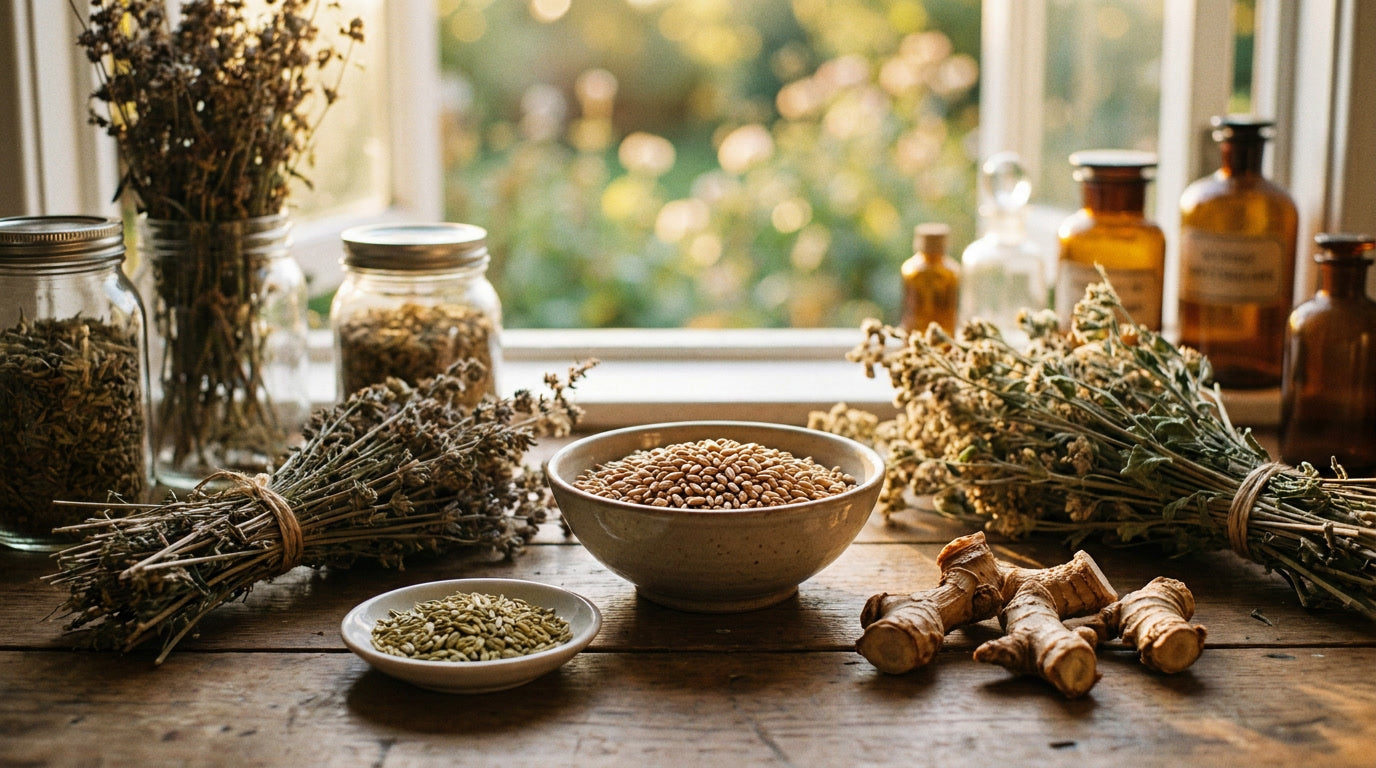
In Hildegard’s nutritional teachings, spices like anacyclus (Bertram), galangal (Alpinia officinarum), and fennel are considered especially valuable. They were traditionally used to give “colder” foods a warming quality and strengthen inner balance. Bertram was regarded by Hildegard as the “king of spices”—valued for centuries in monastic medicine and historically known as a staple of the medieval household pharmacy. Galangal—a root related to ginger—was widely used in monastic kitchens and traditionally added to warm dishes and herbal drinks to support well-being.
What Hildegard described as “warming” cuisine is culturally and historically closely linked to what we today know as gentle cooking: slow cooking, seasoning with aromatic herbs, and enjoying food fresh and warm. For people who regularly struggle with feelings of heaviness or bloating after eating, it can be a worthwhile experiment to integrate Hildegard’s nutritional wisdom into daily life for a few weeks—not as therapy, but as a conscious dietary routine with centuries-old tradition. Hildegard von Bingen products
Hildegard’s herbs: traditionally valued companions for inner balance
Alongside dietary recommendations, herbs and spices play a central role in Hildegard’s healing art. Many were used in monastic medicine not only as seasonings but as an integral part of daily well-being—in teas, tinctures, porridges, or as ingredients in dishes. Hildegard saw each herb as having a specific potential to help a person strengthen their inner balance when used properly.
Especially interesting in the context of water retention is Hildegard’s knowledge of plants traditionally associated with warmth, permeability, and balancing moisture. In Physica, her natural history work, she described numerous herbs that “drive moisture from the body” or “warm and enliven the blood”—phrases we today understand only as historical tradition and cultural expression, not as medical claims. Nevertheless, it is remarkable how many of these plants still hold a firm place in modern herbal medicine.
Hildegard of Bingen described over 200 medicinal plants in her work Physica—many of which remain integral to European herbal medicine and are traditionally used in monastic healing. This continuity over nearly nine centuries is an impressive testament to the transmitted botanical knowledge.
These Hildegard herbs are traditionally valued for inner balance:
- Anacyclus (Bertram, Anacyclus pyrethrum): Hildegard’s “king of spices”—used for centuries in monastic medicine and regarded as a warming all-purpose spice for dishes and herbal mixtures. Historically a staple of the medieval monastic kitchen.
- Galangal (Alpinia officinarum): A ginger-related root considered a particularly valuable spice and herbal ingredient in Hildegard’s teachings. Traditionally used for centuries in monastic medicine and historically closely associated with Hildegard’s name.
- Fennel (Foeniculum vulgare): Hildegard valued fennel as “cheerful” and “warming.” Fennel seeds, herb, and root were traditionally used in European herbal medicine and are culturally known as classic home remedies.
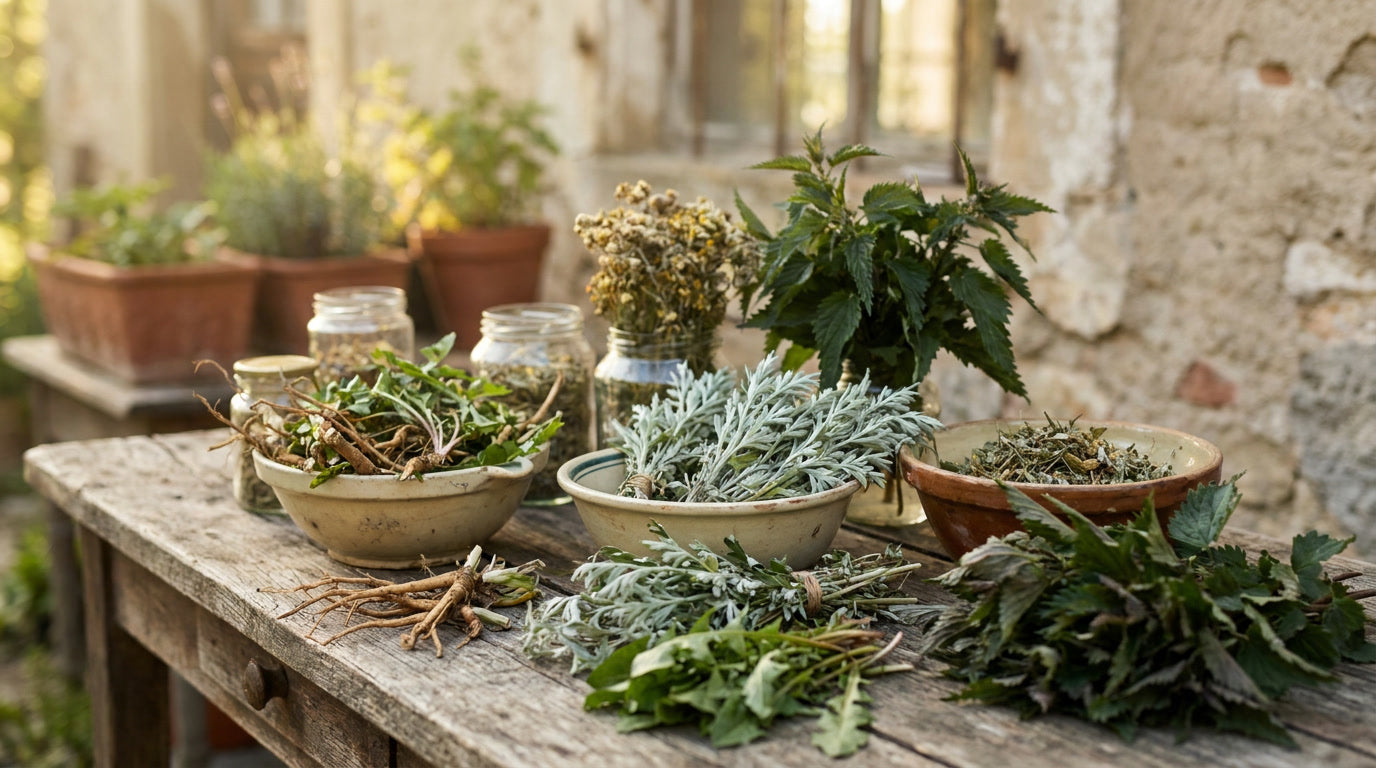
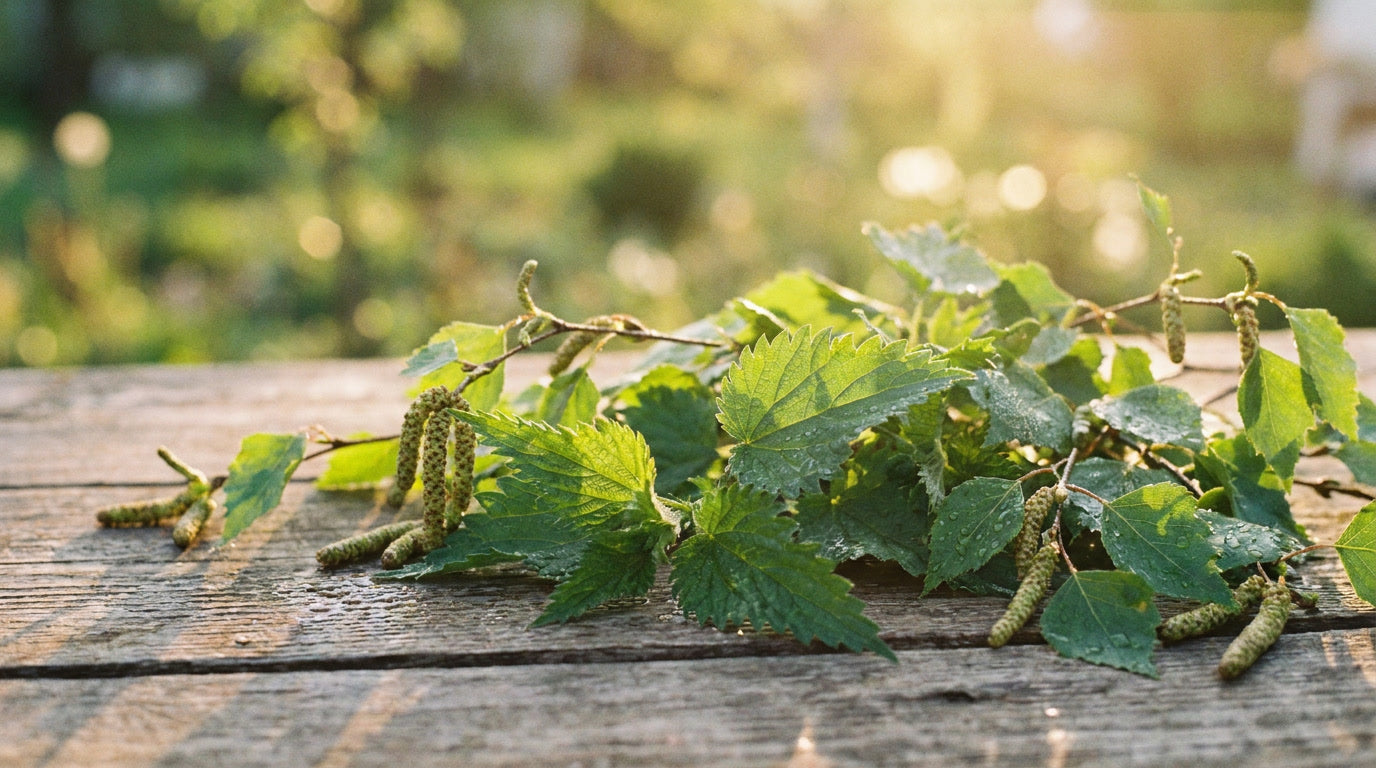
- Nettle (Urtica dioica): Historically known in monastic medicine as a traditional spring herb used in spring cures and as a vegetable. Hildegard mentioned nettle in her writings as a “cleansing” herb.
- Dandelion (Taraxacum officinale): A classic bitter herb of European folk medicine—historically known as a spring plant traditionally used in monastic medicine for centuries. Its characteristically bitter taste made it a staple of traditional herbal cuisine. BitterKraft Original
- Yarrow (Achillea millefolium): Widely used in medieval herbal medicine and known for centuries as a traditional meadow herb. Historically used in herbal teas and as a seasoning herb, it remains part of European herbal tradition today.
Those who want to incorporate these herbs into daily life can start simply: a daily herbal tea in the morning, consciously seasoning meals with Bertram or galangal, or including dandelion leaves in spring cooking. These practices are not therapy but a form of culinary ritual deeply rooted in cultural history that can benefit general well-being—fully in line with Hildegard’s understanding of holistic living. Hildegard von Bingen products
Everyday life according to Hildegard: nutrition and life rhythm as keys
Hildegard of Bingen was convinced that health depends not only on individual foods or herbs but on the entire lifestyle—the rhythm of eating, sleeping, movement, and inner attitude. She spoke of the orders of life (Regulae vitae) that must be observed to maintain inner balance. This holistic approach remains modern today: those who eat regularly, consciously, and at fixed times, give their body sufficient breaks between meals, and listen to their body’s signals do much for their overall well-being.
Specifically, Hildegard recommended placing the main meal in the middle of the day and eating only light, well-prepared foods in the evening—a recommendation still shared by many nutritionists today. Large, heavy meals in the evening, especially combined with cold drinks, were considered particularly unfavorable for the balance of the humors. People who notice they wake up especially bloated after a heavy dinner know this phenomenon from experience.
Hildegard also emphasized the importance of movement and fresh air. She saw physical sluggishness as a co-cause of phlegmatic imbalance—a thought that aligns with modern findings about the role of movement for overall well-being. Gentle walks after meals, gardening, or light physical activities were considered valuable to keep the body flowing. These simple daily habits are a central part of what is today called the “Hildegard lifestyle” and inspire people worldwide in courses and retreats. Fasting products
The Hildegard lifestyle is more than nutrition: fixed meal times, movement in nature, well-tempered foods, and conscious herbal rituals together form the foundation of her health concept—and are still easily integrated into modern daily life.
Wighard Strehlow & Gottfried Hertzka, standard work Große Hildegard-Apotheke (1998): “Hildegard’s nutritional recommendations can be understood as a coherent system based on the observation of food qualities, seasons, and individual constitutions—a form of personalized nutrition avant la lettre.” (Paraphrased from secondary literature)
Those who want to try Hildegard’s nutritional teachings in everyday life don’t have to change everything overnight. Hildegard herself did not advocate radical changes but gentle additions—a principle that still seems wise today: instead of rigid prohibitions, she recommended gradually building good habits. A new spice in the kitchen, a herbal tea in the morning, a meal more at midday instead of evening—these are small rituals that require no major upheaval but sharpen awareness of one’s own body and its signals. Gut and digestion products
Hildegard fasting and dealing with phlegmatic excess
A particularly important element in Hildegard’s health teachings is fasting—or more precisely: the rhythmic cleansing of the body through targeted dietary breaks and the use of certain herbs. Hildegard did not recommend extreme starvation but a form of conscious simplification of nutrition that should give the body space to regenerate. This idea has a long tradition in monastic medicine and is still practiced today in Hildegard fasting weeks and related cures.
Especially interesting in connection with water retention is Hildegard’s recommendation to avoid heavy, phlegmatic foods in certain seasons—especially spring—and instead include light herbal soups, spelt dishes, and bitter vegetables in the diet. Bitter flavors play a special role in Hildegard’s teachings: they were considered “cutting” and “drying” in the best sense—as a counterbalance to the excessive moisture of phlegm. BitterKraft Original
Spelt was for Hildegard the grain par excellence—she called it the best of all grains and recommended it for almost all people and constitutions. In contrast, she saw wheat as less optimal and warned against certain other grains. This emphasis on spelt remains in the Hildegard nutritional world today: spelt bread, spelt semolina, and spelt soups are classic components of every Hildegard fasting cure. For those who want to explore the connection between grain consumption and water retention, the Hildegard tradition offers an exciting, historically grounded starting point. Fasting products
Hildegard’s spelt recommendation—what’s behind it?
Hildegard of Bingen praised spelt (Triticum spelta) as the most nutritious and digestible grain: “Spelt is the best grain, warm and fat and strong—it produces proper flesh and good blood.” (Physica, historically recorded) Compared to modern wheat, spelt contains a different gluten protein profile and has been traditionally used in monastic medicine for centuries—as a basis for bread, soups, and porridge. In Hildegard courses, spelt is still used as a central food and can be understood as a complement to a balanced, traditional diet.
Hildegard fasting is not a medical treatment but a culturally and historically transmitted form of nutrition intended to promote general well-being. Those interested in a fasting week according to Hildegard’s principles can find guidance and support in numerous monasteries, health centers, and online courses. Individual consideration is always important: what suits one person may not be ideal for another—this is a thought that runs through Hildegard’s entire work. Fasting products
Practical Hildegard nutrition in everyday life: how to get started
Getting started with Hildegard’s nutritional teachings doesn’t have to be complicated or expensive. Hildegard herself lived in a world where simplicity and closeness to nature were natural—and it is precisely this simplicity that makes her recommendations so timeless. A first step can be to observe your own diet more mindfully: when do water retention or feelings of heaviness occur most? After which meals do you feel light and energetic, and after which do you feel puffy and sluggish? This self-observation is in the spirit of Hildegard—who always emphasized that each person should explore their own constitution.
Practically, Hildegard nutrition can be complemented by the following rituals: drinking a daily herbal tea made from fennel, Bertram, or dandelion in the morning; seasoning the midday meal with galangal or fennel seeds; preparing spelt bread or soup as staple foods; and consciously reducing cold foods and drinks—especially in autumn and winter when the phlegmatic element dominates according to Hildegard. These small changes can be easily integrated into any daily routine and do not require a complete lifestyle overhaul but a conscious addition. Hildegard von Bingen products
For those who want to delve deeper, reading the historical sources is recommended—whether in modern translations of Hildegard’s Physica or Causae et Curae, or through extensive secondary literature that prepares the saint’s work for today. Particularly valuable is also exchanging experiences in community: Hildegard nutrition groups, monastery courses, and naturopathy retreats offer space to discover the old wisdom together and try it out in one’s own life. After all, Hildegard’s nutritional teachings are not a set of rules to follow slavishly—they are an invitation to rediscover your own body and approach it with ancient knowledge and fresh curiosity. all Bitterkraft products
Hildegard’s nutritional teachings are one of Europe’s oldest systematic nutrition traditions—and offer modern people a rich treasure of culturally transmitted knowledge that invites us to understand eating again as a holistic ritual, not just calorie intake.


Leave a comment
This site is protected by hCaptcha and the hCaptcha Privacy Policy and Terms of Service apply.