





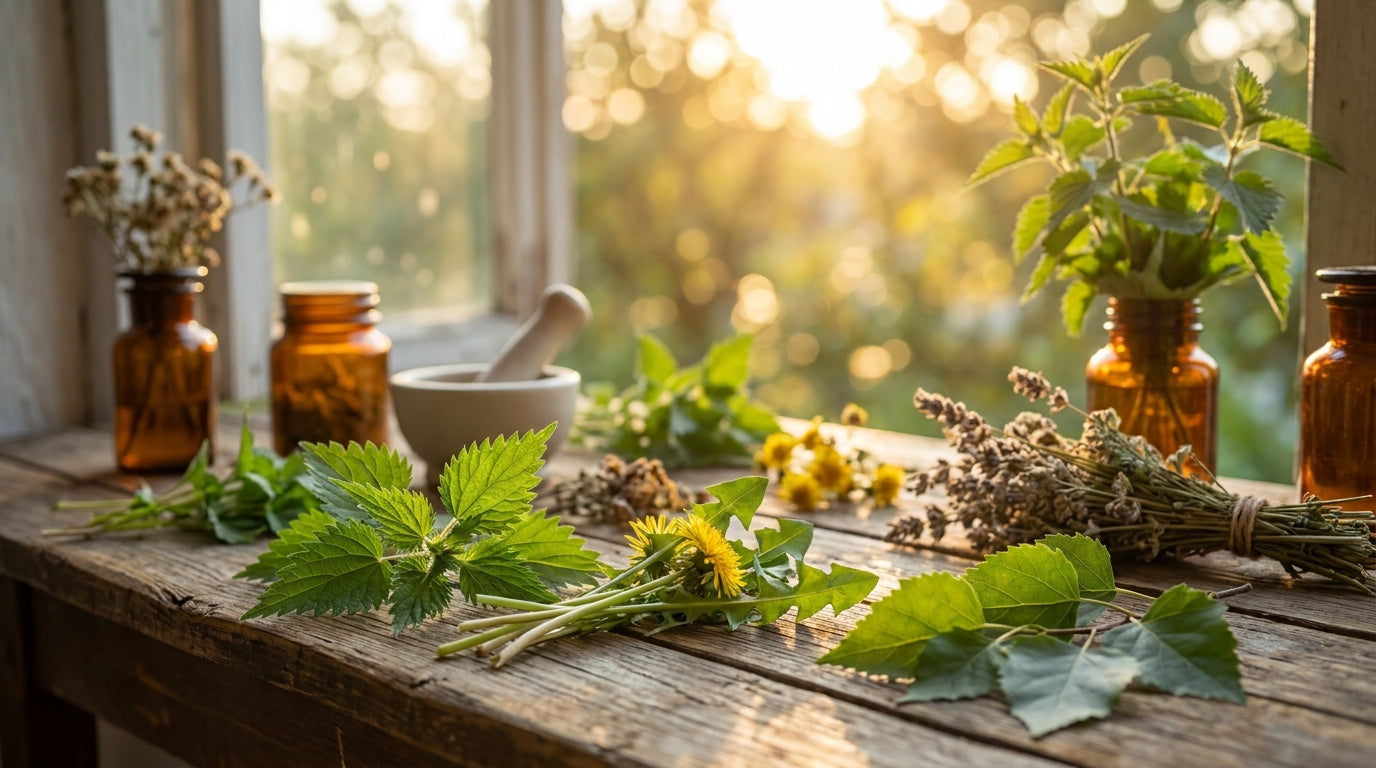
Who doesn’t know this: Your pants feel tight in the evening, your ankles are swollen, and the weight on the scale fluctuates by several kilograms from day to day. Water retention is one of the most common accompanying symptoms of overweight—and is often dismissed as merely a cosmetic issue. However, it involves a complex interplay of metabolism, inflammatory processes, and the lymphatic system, which has been supported by traditional herbal knowledge in naturopathy for centuries. This article explores why water retention and overweight are so closely linked, the role of silent inflammation, and which herbs have been valued as helpful companions in the long tradition of monastic medicine. Hildegard von Bingen products
When the Body Retains Water: The Connection Between Weight and Tissue Water
Water retention, medically known as edema, occurs when fluid leaves the blood vessel system and accumulates in the tissue. In a healthy body, this process is finely regulated—a sophisticated system of blood pressure, protein content in the blood, lymphatic drainage, and hormone balance ensures that excess tissue fluid is reliably removed. In people with overweight, however, this balance is often disturbed for several reasons simultaneously.
Fat tissue is not a passive storage depot—it is metabolically active and releases a variety of signaling substances. These include hormones like leptin and adiponectin, as well as pro-inflammatory signaling molecules. The more fat tissue present, the more of these substances are released. This directly affects water balance: certain signaling molecules alter the permeability of small blood vessels (capillaries), allowing more fluid to pass into the tissue. At the same time, the increased body weight strains the venous system and lymphatic drainage in the legs—a mechanical factor that promotes edema in the lower legs and feet.
Water retention in overweight is often not an isolated symptom but a sign of a disturbed internal balance—in which inflammatory processes, hormone balance, and the lymphatic system all play a role together.
Another often underestimated factor is kidney function. The kidneys regulate sodium balance and thus directly control water retention in the body. Insulin—which is often elevated in overweight because body cells become less sensitive to it—signals the kidneys to retain more sodium. Sodium binds water. This means that a higher insulin level directly contributes to the body storing more water. This mechanism also explains why carbohydrate-rich meals can cause noticeable short-term weight fluctuations. Gut and digestion products
Silent Inflammation: The Invisible Driver Behind Edema and Overweight
In modern health research, a term has become established that naturopathy has long been concerned with: “low-grade inflammation,” also called silent or chronic low-level inflammation. This is not the classic acute inflammation with redness, swelling, and pain—but a permanently activated, barely noticeable inflammatory state smoldering in the background. Immune system products
Fat tissue—especially visceral fat around the internal organs—is considered a central site where these silent inflammations arise and are maintained. Certain immune cells, called macrophages, migrate into the fat tissue and produce inflammatory messengers like interleukin-6 or TNF-alpha. These substances increase vascular permeability, disrupt lymph circulation, and sustainably affect the tissue’s water balance. A cycle emerges: more fat tissue means more silent inflammation—and more silent inflammation promotes water accumulation in the tissue.
Current research in nutritional medicine describes visceral fat tissue as an independent “endocrine organ” that influences the body’s overall inflammatory status through its signaling substances. Historically, monastic physicians like Hildegard von Bingen did not describe this connection in molecular terms—but the traditional recommendation to use detoxifying and draining herbs for “heaviness in the body” and “bloating” reflects a deep observational skill that today can be fascinatingly complemented by modern knowledge.
What makes silent inflammation particularly insidious is that it is hardly noticeable in everyday life. No fever spikes, no obvious pain—but a creeping feeling of exhaustion, a general heaviness, and those water retentions you feel in your eyelids in the morning and your legs in the evening. Traditional naturopathy—and especially the inherited knowledge of Hildegard medicine—has used plants for centuries that support internal balance and help the body with its natural relief. BitterKraft Original
Silent inflammations and water retention reinforce each other—a vicious cycle that has been accompanied by relieving herbs in traditional herbal medicine for centuries.
Traditional Herbal Knowledge: What Hildegard von Bingen Taught About Water Balance and Relief
Hildegard von Bingen (1098–1179) is considered one of the most influential figures in Western monastic medicine. In her preserved works—especially “Physica” and “Causae et Curae”—she described in detail the properties of plants, stones, and foods and related them to human health. Her worldview was holistic: body, mind, and soul form a unity, and disturbances in one area affect all others. Hildegard von Bingen products
Particularly interesting in the context of water retention is Hildegard’s concept of “Viriditas”—the healing life force of nature—and her recommendation to help the body gain lightness through certain herbs and spices in cases of heaviness and internal stagnation. She valued, among others, fennel, nettle, and various bitter plants as traditional companions in such conditions. Her focus was not on treating individual symptoms but on restoring internal balance—a concept that is experiencing a remarkable renaissance in modern holistic health care.
Hildegard’s view on “moist heaviness”: In “Causae et Curae,” Hildegard von Bingen described conditions that we would today interpret as water retention as an expression of a disturbed flow of bodily fluids. She recommended warm, dry, and invigorating herbs to counteract this condition—a wisdom that aptly portrays the plant as a companion to the body, not as a repair tool.
In monastic medicine, herbs were traditionally used as part of a comprehensive lifestyle—together with fasting periods, outdoor exercise, regulated sleep, and a moderate, natural diet. This integration is crucial: individual plants unfold their culturally and historically described character best when embedded in a conscious lifestyle. This is not contradictory to modern science—it is a complement that considers the whole person. Fasting products
Herbs from Naturopathy Traditionally Valued for Water Balance and Inflammatory Tendency
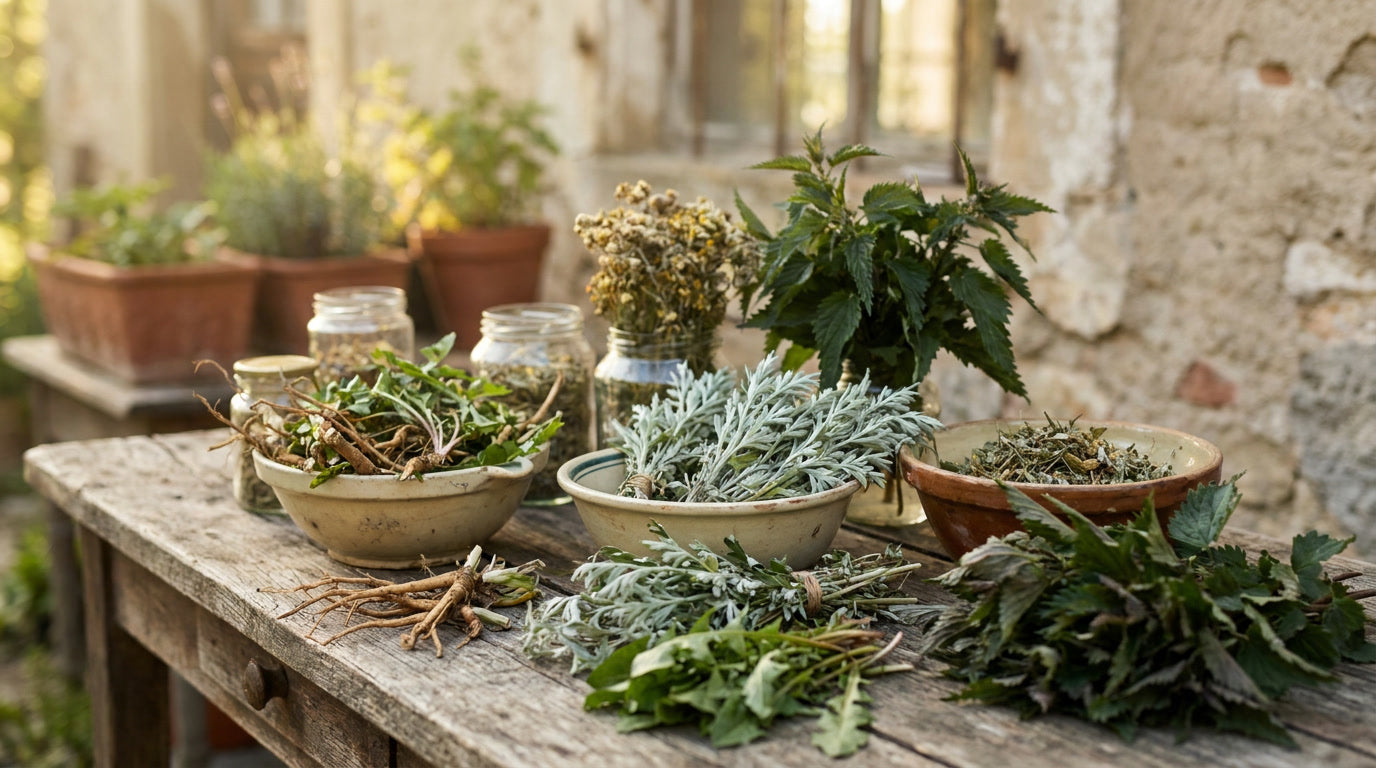
Herbal medicine knows a whole range of herbs that have traditionally played a role in the inherited healing arts for heaviness, stagnation, and water tendency in the body. They have been cultivated for centuries in monastery pharmacies, herb gardens, and folk medicine—and are increasingly gaining attention again in modern naturopathy. The important perspective here is that these plants are used as part of a conscious lifestyle to support overall well-being—not as a substitute for medical evaluation. all Bitterkraft products
Traditionally valued herbs for water tendency and internal heaviness:
- Nettle (Urtica dioica): Nettle has been valued for centuries in European herbal tradition as a classic spring plant. Traditionally used in folk medicine for conditions where the body tends to accumulate tissue water.
- Dandelion (Taraxacum officinale): Hildegard von Bingen knew dandelion as a plant that should make the body “lighter.” It has been traditionally used in monastic and folk medicine for generations to support general well-being in sluggish body conditions.
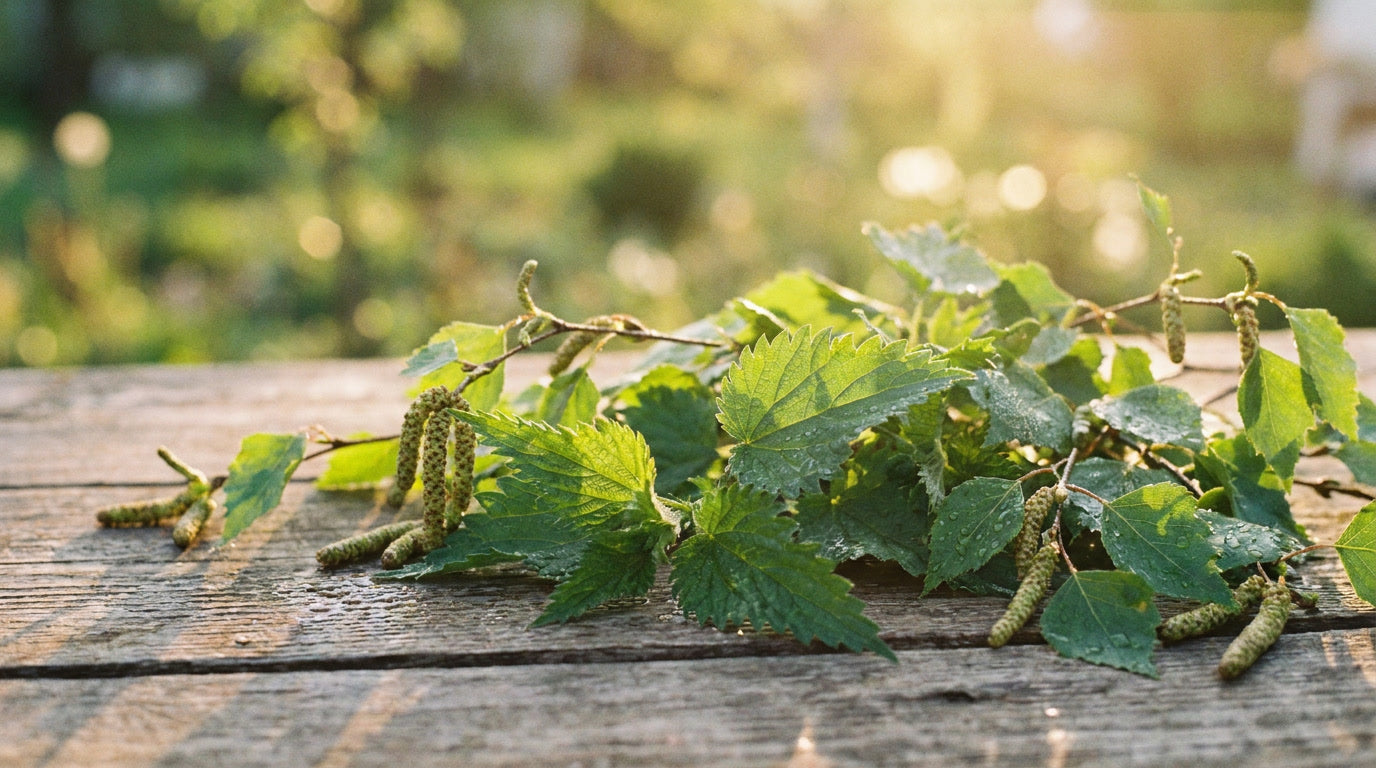
- Birch leaves (Betula pendula): Birch leaves are among the oldest Central European medicinal plants. In traditional herbal medicine, they were used in teas and infusions when the body tended toward heaviness and water accumulation.
- Turmeric (Curcuma longa): The golden-yellow rhizome is known in Ayurvedic and Western monastic medicine as a valuable spice plant. Historically, turmeric has been valued as a plant that nurtures the inner fire and can accompany silent imbalances in the body.
- Ginger (Zingiber officinale): Ginger is one of the warming spices especially recommended by Hildegard von Bingen. In traditional medicine, it has been used for centuries as an invigorating plant for feelings of heaviness and internal coldness.
- Goldenrod (Solidago virgaurea): Goldenrod is known in European folk medicine as a traditional herb used for a tendency to water accumulation in the body. It appears in old herbal books from the 16th and 17th centuries as a valued companion.
- Horsetail (Equisetum arvense): Horsetail—one of the oldest plants on earth—has been used in Central European herbal tradition for centuries in conditions where tissue tends to retain water. In tea form, it remains a classic component of traditional herbal mixtures today.
What these plants share is more than their botanical diversity: they were all developed and passed down in a time when the body was understood as an open system closely connected with the seasons, nutrition, and emotional state. In monastic medicine, herbal knowledge was never understood separately from prayer, rest, rhythm, and nutrition—a holistic concept that remains deeply relevant as a complement to a conscious modern lifestyle. Liver products from Bitterkraft
Many traditionally used herbs like nettle, birch leaves, and goldenrod have been used for centuries for water tendency in the body—as herbal companions to a conscious lifestyle, not as cure-alls.
Bitterkraft tip from naturopathy: Bitter and herbal preparations based on traditional recipes are often used in holistic health care as a complement to a balanced daily routine. Especially in spring and autumn—the classic relief times of monastic medicine—the integration of proven herbal blends into daily life is a form of loving self-care with deep roots in European herbal culture tradition.
Lifestyle, Nutrition, and Herbs: A Holistic Approach from Monastic Medicine
As valuable as the inherited herbal knowledge is—it unfolds its full character only in combination with a conscious lifestyle. Monastic medicine never promoted individual herbs as miracle cures. Hildegard von Bingen always emphasized the importance of moderation and balance: in nutrition, sleep, exercise, and inner attitude. Those who want to address water retention holistically would do well to take this traditional wisdom as a guiding principle. Sleep and relaxation products
From a nutritional perspective, reducing highly processed foods, refined sugar, and table salt plays an important role—not because these ingredients are forbidden per se, but because an excess burdens water balance. At the same time, naturopathic traditions recommend a diet rich in plant-based foods: fresh vegetables, herbs, legumes, and minimally processed grains. These foods provide secondary plant compounds described in naturopathy as supportive for internal balance. Additionally, sufficient movement—even gentle forms like walking, yoga, or light water gymnastics—is one of the most effective ways to stimulate lymph circulation. Unlike the blood circulation, lymph flow depends directly on muscle movement: every step, every stretch literally pumps the lymphatic system. Fasting products
In Hildegard medicine, the daily rhythm was also part of health care: going to bed early, rising with the morning light, regular meals, and scheduled rest periods. Modern knowledge confirms that lack of sleep raises cortisol levels—and cortisol is another factor influencing water retention in the body. Restful, sufficiently long sleep is therefore important not only for mind and soul but also for balanced fluid regulation. Sleep and relaxation products
Hildegard von Bingen wrote in “Causae et Curae” in essence: “Man is like a tree: he needs the right soil, the right light, and the right rain—all in their time.” This image of balance and proper measure runs through her entire work and remains a timeless compass for what we today understand as holistic health care.
When herbs are embedded in this holistic framework—as a daily ritual, a conscious pause in everyday life, a tasteful and fragrant sign of self-care—they unfold their culturally and historically described character most convincingly. A morning herbal tea of nettle and birch leaves, a ginger-turmeric infusion after lunch, an evening bitter ritual: these small routines connect ancient knowledge with modern awareness in a way that can be felt daily. Not as treatment—but as care. As a complement. As a loving “yes” to one’s own body. BitterKraft Original


Leave a comment
This site is protected by hCaptcha and the hCaptcha Privacy Policy and Terms of Service apply.