





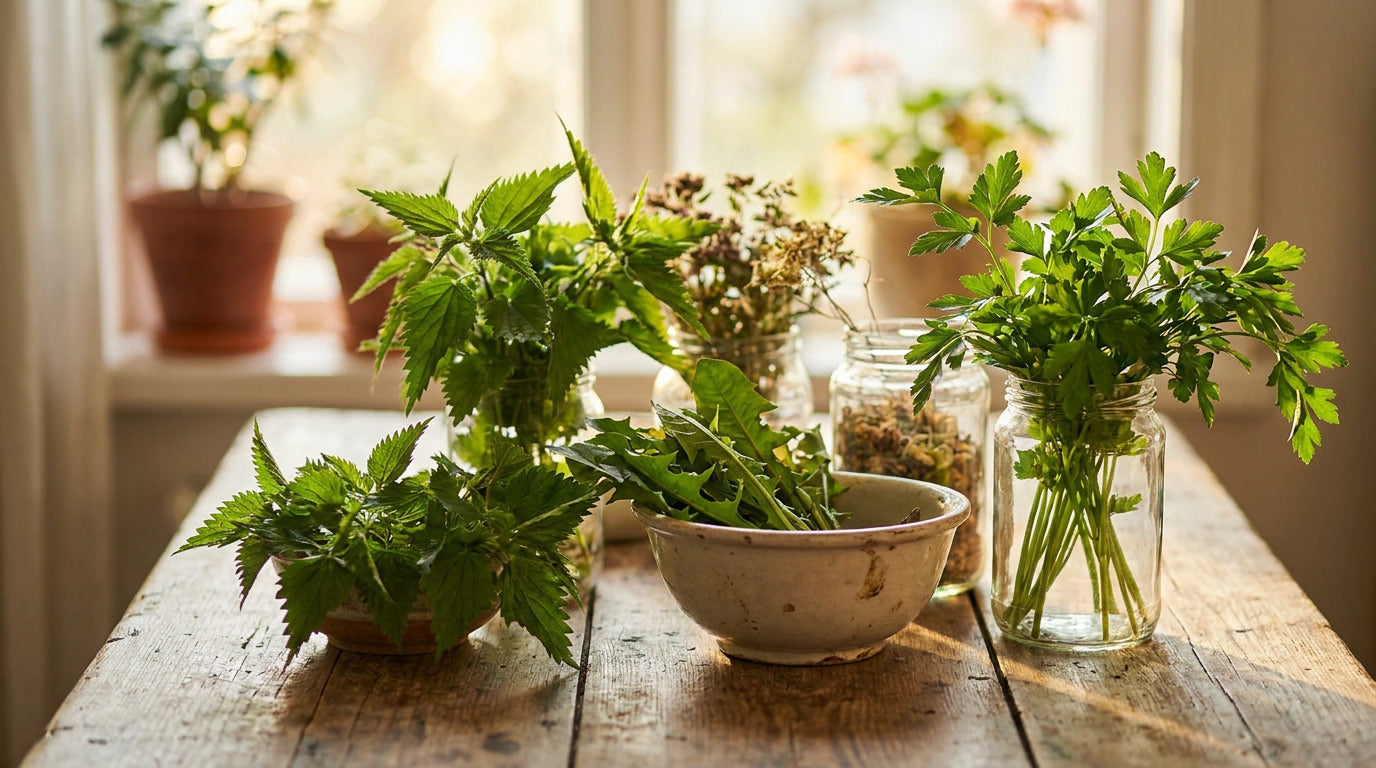
Do you know the feeling after eating when your stomach feels heavy and full, as if nothing is moving along properly? This unpleasant sensation of congestion is something many people are familiar with—and it has become quite common in modern diets with processed foods, irregular meals, and little exercise. Interestingly, this phenomenon is by no means new: as early as the 12th century, the Benedictine abbess Hildegard of Bingen studied such complaints intensively and developed a sophisticated system of dietary recommendations, herbal recipes, and life wisdom that still fascinates today. Those who follow her teachings discover not only historically grown botanical knowledge but also a very special perspective on human well-being as a whole.
What Hildegard of Bingen Thought About the Feeling of Congestion
Hildegard of Bingen, mystic, polymath, and one of the most important healers of the Middle Ages, saw the human body as a delicate balance system. At the center of her concept was Viriditas—the green life force—which should be maintained and strengthened through the proper handling of food, sleep, and herbs. When this balance was disturbed, Hildegard believed it often manifested in physical sensations such as heaviness, pressure, and a general feeling of being “stuck.” She described such states extensively in her main works Physica and Causae et Curae, linking them to what she called “bad humors”—a term from medieval humoral pathology that today is mainly of cultural-historical interest.
Hildegard’s understanding of cold and heat in food is particularly insightful. She classified foods according to their temperaments: some were considered “hot and dry,” others “cold and moist.” She often saw a feeling of congestion in the stomach as a sign that too many “cold” foods had been eaten—those that in her system were considered hard to digest and sluggish. These included, among others, large amounts of raw vegetables, certain legumes, and heavy meat dishes. Her recommendation was always to complement the diet with warming, invigorating foods and herbs to rekindle the inner fire.
What makes Hildegard’s approach so fascinating for today’s natural health enthusiasts is the holistic nature of her view. She did not separate body, soul, and spirit but saw them as inseparably connected. Stress, sorrow, or emotional unrest could, in her view, lead to feelings of congestion just as much as poor nutrition. This perspective is increasingly embraced by modern science today, which investigates the close connection between the so-called gut brain and emotional experience. Hildegard of Bingen Products
“The heart of man is the seat of his joy and his sorrow. But the stomach carries what the heart cannot digest.” – Paraphrased from Hildegard’s Causae et Curae, 12th century, cited as a historical reference.
The Most Important Herbs of Hildegard Medicine for Stomach Well-Being
Hildegard of Bingen was a passionate expert in medicinal plants. In her Physica, she described hundreds of plants, stones, and animals and their possible uses. For stomach well-being and the sensation of lightness after eating, she gathered a particularly rich treasure of herbs that were passed down in monastic medicine for many centuries. Many of these plants are still well known in natural medicine today and are valued by herbalists and naturopaths.
Fenchel (fennel) was especially dear to Hildegard—a plant she described in almost rapturous terms. She recommended it as the “joy of the body” and advised chewing fennel seeds after meals or taking them as a decoction. Bertram, a medicinal plant now almost forgotten, also holds a special place in Hildegard’s work. She called it a “spice of warmth” and used it in numerous preserved recipes. Psyllium seeds, caraway, ginger, and galangal—a ginger-like root from Southeast Asia—also frequently appear in her recommendations for heavy or sluggish sensations after eating. BitterKraft Original
Hildegard medicine already relied on a combination of warming spices and bitter herbs in the 12th century—a combination that has a place in nearly all traditional healing systems worldwide, from Ayurvedic medicine to Chinese herbal medicine.
Traditionally Valued Hildegard Herbs for Well-Being After Eating:
- Bertram (Anacyclus pyrethrum): The “king’s spice” of Hildegard medicine—historically known as a warming root spice used in monastic medicine for centuries after meals.
- Fennel (Foeniculum vulgare): Hildegard described fennel as a plant of lightness; fennel seeds and teas are among the oldest preserved home remedies in Western herbal medicine.
- Galangal (Alpinia officinarum): A ginger-like root that Hildegard especially loved and called one of the most important spices in her healing kitchen; traditionally used in monastic medicine for centuries.
- Caraway (Carum carvi): Known in the Hildegard tradition as a warming kitchen spice, historically used in bread and herbal recipes.
- Ginger (Zingiber officinale): Although Hildegard mainly used native plants, ginger was known via trade routes and valued in medieval monastery pharmacies.
- Yarrow (Achillea millefolium): A herb native to Hildegard’s herb garden, traditionally used for centuries as an herbal tea after meals in folk medicine.
What’s Behind Galangal?
Galangal belongs to the ginger family and originates from Southeast Asia. The dried root contains essential oils and pungent compounds that give it its characteristic slightly burning aroma. Hildegard of Bingen used galangal in her kitchen so frequently that it is sometimes called the “Hildegard spice par excellence” today. Historical sources recommend boiling galangal in wine or water and enjoying it as a warm drink. Galangal wine remains a traditional recipe from Hildegard’s monastic medicine and is cherished by followers of this dietary teaching as a ritual after hearty meals.
Hildegard’s Dietary Principles: Lightness Through Conscious Eating
Beyond individual herbs and spices, Hildegard of Bingen developed a comprehensive dietary system that went far beyond single remedies. Her approach was to see eating as a daily ritual—a conscious act of self-care. She recommended taking meals calmly, chewing well, and not eating large amounts at once. In doing so, she anticipated principles now known in modern nutrition counseling as “mindful eating.”
Hildegard preferred warm, cooked foods over raw foods, especially for people with sensitive stomachs. Grain porridge made from spelt—the “grain of life,” as she called it—warm herbal soups, steamed vegetables, and gently prepared meat formed the core of her recommendations. Raw vegetables, legumes, and foods considered “cold and heavy” in her system were recommended only in moderation or not at all. This observation is interesting because many people actually report that they tolerate cooked forms of raw foods much better. Fasting Products
Another central element in Hildegard’s dietary teaching was fasting—not as punishment but as a conscious break for the body. She recommended regular light fasting days on which the body could rest and regenerate. This aligns with the now popular idea of meal breaks, which is intensively discussed in modern nutritional research. For Hildegard, fasting was always connected with prayer and inner reflection—a holistic ritual addressing both body and soul equally.
Hildegard recommended spelt as the healthiest grain of all—a judgment preserved for centuries in monastic medicine and gaining new relevance today through growing interest in ancient grains.
“Spelt is the best grain, warm and fatty and strong. It makes the flesh of man good, and it creates cheerful blood in those who eat it, and it prepares the heart and soul of man for joy.” – Hildegard of Bingen, Physica, 12th century.
BitterKraft as a Key: The Role of Bitters in the Hildegard Tradition
Anyone exploring Hildegard’s dietary teachings sooner or later encounters a concept largely forgotten in modern nutrition: the importance of the bitter taste. Hildegard of Bingen highly valued bitter plants and herbs and used them deliberately in her healing kitchen. Whether wormwood, dandelion, gentian, or bitter herbal blends—the bitter power of nature played a central role in her system for overall well-being. BitterKraft Original
In traditional European herbal medicine—to which Hildegard’s work contributed significantly—bitters have always been considered especially important for well-being after eating. Bitter plants like gentian, centaury, and artichoke have been known for centuries as ingredients in herbal bitters and digestifs traditionally served after meals in many European cultures. This tradition of digestifs—whether as amaro in Italy, Underberg in Germany, or herbal liqueurs in Austrian monasteries—has deep roots in medieval monastic medicine, to which Hildegard of Bingen made a decisive contribution. Gut and Digestion Products
The special appreciation for the bitter taste can also be explained evolutionarily: humans have specialized bitter taste receptors that extend throughout the digestive tract. In traditional medicine systems worldwide—from Indian Ayurveda to Chinese medicine to European monastic medicine—bitters have always played an important role in well-being after meals. Hildegard was a pioneer of this insight in her time and consistently integrated bitters into her recipes and dietary recommendations.
What’s Behind Bitter Herbal Blends?
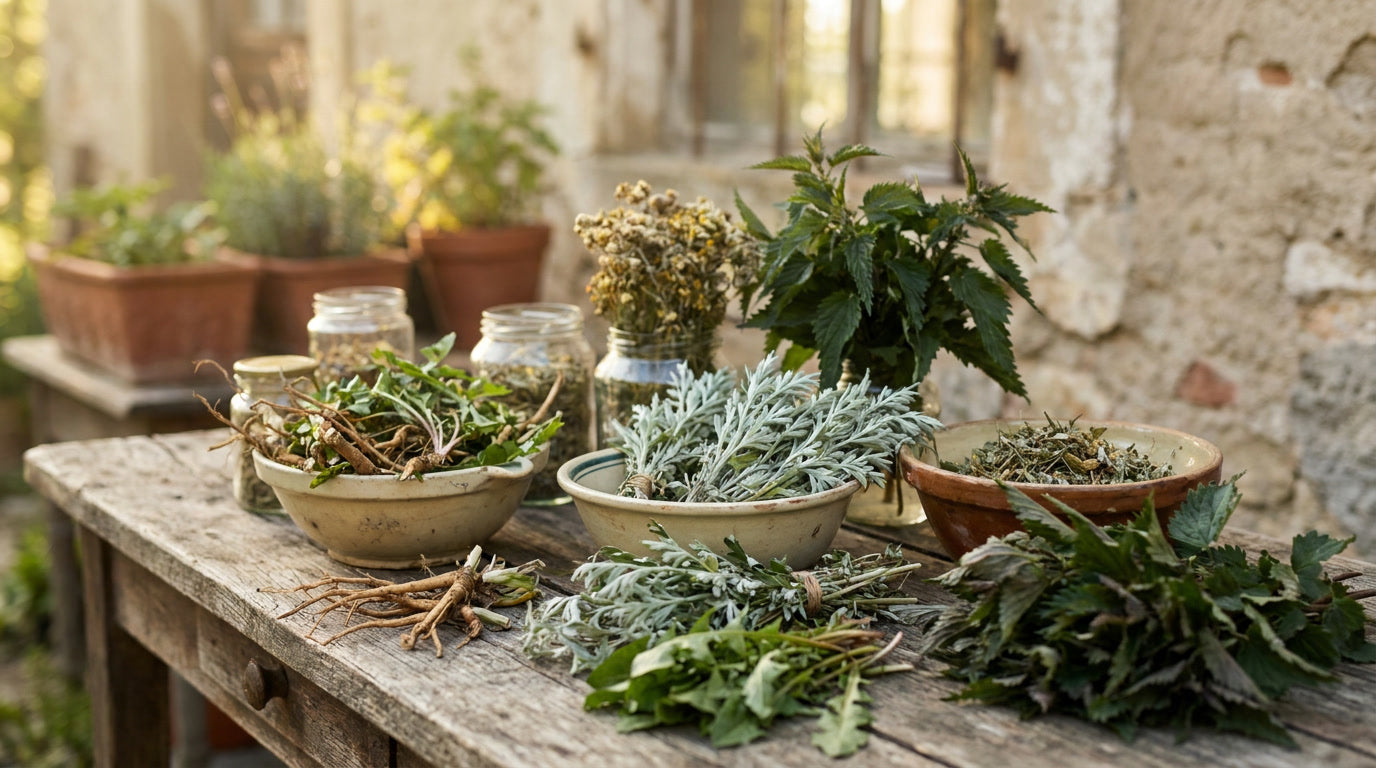
Traditional bitter preparations used in monastic medicine and naturopathy typically contain a combination of gentian (Gentiana lutea), centaury (Centaurium erythraea), wormwood (Artemisia absinthium), and other bitter plants. These plants have been known in European herbal medicine for centuries and are traditionally used as drops or teas after meals. Gentian, for example, appears in historical pharmacy recipes from the 15th and 16th centuries, and centaury was already known as a medicinal plant in antiquity. Wormwood was especially highly valued in Hildegard medicine and appears in numerous preserved recipes.
Traditionally Valued Bitter Plants from Monastic Medicine:
- Gentian (Gentiana lutea): One of Europe’s strongest bitter plants—known for centuries in monastery pharmacies and as the basis of traditional herbal bitters.
- Centaury (Centaurium erythraea): A bitter plant valued since antiquity, regarded as a proven traditional herb in medieval herbal medicine.
- Wormwood (Artemisia absinthium): Hildegard of Bingen described wormwood as one of the most important medicinal plants ever; traditionally used in monastic medicine since the Middle Ages.
- Dandelion (Taraxacum officinale): A wild herb native to Hildegard’s herb garden with a distinctly bitter taste, traditionally used as a spring tea and herbal salad.
- Artichoke (Cynara scolymus): A historically known cultivated plant traditionally used in European natural medicine since the 16th century as a bitter herb after meals.
Everyday Rituals According to Hildegard: How to Live the Teachings Today
The beauty of Hildegard’s dietary teachings is that they can be integrated into modern everyday life without much effort. It’s not about turning everything upside down or following strict diet rules—Hildegard herself always emphasized the joy of eating and the importance of pleasure and community at the table. Rather, it is the principle of conscious “adding”: small rituals, new spices, a tea after meals, an occasional fasting day—these building blocks gradually come together into a coherent whole. Hildegard of Bingen Products
A simple introduction to the Hildegard world is galangal wine—a historic recipe that is easy to prepare at home: simply stir a small amount of galangal powder into a glass of mild red wine and enjoy it in small sips after a heavy meal. Those who do not want to drink alcohol can use galangal as a spice in soups and stews or prepare a warming herbal tea with fennel and caraway. The combination with bertram—for example, as a spice in spelt dishes—also corresponds to the traditional spirit of Hildegard’s kitchen. all BitterKraft products
The principle “adding instead of omitting” is one of the most important messages of Hildegard’s dietary teachings: it’s not about deprivation but about enriching the diet with traditional herbs, warming spices, and conscious rituals.
Besides concrete recipes, Hildegard also recommended shaping the external conditions of eating: choosing a quiet, pleasant place, enjoying food with all the senses, not eating under stress, and, if possible, sharing meals in community. These recommendations sound so timeless that one forgets they come from the 12th century. Today, we would summarize these aspects under the term “food culture”—and Hildegard would probably have been a passionate advocate of such a culture. Anyone looking for a holistic approach to more well-being in everyday life will find in Hildegard’s dietary teachings a rich, inspiring treasure—rooted in a centuries-old tradition that seems to gain more relevance with each passing year. Liver Products from BitterKraft


Leave a comment
This site is protected by hCaptcha and the hCaptcha Privacy Policy and Terms of Service apply.