





When the legs feel heavy in the evening, the ankles swell, or the face appears puffy in the morning, it is often due to an imbalance in the body's water regulation. Tissue edema – that is, water accumulation in the connective tissue – is a widespread phenomenon that many people know but rarely manage to control. Naturopathy and especially the centuries-old herbal knowledge offer a gentle, holistic way to support the body in its natural balance. In this article, we take a look at the phenomenon of edema, the traditional knowledge of monastic medicine – particularly Hildegard of Bingen – and those medicinal plants that have been valued for generations as gentle herbal companions.
What lies behind tissue edema? A deeper look
Edema occurs when fluid leaks from the blood vessels into the surrounding tissue and is not adequately drained there. The lymphatic system, the small kidneys, and the entire circulatory system work closely together – if this interaction falls out of balance, water accumulates in places where it does not belong. Typical signs are swollen legs and feet, especially after long periods of sitting or standing, a puffy face in the morning, or the unpleasant feeling of heaviness and tension in the tissue.
The causes are varied: dietary habits, a sedentary lifestyle, hormonal fluctuations, heat in summer, or natural aging can contribute to the body not distributing its fluids optimally. Women, in particular, often report such complaints – for example, during their cycle or menopause. High salt intake, little exercise, and insufficient fluid intake are traditionally considered contributing factors. Products for women's health
Important to know: Edema is in many cases a harmless but annoying companion of everyday life – however, it can also be a sign of more serious health issues. Therefore, medical clarification is always recommended before relying on herbal support.
In naturopathy, the body is always viewed as a whole. The occurrence of water accumulation is not seen as an isolated symptom but as a sign that certain regulatory mechanisms have stalled. Instead of addressing only the visible sign, the holistic focus shifts to nutrition, exercise, emotional balance, and herbal support. This approach fundamentally distinguishes naturopathy from purely symptomatic treatments.
Hildegard of Bingen’s herbal knowledge: Tradition meets modern spirit
Hildegard of Bingen (1098–1179) is considered one of the most important figures in European herbal medicine. The Benedictine nun, abbess, and polymath left behind a comprehensive system of medicinal plant knowledge in her writings – especially in “Physica” and “Causae et Curae” – which remains alive in monastic medicine today. She understood the body as part of a great order and saw certain plants, spices, and foods as tools to maintain this order. Hildegard of Bingen products
“The plants were given to humans so that they may become and remain healthy through them.” – Hildegard of Bingen, Physica (ca. 1150–1160). This conviction runs like a red thread through the entire work of the monastic healer and still forms the basis for many naturopathic approaches in the German-speaking tradition.
Hildegard had a keen sense of the connections between water, warmth, and life force – she spoke of “Viriditas,” the green life force of nature, which manifests in every medicinal herb. For complaints we today associate with water balance and tissue fluid, she recommended, among others, nettle, fennel, and certain herbal preparations as traditional companions. The idea behind this: not to force, but to gently support the body in finding its natural rhythm again.
The knowledge of monastic medicine is not a museum relic – it is experiencing a remarkable renaissance in modern naturopathy. More and more people are seeking alternatives to the quick reach for pills and discovering in the millennia-old phytotherapy a treasure that embodies patience, closeness to nature, and respect for the body. Hildegard medicine exemplifies a path that connects body, mind, and the wisdom of nature. BitterKraft Original
Hildegard of Bingen is regarded as a pioneer of European herbal medicine – her 12th-century texts remain an important reference for naturopathic support of the body with medicinal plants.
Herbal companions: These herbs are traditionally valued for water retention
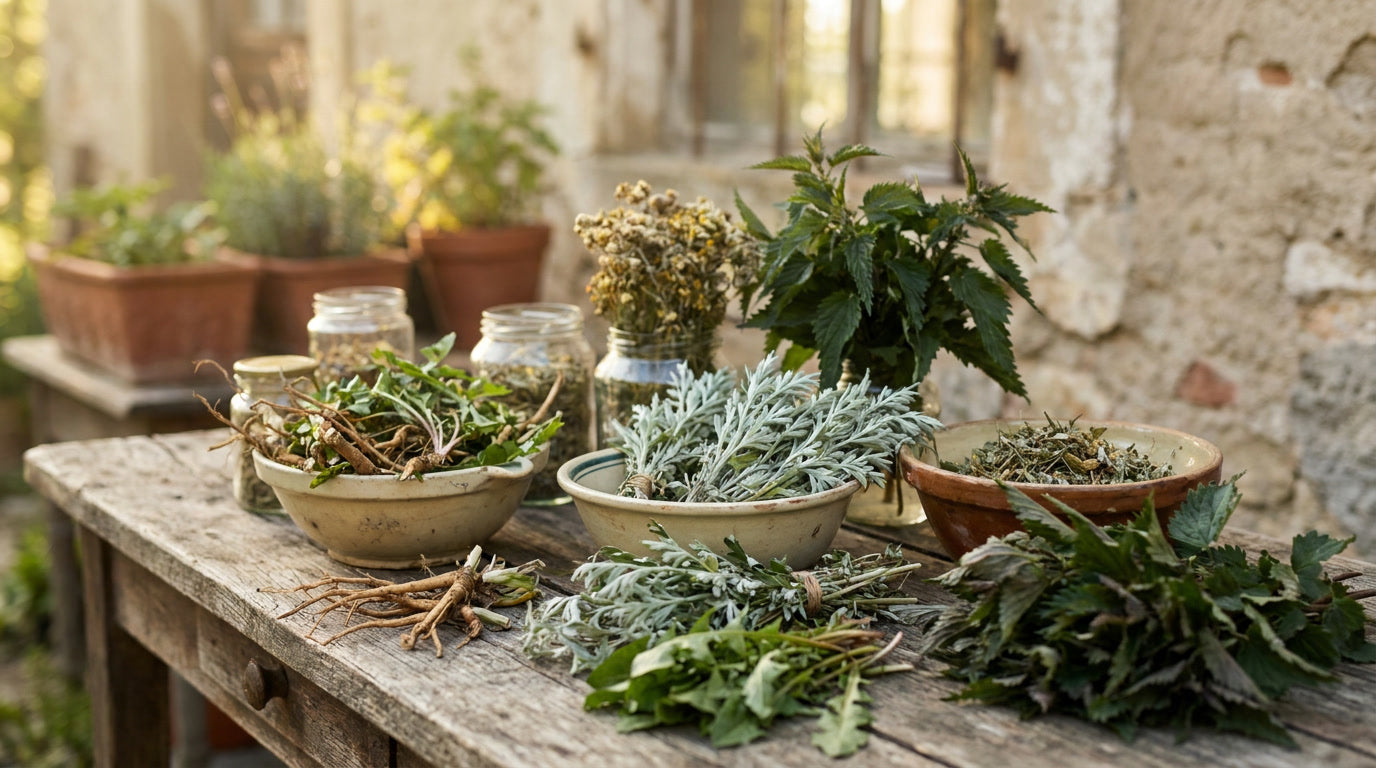
The plant world offers an impressive variety of herbs that have been known in European folk medicine and monastic medicine for centuries as traditional companions for water retention and swelling sensations. They were not used as medicines in the modern sense but as herbal co-supporters that can gently help the body find its balance. Many of these plants are now available as teas, herbal blends, or herbal preparations.
These medicinal plants are traditionally valued for water retention:
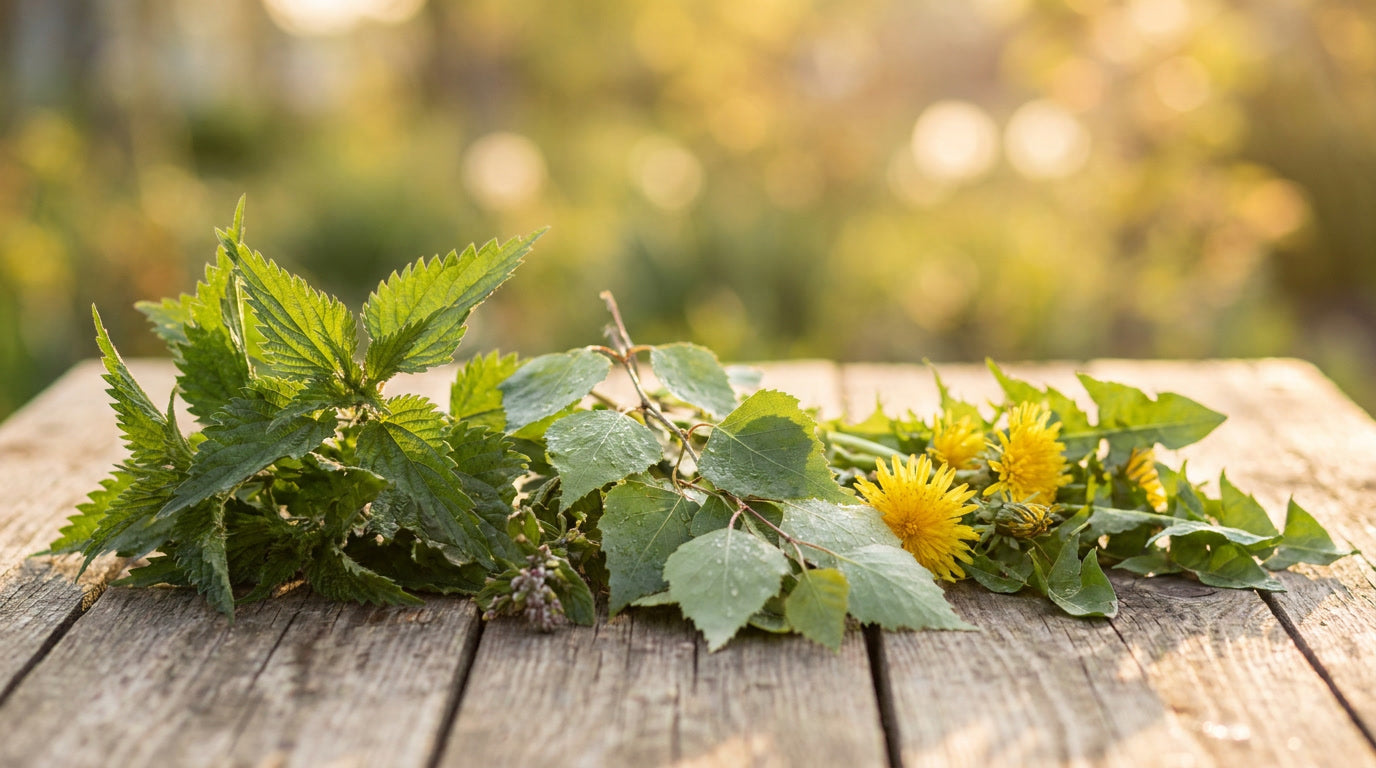
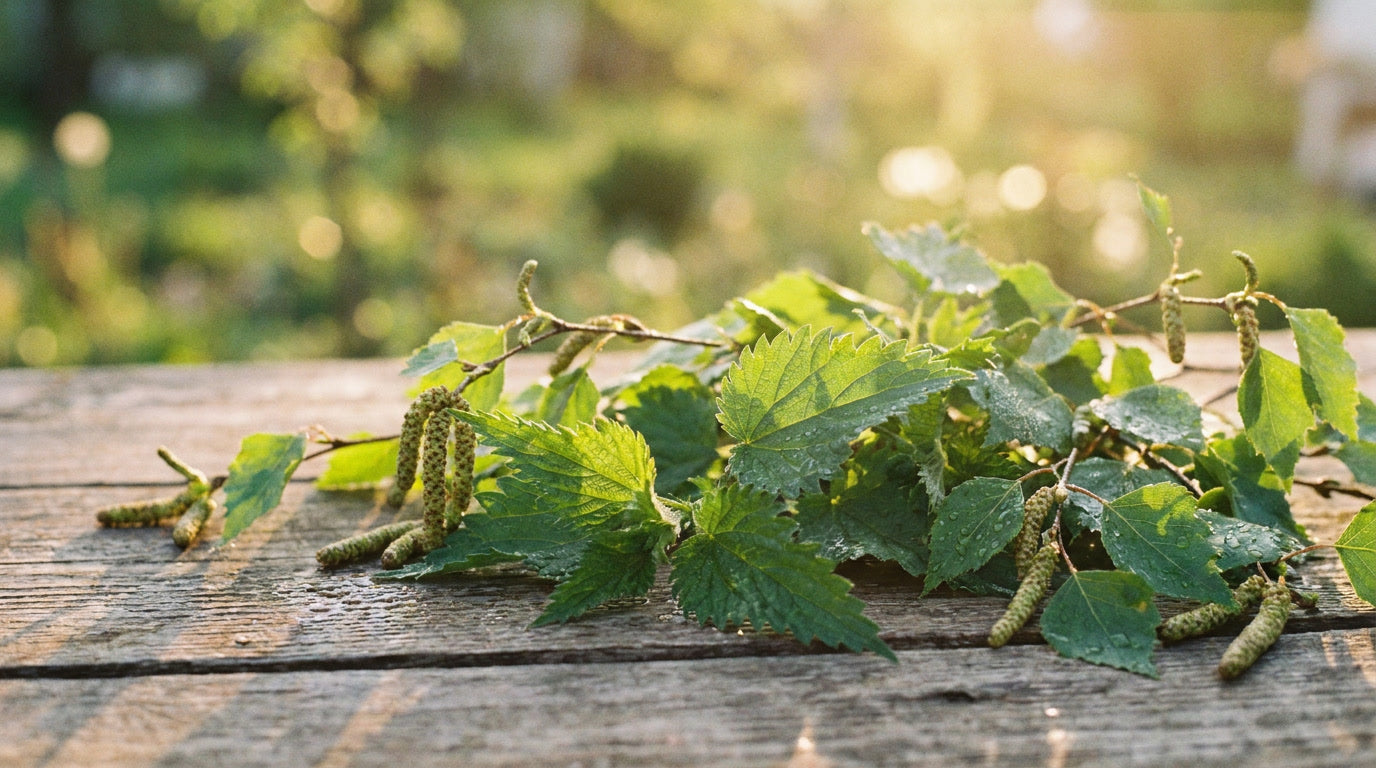
- Nettle (Urtica dioica): Known for centuries in European herbal medicine – nettle is traditionally valued as a precious plant, often gathered in spring as a spring cure and prepared as tea. Hildegard of Bingen mentioned it as a strengthening herb that can support vitality.
- Goldenrod (Solidago virgaurea): Goldenrod has been known in traditional European herbalism since the Middle Ages as a companion for complaints in the urinary tract and is frequently mentioned in historical herbals. Pharmacist Sebastian Kneipp valued it as one of his most important herbs.
- Dandelion (Taraxacum officinale): The ubiquitous “blowball” dandelion is widely known in folk medicine beyond Europe as a traditional spring companion. Leaves and roots have been used for generations as tea or fresh in salads.
- Birch leaves (Betula pendula): Birch leaf tea is one of the oldest household remedies in Central European folk medicine. The birch is called the “tree of light” in tradition, and its leaves are traditionally used as a mild herbal companion in spring.
- Parsley (Petroselinum crispum): Much more than a kitchen herb – parsley has been mentioned in medicinal plant knowledge since antiquity. Hildegard of Bingen valued it as a versatile plant and recommended it in various preparations as a regular dietary supplement.
- Horsetail herb (Equisetum arvense): Horsetail, one of the oldest plants on earth, is valued in folk medicine as a traditional companion for those seeking mineral-rich herbal supplementation and has been part of monastic herbal teas for centuries.
Preparing these herbs as tea is probably the simplest and most traditional form of herbal support. A classic herbal tea made from nettle and birch leaves – freshly brewed daily and drunk calmly – can be integrated into everyday life as a mindful ritual. Such small rituals are often just as important in naturopathy as the plant itself: they invite you to pause, listen to your body, and consciously take time for your own health. all Bitterkraft products
What’s in these herbs?
Many of the traditionally used water herbs contain flavonoids, essential oils, organic acids, and minerals – ingredients that have been studied in phytochemical research for decades. The exact relationships between these plant substances and their traditional use are the subject of scientific investigation. In monastic medicine and European folk medicine, these plants were used empirically – that is, based on experience passed down over generations. This “Traditional Use” is now a recognized quality term in phytotherapy and forms the basis for the approval of many herbal preparations in Europe.
Holistic support: Lifestyle, nutrition, and gentle interplay
Herbal herbs alone are never the only path in naturopathy. They are always embedded in a holistic approach that includes nutrition, exercise, emotional balance, and conscious daily routines. Those who take water retention in the tissue seriously as a sign from their body are invited to examine their own lifestyle – not with the goal of perfection but with curious self-awareness. Fasting products
From a nutritional perspective, naturopathy often emphasizes a balanced, mineral-rich diet. Traditionally, too much table salt, highly processed foods, and a lack of fresh vegetables are considered unfavorable for water balance. Potassium-rich foods such as potatoes, bananas, or legumes have been a fixed part of natural nutrition concepts on this topic for centuries. Hildegard of Bingen placed great importance on the “right measure” in nutrition – a principle rediscovered today in concepts like intuitive eating or the Mediterranean diet.
Exercise is another often underestimated component. Regular walking, swimming, or gentle yoga can help keep the body's natural transport pathways moving. In Kneipp medicine – another pillar of German naturopathy – water treading, contrast showers, and brush massages are traditional methods to stimulate circulation and support general well-being. Elevating the legs in the evening is also a simple, time-tested everyday measure that is never missing in naturopathic advice.
The holistic approach of naturopathy means: Herbs are valuable companions – but only in combination with nutrition, exercise, and mindfulness does the full potential of a natural lifestyle unfold.
The emotional dimension also deserves attention: Stress, overload, and the feeling of “bottling everything up” can, according to traditional belief, settle in the body – and some naturopaths also see water retention as an echo of unresolved emotional states. Whether one shares this view or not – the invitation to be more mindful with oneself is valuable in any case. Meditations, walks in nature, herbal tea rituals in the evening: all these are small acts of self-care that can make a real difference in sum. Sleep and relaxation products
Sebastian Kneipp wrote in the 19th century: “Whoever gives the body what it needs – water, movement, herbs, order, and rest – receives back what it deserves: health.” These five pillars of Kneipp medicine remain the foundation of a nature-close lifestyle and are reflected in many modern prevention concepts.
Herbal preparations, teas, and rituals: How to integrate herbal knowledge into everyday life
Knowledge about medicinal plants is one thing – but how does it enter lived daily life? The answer usually lies in regularity and the conscious integration of herbal support into the daily rhythm. A herbal tea in the morning, a small herbal preparation with a meal, an evening foot bath with herbal decoction – these rituals have a long history in monastic medicine and can still serve today as anchors for more mindfulness in everyday life.
For people who do not want or cannot prepare fresh herbs daily, high-quality herbal preparations – such as capsules, drops, or standardized extracts – offer a practical alternative. Quality is crucial here: organic-certified raw materials, careful processing, and transparency about origin and composition are criteria that naturopathy-affine consumers rightly value. A look at the ingredient list and checking seals is always worthwhile.
Nevertheless, tea remains the most original and in many ways the most beautiful form of herbal support. A self-prepared nettle-birch tea, poured with hot water, steeped for five minutes, and drunk calmly, is more than just fluid intake – it is a small break, a connection to nature, and to the long history of herbal knowledge. Those who have started to cultivate such rituals often report a changed awareness of their own body and its signals.
Tips for daily herbal practice:
Morning tea: Nettle and birch leaves in equal parts – one teaspoon per cup, steep for 5 minutes. One to two cups daily over several weeks as part of the breakfast ritual.
Midday supplement: Sprinkle fresh parsley over salads, vegetable dishes, or soups – a simple way to bring traditional herbal knowledge into everyday cooking.
Evening care: Lukewarm-cool foot bath with horsetail herb – traditionally recommended as a relaxing ritual after a long day. Then briefly elevate the legs.
Weekly cure: A traditional spring cure with dandelion – as leaf salad, tea, or juice – is known in many naturopathic traditions as a seasonal cleansing ritual. Fasting products
Those who want to delve deeper into monastic medicine and herbal tradition will find a wealth of inspiration in Hildegard literature and modern phytotherapy books. Naturopathy thrives on passing down this knowledge – from generation to generation, from monastery garden to kitchen garden, from old herbals to modern blogs and specialist articles. Hildegard of Bingen products The beauty of it: you don’t have to be an expert to get started. A packet of herbal tea, a walk in the green, and the willingness to listen to your body – that’s enough for the first step.


Leave a comment
This site is protected by hCaptcha and the hCaptcha Privacy Policy and Terms of Service apply.