

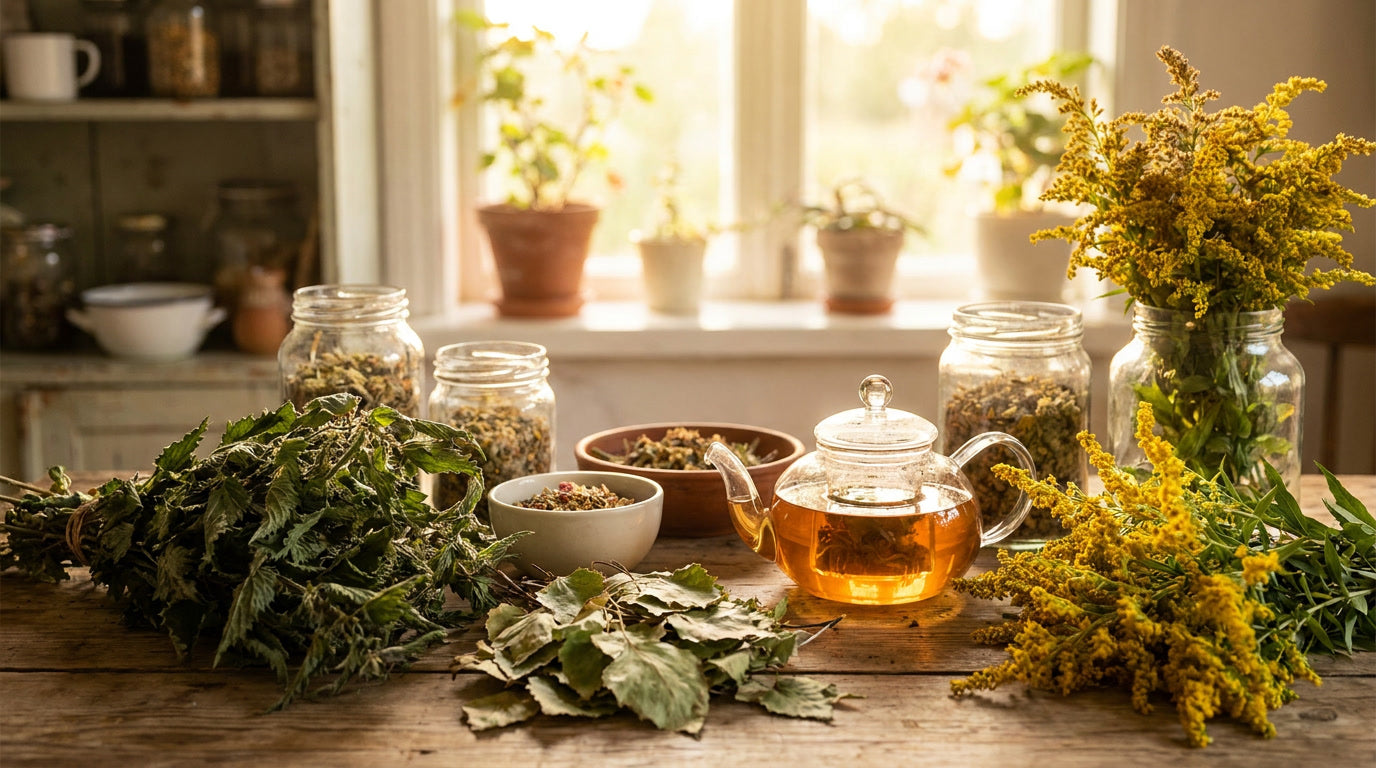
Wasser ist das Element der Reinigung – und kaum eine Tradition weiß das so präzise zu nutzen wie die Klostermedizin des Mittelalters. Hildegard von Bingen, die visionäre Äbtissin und Naturkundlerin des 12. Jahrhunderts, hinterließ uns ein reiches Kräuterwissen, das bis heute in der Naturheilkunde geschätzt wird. Besonders ihre Empfehlungen rund um wohltuende Kräutertees sind faszinierend zeitlos – und das Selbermischen eines sorgfältig zusammengestellten Nierentees gehört zu den schönsten Formen, dieses Wissen lebendig zu halten. In diesem Artikel zeigen wir dir, welche Kräuter Hildegard kannte, wie du daraus deinen eigenen Nierentee mischen kannst und warum diese alte Tradition heute eine wunderbare Ergänzung zu einem bewussten Lebensstil sein kann. Hildegard von Bingen Produkte
Hildegard von Bingen und ihre Kräuterweisheit: Eine Tradition, die trägt
Hildegard von Bingen (1098–1179) war weit mehr als eine Klosterfrau. Sie war Mystikerin, Komponistin, Theologin – und eine der bedeutendsten Naturkundlerinnen ihrer Zeit. In ihren Hauptwerken Physica und Causae et Curae beschrieb sie Hunderte von Pflanzen, Tieren und Mineralien und deren traditionellen Nutzen für den Menschen. Ihr Kräuterwissen war dabei kein bloßes Sammeln von Volksweisheiten, sondern ein systematisches, auf Beobachtung und Erfahrung beruhendes Naturverständnis, das sie in eine ganzheitliche Lehre von Gesundheit und Lebensführung einbettete.
Für Hildegard war der Mensch ein Teil der Natur, und die Natur bot ihm alles, was er für ein ausgewogenes Leben brauchte. Sie sprach von der Viriditas – der grünen Lebenskraft, die allem Lebendigen innewohnt – und sah in den Kräutern Träger dieser heilsamen Energie. Ihr Verständnis von Kräutern war dabei stets eingebettet in ein größeres Bild: Ernährung, Tagesrhythmus, innere Haltung und Naturverbundenheit gehörten für sie untrennbar zusammen. Dieser ganzheitliche Blick macht ihre Überlieferungen bis heute so inspirierend für Menschen, die sich auf der Suche nach einem natürlichen Lebensstil befinden.
Besonders bemerkenswert ist, wie präzise Hildegard bestimmte Kräuter bestimmten Körperbereichen und Jahreszeiten zuordnete. Ihre Beschreibungen lesen sich manchmal wie poetische Naturbetrachtungen, enthalten aber stets konkrete Hinweise auf Zubereitung, Dosierung und Anwendungszeiträume. Für die Nieren und das Wasser im Körper empfahl sie unter anderem eine Reihe von Kräutern, die noch heute in der traditionellen Pflanzenheilkunde als wertvoll gelten. Hildegard von Bingen Produkte
„Die Niere ist der Herd der Wärme im Menschen" – so beschrieb Hildegard von Bingen in der Physica die Bedeutung dieses Organs für das gesamte Wohlbefinden. Ihre Empfehlung: warme, aromatische Kräutertees, die den Körper von innen heraus beleben und das natürliche Gleichgewicht unterstützen.
Die Klostermedizin, die Hildegard so maßgeblich geprägt hat, ist heute Gegenstand wachsenden Interesses – sowohl in der Naturheilkunde als auch in der Kulturgeschichte. Immer mehr Menschen entdecken, dass das Wissen der mittelalterlichen Kräuterkunde nicht nur historisch interessant ist, sondern als lebendige Praxis in den Alltag integriert werden kann. Das Selbermischen von Kräutertees nach überlieferten Rezepten ist dabei eine besonders sinnliche und verbindende Form dieser Beschäftigung.
Die wichtigsten Kräuter für den Nierentee: Was Hildegard empfahl
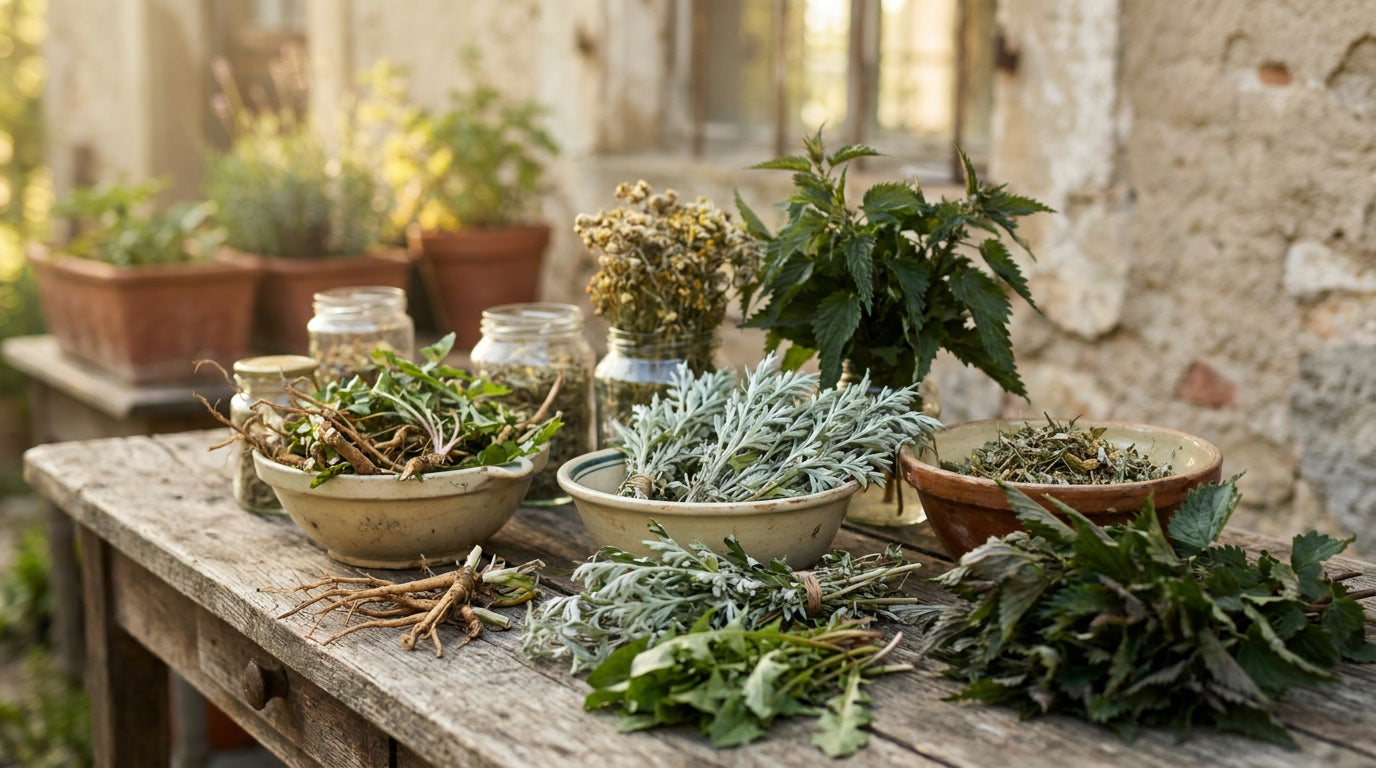
Hildegard von Bingen nannte in ihren Schriften eine ganze Reihe von Kräutern, die sie dem Bereich des Wassers und der inneren Reinigung zuordnete. Ihr Wissen deckt sich dabei in bemerkenswerter Weise mit dem, was Generationen von Kräuterkundigen nach ihr ebenfalls als traditionell wertvoll beschrieben haben. Die folgende Auswahl orientiert sich an den überlieferten Quellen und ergänzt diese um Pflanzen, die in der europäischen Klostermedizin eng mit Hildegards Schule verbunden sind.
Diese Kräuter wurden in der Klostermedizin traditionell für Nierentees geschätzt:
- Brennnessel (Urtica dioica): Hildegard schätzte die Brennnessel als kraftvolles Frühjahrskraut. Sie wird seit Jahrhunderten traditionell verwendet und ist in der europäischen Kräutertradition eines der bekanntesten Pflanzen im Zusammenhang mit innerem Gleichgewicht und Wasserprozessen im Körper.
- Goldrute (Solidago virgaurea): In der mittelalterlichen Klostermedizin als „Wundkraut" bekannt, wird die Goldrute in der traditionellen Pflanzenheilkunde seit Generationen im Zusammenhang mit dem Wasserhaushalt des Körpers erwähnt. Hildegard empfahl Kräuter dieser Kategorie für Frühlings- und Herbstkuren.
- Schachtelhalm (Equisetum arvense): Das uralte Pflanzenwesen Schachtelhalm, das seit der Jurazeit die Erde bevölkert, galt in Klostergärten als Pflanze des Wassers. Traditionell wird er in Tees verwendet, die dem inneren Gleichgewicht und Wohlbefinden gewidmet sind.
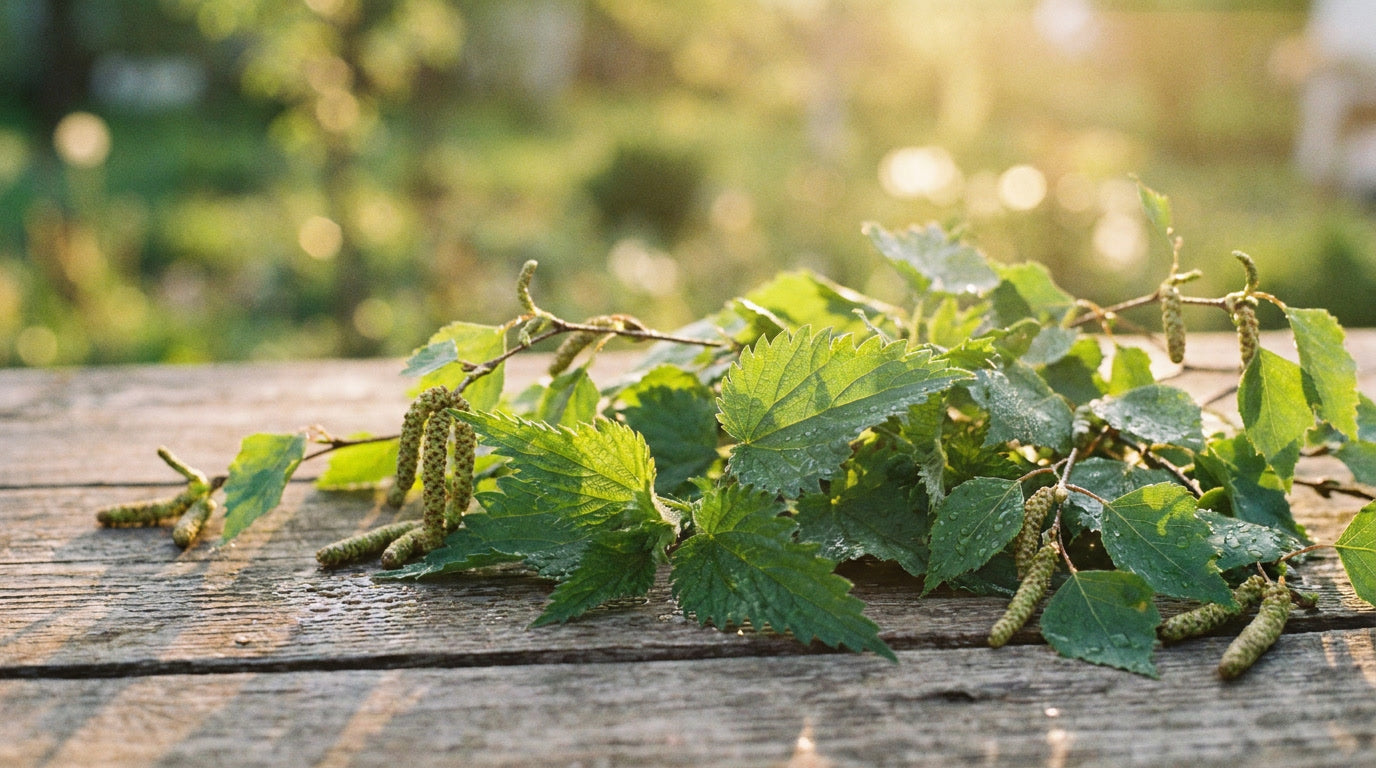
- Birkenblätter (Betula pendula): Die Birke war für Hildegard Sinnbild der Reinheit und des neuen Beginns. Birkenblättertees gehören zu den klassischen Frühjahrskräutern der Klostermedizin und werden traditionell dem inneren Frühlingserwachen zugeordnet.
- Liebstöckel (Levisticum officinale): Im mittelalterlichen Klostergarten wuchs Liebstöckel als unverzichtbares Heilkraut. Hildegard beschrieb ihn in der Physica und empfahl ihn traditionell für das allgemeine Wohlbefinden – besonders in Verbindung mit dem Wärmehaushalt des Körpers.
- Petersilienwurzel (Petroselinum crispum): Hildegard von Bingen widmete der Petersilie in der Physica einen eigenen Abschnitt. Sie nannte sie ein Kraut, das dem Körper von innen wärmt und in der Klosterheilkunde traditionell als Teebestandteil für den Herbst und Winter eingesetzt wurde.
- Wacholderbeeren (Juniperus communis): Der Wacholder hatte in Hildegards Pflanzenkosmos eine besondere Stellung – als Pflanze der Wärme und der inneren Stärke. Traditionell wurden Wacholderbeeren in Tees und Kräutermischungen eingesetzt, die dem Wohlbefinden in der kalten Jahreszeit gewidmet waren.
Was diese Pflanzen verbindet, ist ihre lange Geschichte in der europäischen Pflanzenheilkunde und ihre Verankerung in der Tradition klösterlicher Kräutergärten. Hildegard von Bingen hat viele dieser Kräuter nicht „erfunden" – sie hat sie dokumentiert, in ein System gebracht und mit ihrer eigenen Naturphilosophie verknüpft. Das macht ihre Schriften zu einer so wertvollen Quelle: Sie sind ein Fenster in das Kräuterwissen ganzer Generationen. Hildegard von Bingen Produkte
Die Pflanzen der Hildegard-Tradition werden seit über 800 Jahren überliefert – ihr Wissen über Brennnessel, Birke und Goldrute ist tief in der europäischen Kräuterheilkunde verwurzelt und inspiriert noch heute Naturheilkunde-Begeisterte auf der ganzen Welt.
Was steckt hinter diesen Kräutern?
Brennnessel, Goldrute und Birkenblätter sind seit Jahrhunderten Bestandteil traditioneller Kräutertees in der europäischen Heilkräuterkunde. Sie werden nicht als Heilmittel eingesetzt, sondern als Ergänzung zu einem bewussten, naturverbundenen Lebensstil – ganz im Sinne von Hildegards Philosophie: Hinzufügen, was der Natur des Menschen entspricht, statt einzugreifen.
Drei Nierentee-Rezepte zum Selbermischen: Vom Frühling bis Herbst
Das Selbermischen von Kräutertees ist eine zutiefst befriedigende Tätigkeit. Der Duft der Kräuter, das Abwiegen, das bewusste Zusammenführen – all das macht das Mischen zu einem kleinen Ritual, das in den hektischen Alltag eine Qualität von Stille und Achtsamkeit bringt. Hildegard von Bingen empfahl, Kräutertees immer im Einklang mit den Jahreszeiten und den Bedürfnissen des eigenen Körpers zu wählen. Diesem Gedanken folgen die drei folgenden Rezepte.
Für alle Rezepte gilt: Die Kräuter sollten in Bio-Qualität verwendet werden, am besten aus kontrolliert biologischem Anbau oder aus dem eigenen Garten. Für die Zubereitung als Aufguss nimmst du pro Tasse (ca. 200 ml) etwa einen gestrichenen Teelöffel der fertigen Mischung, übergießt mit frisch aufgekochtem Wasser (nicht mehr sprudelnd kochend, ca. 85–90 °C), und lässt den Tee 8–10 Minuten zugedeckt ziehen. Das Zudecken ist wichtig, damit ätherische Öle nicht entweichen. Dann abseihen, in Ruhe trinken – und den Moment genießen.
Hildegard empfahl, Kräutertees stets warm und langsam zu trinken – nie in Hast, sondern als bewusstes Innehalten. Dieser Aspekt des Rituals ist für sie kein Beiwerk, sondern Teil der Wirkung: Der Körper empfängt die Pflanzenstoffe anders, wenn der Geist ruhig und offen ist. Ein schöner Gedanke, der uns heute vielleicht mehr anspricht als je zuvor.
Rezept 1: Frühlingstee nach Hildegard – „Der grüne Erwecker"
Für ca. 50 g Mischung:
• 20 g Brennnesselblätter
• 15 g Birkenblätter
• 10 g Löwenzahnblätter
• 5 g Schachtelhalm
Zubereitung: Alle Kräuter gut vermengen und in einem dunklen, luftdichten Behälter aufbewahren. Pro Tasse 1 TL der Mischung, 8 Minuten zugedeckt ziehen lassen, abseihen. Wer möchte, kann einen kleinen Tropfen Birkenhonig hinzufügen.
Hildegards Idee dahinter: Der Frühling war für Hildegard die Zeit der Erneuerung und des inneren Aufbruchs. Brennnessel und Birke stehen in ihrer Tradition für diese Energie des Neubeginns.
Rezept 2: Sommertee – „Der stille Begleiter"
Für ca. 50 g Mischung:
• 15 g Goldrutenkraut
• 15 g Brennnesselblätter
• 10 g Schachtelhalm
• 10 g Zinnkraut (Ackerschachtelhalm)
Zubereitung: Kräuter gut vermischen. 1 TL pro Tasse, mit nicht mehr kochendem Wasser übergießen, 10 Minuten zugedeckt ziehen lassen. Dieser Tee eignet sich besonders für ruhige Sommerabende – gekühlt als Eisaufguss ebenfalls wunderbar.
Hildegards Idee dahinter: Im Sommer, wenn die Pflanzenwelt in voller Blüte steht, empfahl Hildegard leichte, klärende Kräuter, die das natürliche Gleichgewicht des Körpers in der Hitze unterstützen.
Rezept 3: Herbst- und Wintertee – „Die warme Wurzel"
Für ca. 50 g Mischung:
• 15 g Petersilienwurzel (getrocknet, fein gehackt)
• 15 g Liebstöckelwurzel
• 10 g Wacholderbeeren (leicht angedrückt)
• 10 g Brennnesselblätter
Zubereitung: Wurzeln und Wacholderbeeren zunächst 5 Minuten als Dekokt köcheln lassen (sanftes Simmern), dann Brennnesselblätter hinzufügen und weitere 5 Minuten zugedeckt ziehen lassen. Abseihen und warm trinken. Achtung: Wacholderbeeren sollten nur in kleinen Mengen verwendet werden; dieser Tee ist für gelegentlichen Genuss gedacht, nicht für längere tägliche Einnahme.
Hildegards Idee dahinter: Herbst und Winter waren für Hildegard die Zeit der Innenschau und der Wärme. Wurzeln und Samen – das Kraftvolle, das unter der Erde verborgen liegt – standen für sie für innere Stärke und Beständigkeit.
Das Selbermischen von Kräutertees nach überlieferten Rezepten ist weit mehr als eine nette Beschäftigung – es ist eine Form der bewussten Selbstfürsorge, die uns mit einer jahrhundertealten Tradition verbindet und dem Alltag eine neue Qualität von Achtsamkeit schenkt.
Tee mischen als Ritual: So integrierst du Hildegards Kräuterweisheit in deinen Alltag
Hildegard von Bingen lebte in einer Zeit, in der das Leben in klaren Rhythmen verlief – Jahreszeiten, Gebetszeiten, Arbeitszeiten. Dieser Rhythmus war für sie kein Zufall, sondern Ausdruck einer göttlichen Ordnung, der der Mensch am besten durch achtsames Leben entspricht. Ihr Kräuterwissen war daher nie losgelöst von dieser Lebensführung zu denken. Auch heute können wir von dieser Haltung lernen: Ein Tee, der bewusst gemischt, zubereitet und getrunken wird, ist mehr als die Summe seiner Kräuter.
Wenn du anfängst, deine eigenen Kräutertees zu mischen, lohnt es sich, ein kleines Kräutertagebuch zu führen. Notiere, welche Mischungen du ausprobiert hast, wie sie geschmeckt haben, wie du dich dabei gefühlt hast. Das klingt vielleicht ungewohnt – aber es ist genau diese Art von bewusster Beobachtung, die Hildegard selbst praktizieret hat. Sie war eine aufmerksame Beobachterin der Natur und des Menschen, und diese Aufmerksamkeit war die Grundlage ihres Wissens. Das Führen eines Kräuterjournals verbindet uns mit dieser Tradition und schärft unsere eigene Naturwahrnehmung auf wunderbare Weise.
Praktisch gedacht: Eine kleine Ecke in der Küche oder im Schlafzimmer, wo deine Kräuter in hübschen Gläsern aufbewahrt werden, ist schon der erste Schritt zu einem lebendigen Kräuteralltag. Etikettiere die Gläser mit Pflanzennamen und Erntedatum, kaufe deine Kräuter in Bio-Qualität – am besten bei Händlern, denen kontrollierte Herkunft und Qualität wichtig sind. Hildegard von Bingen Produkte Auch der Gang in einen Klosterladen oder auf einen Kräutermarkt kann eine wunderbare Möglichkeit sein, neue Pflanzen kennenzulernen und das eigene Repertoire zu erweitern.
Die moderne Kräuterkunde-Forschung beschäftigt sich zunehmend mit den Überlieferungen der mittelalterlichen Klostermedizin. Wissenschaftler wie Dr. Wighard Strehlow, der sich intensiv mit Hildegards Werk auseinandergesetzt hat, betonen, dass viele der von ihr beschriebenen Pflanzen bis heute in der traditionellen europäischen Heilpflanzenkunde eine wichtige Rolle spielen – ein eindrucksvoller Beleg für die Beständigkeit dieses Wissens.
Ein besonders schöner Aspekt des Kräutermischens ist seine soziale Dimension: Kräutertees selbst zu mischen und zu verschenken ist eine der persönlichsten Formen des Gebens. Ein Glas selbst gemischter Frühlingstee, liebevoll etikettiert und mit einem Zettel über die Hildegard-Tradition versehen – das ist ein Geschenk, das eine Geschichte trägt. Hildegard schenkte ihr Wissen der Gemeinschaft, und auch wir können Kräuterwissen teilen und weitergeben.
Für Menschen, die tiefer in die Welt der Hildegard-Kräuter eintauchen möchten, bietet Hildegard von Bingen Produkte eine gute Anlaufstelle für weiterführende Inhalte und passende Produkte. Wer seinen Fokus über Nierentees hinaus erweitern möchte, findet im Bereich Leber-Produkte von Bitterkraft ergänzende Traditionen der Klostermedizin, und wer sich für das große Thema Fasten und innere Reinigung interessiert, wird unter Fasten-Produkte fündig.
Qualität und Bezug: Worauf du beim Kauf deiner Kräuter achten solltest
Nicht alle Kräuter sind gleich. Die Qualität eines Kräutertees steht und fällt mit der Qualität der verwendeten Pflanzen – und diese hängt von Anbau, Ernte, Trocknung und Lagerung ab. Hildegard selbst lebte in einer Zeit, in der Klostergärten die Kräuter für den eigenen Bedarf anbauten und ernteten. Diese Kontrolle über die gesamte Wertschöpfungskette ist ein Ideal, dem wir heute nachstreben können, auch wenn wir nicht über einen eigenen Garten verfügen.
Beim Kauf von Heilkräutern gilt: Bio-Zertifizierung ist ein guter erster Anhaltspunkt, aber nicht das einzige Kriterium. Achte auch auf Herkunftsangaben, auf den Zustand der Kräuter (kein Staub, keine Bräunung, kein Schimmel), auf das Erntedatum (frisch ist besser als uralt) und auf den Duft – ein gutes Kräuterprodukt sollte aromatisch und lebendig riechen. Lose Kräuter in Bio-Qualität aus kleinen, spezialisierten Läden oder von vertrauenswürdigen Online-Händlern sind oft die beste Wahl.
Für hochwertige Kräuter in Bio-Qualität – ideal zum Selbermischen nach Hildegards Rezepten – lohnt sich ein Blick ins Sortiment von Bitterkraft.com. Hier findest du ausgesuchte Kräuter und Mischungen, die konsequent auf Qualität und Herkunft geachtet wurden. Hildegard von Bingen Produkte
Wer selbst Kräuter anbauen möchte, findet in Hildegards Kräutergarten-Tradition eine wunderbare Inspiration. Brennnessel, Petersilie und Liebstöckel lassen sich auch auf dem Balkon kultivieren – und es gibt kaum etwas Befriedigenderes, als den eigenen Tee aus selbst angebauten Kräutern zu mischen. Das bringt uns zurück zu Hildegards Grundgedanke: Der Mensch ist Teil der Natur, und wenn er diese Verbindung pflegt, tut er sich selbst etwas Gutes.
Ein letzter Hinweis zum Thema Lagerung: Gemischte Kräutertees sollten in gut verschlossenen, lichtundurchlässigen Behältern aufbewahrt werden – am besten aus Glas oder Keramik. Direkte Sonneneinwirkung und Feuchtigkeit sind die größten Feinde der Kräuterqualität. Richtig gelagert halten selbst gemischte Kräutertees bis zu einem Jahr ihre Qualität. Beschrifte jede Mischung mit Name und Mischdatum – so behältst du den Überblick und weißt immer, wann es Zeit für frische Kräuter ist.
Kurz zusammengefasst – Das brauchst du für deinen ersten selbst gemischten Nierentee:
• Hochwertige Kräuter in Bio-Qualität (Brennnessel, Birkenblätter, Goldrute, Schachtelhalm etc.)
• Eine feine Küchenwaage
• Luftdichte, dunkle Aufbewahrungsbehälter
• Ein Teesieb oder ein Teefilter
• Frisches, gutes Wasser (gefiltert oder Quellwasser)
• Etwas Zeit und Muße – das Wichtigste überhaupt
Und vielleicht: ein kleines Notizbuch für dein persönliches Kräutertagebuch.
Das Wissen von Hildegard von Bingen ist kein Museum, das wir von außen betrachten – es ist eine lebendige Quelle, aus der wir noch heute schöpfen können. Das Selbermischen eines Nierentees nach überlieferten Kräuterrezepten ist vielleicht eine kleine Geste, aber sie verbindet uns mit einer langen Linie von Menschen, die in der Natur eine Begleiterin und nicht nur eine Ressource gesehen haben. In diesem Sinne: Auf dein Wohlbefinden – mit einem dampfenden Becher selbst gemischtem Kräutertee. Hildegard von Bingen Produkte

Hinterlasse einen Kommentar
Diese Website ist durch hCaptcha geschützt und es gelten die allgemeinen Geschäftsbedingungen und Datenschutzbestimmungen von hCaptcha.