





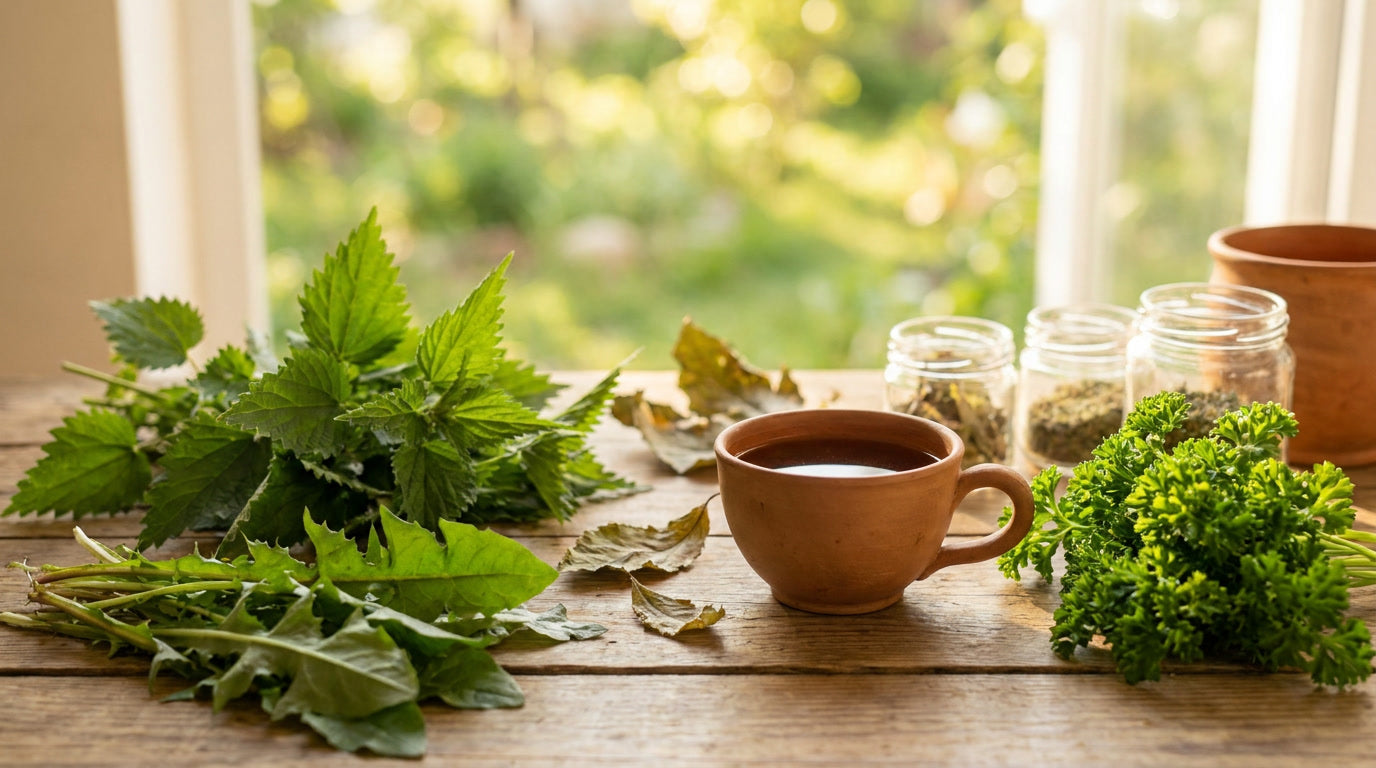
Morning is the most precious time of the day – and how we start it shapes our entire well-being until the evening. Who doesn’t know it: you wake up and feel somehow “heavy” despite enough sleep, maybe your face shows morning puffiness, your legs feel sluggish, and your body takes what feels like an eternity to get going. This condition was well known in the traditional monastic medicine of Hildegard of Bingen – and it was met with a thoughtful morning ritual of warm water, selected medicinal herbs, and gentle physical exercises. This ancient knowledge is experiencing a renaissance today, and for good reason: it is simple, natural, and can be effortlessly integrated into modern daily life. In this article, we show you step by step how to build such a morning ritual – entirely in the spirit of Hildegard and the millennia-old European natural medicine.
Why Morning Is Crucial – The Hildegard Principle of Awakening
Hildegard of Bingen (1098–1179) is considered one of the most important natural healers of the Middle Ages. The abbess, theologian, and herbalist left behind comprehensive knowledge about plants, the human body, and the importance of daily rhythms in her works “Physica” and “Causae et Curae.” For Hildegard, morning was not just any time of day – it was the moment when the body realigns itself, when the “Viriditas,” the green life force, can awaken again. This idea aligns remarkably well with what modern chronobiology knows about circadian rhythms: the first hours after waking are biologically especially active and formative.
In the Hildegard concept, great importance is placed on gently activating the body in the morning – never abruptly, never with immediate coffee and a heavy breakfast. Instead, Hildegard recommended first giving the body warmth and lightness: warm liquids, gentle movement, calm breathing exercises. These principles are also found in other traditional healing systems such as Ayurveda or Traditional Chinese Medicine – a strong sign that different cultures worldwide have arrived at similar insights. Hildegard von Bingen products
Particularly interesting is Hildegard’s understanding of what we today colloquially call “water retention” or “feeling swollen.” In her teachings, she spoke of an imbalance of bodily fluids – the fluid balance was closely linked to the general balance of warmth, cold, moisture, and dryness. From this perspective, she developed recommendations for herbs and practices that have been traditionally used for centuries to promote morning well-being and restore the body to its natural balance. It is this holistic thinking that makes the Hildegard morning ritual so timeless.
The morning ritual according to Hildegard of Bingen combines three elements: soothing warmth through hot water, the traditional power of selected medicinal plants, and gentle body exercises – a combination cherished for centuries in European monastic medicine.
Warm Water as the Foundation – The First Step in the Detox Ritual
The very first step in the traditional morning ritual is simple yet effective: a large glass of warm water, before breakfast, before coffee, right after getting up. This practice is rooted in monastic medicine as well as Ayurveda and has been passed down for generations. The water should not be boiling hot but clearly warmer than lukewarm – about body temperature or slightly above, so it feels pleasantly warm when you drink it. Temperature is crucial: cold water in the morning was explicitly unwanted in Hildegard’s medicine, as it was considered “cooling” and thus detrimental to the morning awakening.
Hildegard herself emphasized in her writings the importance of warmth for physical well-being. She saw warmth as invigorating and harmonizing – a principle that still resonates in natural medicine today. Warm water in the morning has been traditionally known for centuries to gently accompany the body into the day and support overall well-being. If desired, you can add a splash of freshly squeezed lemon juice to the water – lemon was valued in medieval monastic medicine as a cleansing and refreshing agent and fits wonderfully into the morning ritual.
The amount also matters: at least 250 to 300 ml, preferably a full glass of 400 ml. After a long night without fluid intake, the body is naturally slightly dehydrated – the warm water gently begins to restore this balance. This simple practice can be wonderfully combined with other steps of the ritual: while preparing the water, you can already prepare the herbs for the next step or open the windows to let in fresh morning air. This creates a flowing, relaxed morning ritual that knows no rush and opens the day with calm and awareness.
Hildegard of Bingen wrote in “Causae et Curae”: “Warmth is the principle of life.” This conviction is reflected in her recommendation to always greet the body in the morning with warming means – never confront it with cold, which she considered weakening and unbalanced. (Hildegard von Bingen, Causae et Curae, 12th century)
Those who consistently maintain the morning ritual over several weeks often report that the warm water becomes their favorite part of the morning – a small, conscious break before everyday life begins. This kind of mindfulness is an important part of the Hildegard approach: it’s not just about the physical effect of the means used but also about the conscious attention to one’s own body. Fasting products
Hildegard’s Herbal Treasure – These Plants Belong in the Morning Ritual
Hildegard of Bingen knew and valued a variety of medicinal plants, many of which are excellent for a morning detox ritual. In her work “Physica,” she described in detail the properties of numerous herbs and their traditional uses. Particularly interesting for a morning ritual are plants that have been used in European herbal tradition for centuries and that Hildegard herself cultivated in her monastery gardens. These herbs can be prepared as tea, infusion, or herbal water and wonderfully integrated into the daily morning ritual. BitterKraft Original
A classic Hildegard herbal tea for the morning is traditionally brewed hot and drunk before breakfast. The choice of herbs depends on personal well-being and individual needs. It is important that the herbs are of good quality – preferably organic, as was customary in medieval monastery gardens, where natural and unblended medicinal plants were used. Hildegard placed great value on the purity of the means used and warned against adulterated or poorly processed herbs. Those interested in traditional Hildegard herbal knowledge will find a comprehensive selection of corresponding products at Hildegard von Bingen products.
The following selection presents herbs traditionally known in Hildegard medicine and European monastic medicine and used for centuries to promote morning well-being. They form the herbal core of the morning ritual and can be used individually or as a blend according to preference:
These medicinal herbs are traditionally known in the Hildegard morning ritual:
- Nettle (Urtica dioica): Nettle is one of the most commonly used medicinal plants in European herbal tradition. It has been traditionally used for centuries and is valued in monastic medicine for its high mineral content.
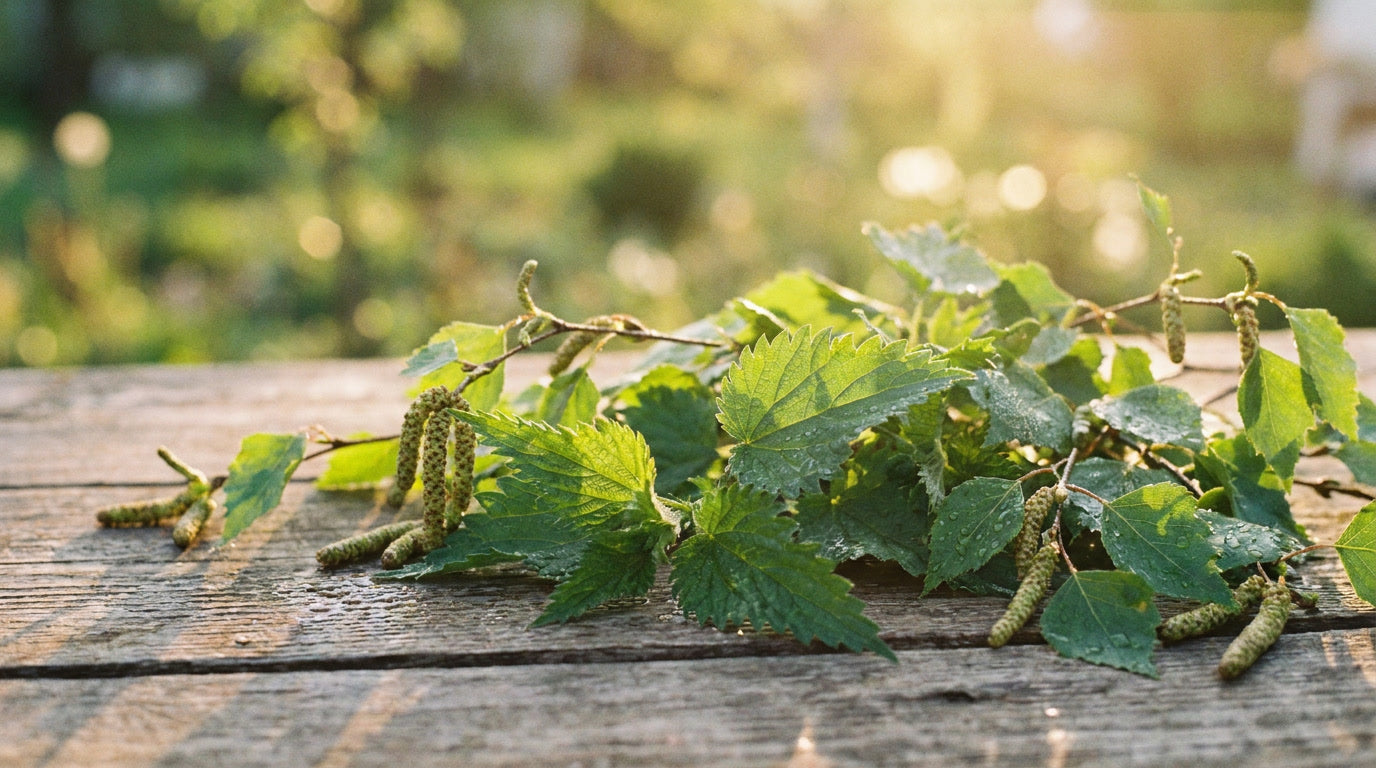
- Birch leaves (Betula pendula): Birch leaves were traditionally used in medieval herbal medicine as a spring cure. They are historically known as a valuable component of herbal teas that contribute to general well-being.
- Dandelion (Taraxacum officinale): Dandelion is one of the most versatile medicinal plants in European herbal tradition and has been traditionally used for centuries. Hildegard of Bingen mentioned related bitter plants in her writings as valuable for physical balance.
- Horsetail (Equisetum arvense): Horsetail, also called scouring rush, is one of the oldest plants in the world and has been traditionally used in folk medicine for generations. In monastic medicine, it was considered a mineral-rich companion in spring and morning rituals.
- Fennel (Foeniculum vulgare): Fennel is one of the medicinal plants most frequently mentioned by Hildegard of Bingen. In her work “Physica,” she describes fennel as soothing and warming – ideal for a gentle morning ritual.
- Lemon balm (Melissa officinalis): Lemon balm was cultivated in medieval monastery gardens and is historically known as a plant of well-being and harmony. It complements the morning ritual with a fresh, mild lemon aroma.
What’s behind the Hildegard herbal tea?
A traditional morning herbal tea modeled after Hildegard typically consists of a blend of two to four herbs. The herbs are poured over with freshly boiled, then slightly cooled water (approx. 90°C) and covered to steep for 5–7 minutes. Covering is important to preserve the volatile aromatic substances. The tea is drunk without sugar – according to Hildegard’s belief, one should let the natural flavors of the plants affect oneself unadulterated. Optionally, a spoonful of natural honey can be added, which Hildegard valued as a precious natural substance.
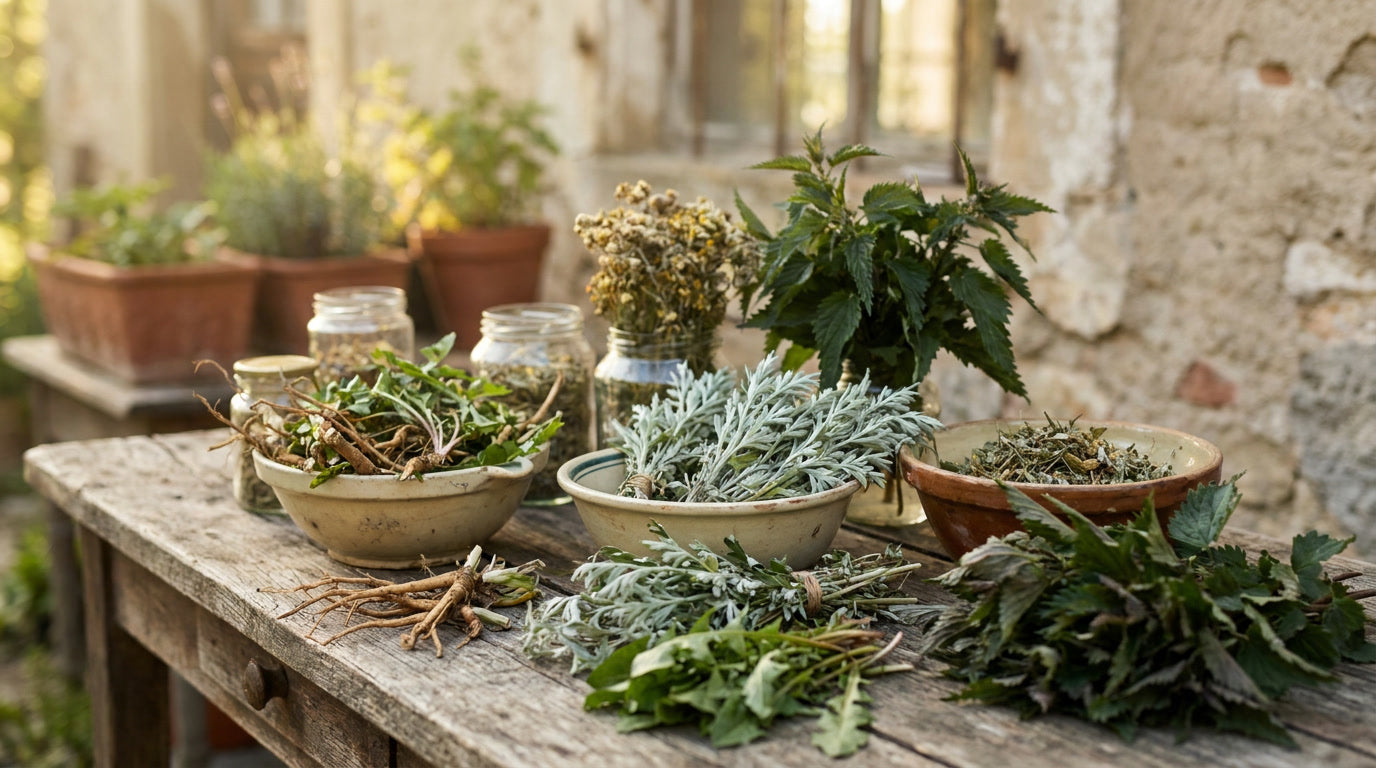
Nettle, birch leaves, and dandelion form the classic trio of European herbal tradition for the morning ritual – cultivated in monastery gardens for centuries and valued in natural medicine as valuable companions for general well-being.
Hildegard Morning Exercises – Gentle Movement for a Light Start
A complete Hildegard morning ritual does not end with herbal tea. Hildegard of Bingen attached great importance to physical movement – but always in moderation and adapted to the time of day. For the morning, she recommended gentle, flowing movements that warm the body without exhausting it. These exercises are not a modern invention but are based on the principles Hildegard formulated in her writings on body care and health preservation. The basic idea: movement in the morning should awaken the life energy (the “Viriditas”) and stimulate flow in the body – gently, consciously, and in harmony with the body’s natural rhythm.
Especially recommended in the Hildegard context are exercises that involve the extremities and help activate the tissue after the long night. Simple exercises like consciously stretching and reaching right after waking, still in bed, are a good start. Then follow slow circular movements of the ankles and hands, which according to Hildegard’s belief get the flow in the body going. These exercises can be continued sitting or standing and in their basic form last no more than five to ten minutes – ideal for every morning, even when time is tight.
An important part of the Hildegard movement concept is conscious breathing. In monastic medicine, deep, calm breathing was considered the basis of every physical activity. A simple morning exercise: stand upright, close your eyes, breathe deeply into your belly through your nose – slowly count to four – hold briefly, then slowly exhale through your mouth. This breathing exercise, repeated four to five times, is traditionally recommended as an introduction to the physical morning routine and combines inner focus with physical activation. Immune system products
“Man should move like water, which flows and renews itself – never stagnate, never rush.” – This principle, attributed to many Hildegard commentators, aptly summarizes the movement understanding of monastic medicine: moderate, continuous movement as a path to inner harmony.
These morning exercises from the Hildegard tradition are easy to implement:
- The big stretch: Right after waking, still in bed: stretch arms and legs simultaneously in opposite directions, repeat three to five times. In monastic medicine, this stretching was considered a natural wake-up call for muscles and joints.
- Ankle circles while sitting: Sitting on the edge of the bed, move both ankles alternately in large, slow circles – ten times in each direction. This exercise is historically known as a gentle activation of the legs in the morning.
- The tree pose: Stand upright, raise arms sideways while taking a deep breath – Hildegard spoke of upright posture as a sign of human dignity and vitality. Five to seven calm breaths in this posture.
- Gentle tapping: With lightly clenched fists, gently tap the outer sides of the legs from top to bottom – a practice traditionally used in European folk medicine to activate tissue in the morning.
- The morning twist: Standing, slowly twist the upper body to the right and left, letting the arms swing loosely. This exercise is considered harmonizing and invigorating in monastic medicine.
The beauty of these exercises is their simplicity: they require no special equipment, no great time investment, and no prior knowledge. They fit into any daily routine and can be combined and expanded as desired. If you like, you can do the exercises in the garden or by an open window – fresh air was also an important element of well-being for Hildegard. Gut and digestion products
The Complete Ritual – How to Bring It All Together
A ritual unfolds its full effect only through regularity and awareness. It is not enough to apply the individual elements occasionally – what matters is the daily, preferably simultaneous repetition. Hildegard of Bingen repeatedly emphasized in her writings the importance of order and rhythm in life: humans as part of creation should orient themselves to natural cycles and shape their lives accordingly. A morning ritual practiced daily at the same time creates exactly this order – a reliable structure that gives body and mind security and continuity.
For practical implementation, we recommend thinking of the ritual in three clearly defined phases: first the water phase (drinking warm water, optionally with lemon), second the herb phase (preparing and calmly drinking Hildegard tea), and third the movement phase (morning exercises and breathing exercises). These three phases together last about 20 to 30 minutes – a manageable time that can be integrated into the morning even with a full schedule. Those with very little time can shorten the ritual to 10 to 15 minutes without having to do without the essential elements. Liver products from Bitterkraft
The ritual becomes especially valuable when it begins with a short moment of pause: before drinking the first glass of water, one minute of silence – perhaps standing by the window, consciously perceiving the morning, keeping thoughts calm. Hildegard of Bingen was deeply convinced that body and mind are inseparably connected and influence each other. The morning ritual is therefore also a spiritual practice: a conscious, calm start to the day that sends the body the message: I take time for you. I begin the day with mindfulness and care.
Your Hildegard morning ritual at a glance:
🌿 Phase 1 – Water (5 min.): Drink a large glass of warm water, optionally with a splash of lemon. Drink consciously and slowly, not hastily down.
🌿 Phase 2 – Herbs (10–15 min.): Prepare Hildegard herbal tea (e.g., nettle, birch, fennel). Drink calmly and without distraction – no smartphone, no TV.
🌿 Phase 3 – Movement (10 min.): Gentle morning exercises: stretching, ankle circles, breathing exercises, gentle tapping. Preferably by an open window or outdoors.
🌿 Optional: A short pause before the ritual (1–2 min. silence) and a small Hildegard breakfast afterward: spelt products, fresh herbs, and natural honey were especially valued by Hildegard.
Regularity makes the difference: a morning ritual modeled after Hildegard unfolds its full effect when practiced daily and preferably at the same time – body and mind appreciate the reliable rhythm that recalls the natural daily cycle, which Hildegard considered the foundation of every healthy life.
Those who invite the Hildegard morning ritual into their lives begin a small but meaningful journey: back to ancient knowledge, back to nature, back to their own body. It is not an elaborate or costly practice – on the contrary: most herbs are inexpensive or even grow in one’s own garden. What counts is the intention behind it: the desire to treat one’s own body with care and respect, just as Hildegard of Bingen taught over 800 years ago. For those who want to delve deeper into Hildegard’s herbal knowledge, Hildegard von Bingen products offers a comprehensive selection of traditional products from monastic medicine. And those curious about the world of bitter substances, which also firmly belonged to Hildegard’s worldview, will find further exciting insights into this fascinating chapter of natural medicine at BitterKraft Original.


Leave a comment
This site is protected by hCaptcha and the hCaptcha Privacy Policy and Terms of Service apply.