





Our body is a remarkable self-cleansing system—and at the center of this system are two organs that are rarely considered together: the liver and the kidneys. While the liver, as the largest internal organ, tirelessly filters and transforms substances, the kidneys handle the fine work: they excrete water-soluble compounds and maintain internal balance. Both organs work hand in hand, yet we hardly pay attention to them in everyday life—until a vague feeling of heaviness, fatigue, or lack of vitality sets in. Naturopathy, especially the traditional herbal knowledge of monastic medicine, has known for centuries about plants that are valued as valuable companions for these two organs within the framework of a conscious lifestyle. In this article, we take a close look at the detox team of liver and kidney—and which herbs tradition has in store for them.
The silent working pair: What the liver and kidneys do daily
The liver is the organ that, in both naturopathy and traditional medicine, has always been regarded as the seat of life force. It processes almost everything that enters the body through the digestive tract—from nutrients and plant substances to foreign compounds. In the process, intermediate products are formed, which are then either passed on via the bile or the blood. What is transported through the blood ultimately ends up at the kidneys: two bean-shaped organs that filter enormous amounts of blood daily and excrete water-soluble compounds. This interplay is no accident of evolution—it is a highly precise two-stage system.
In Hildegard medicine, the herbal knowledge of the Benedictine abbess Hildegard of Bingen (1098–1179), the liver and kidneys were already understood as central organs of life balance. Hildegard described the kidney as an organ closely connected to life force and sleep, while she attributed a key role to the liver in the body's warmth and fluid system. This holistic understanding remains alive today in monastic medicine and modern naturopathy—and it offers a fascinating perspective on how we can cultivate our inner balance. Hildegard von Bingen products
What many do not know: the liver and kidneys communicate not only through the bloodstream but also via finely tuned feedback mechanisms. If the liver has only partially transformed certain compounds, the kidneys are more heavily burdened. Conversely, kidney function influences how well the liver can perform its tasks. This close cooperation makes it clear why a holistic approach—that considers both organs simultaneously—makes so much sense in naturopathy. Focusing on only one end falls short.
The liver and kidneys are no accidental duo: they form a coordinated two-stage system that has been the focus of monastic medicine for centuries—and that can be consciously supported with traditional herbs.
Herbs for the liver: What tradition has known for centuries
Medieval monastic medicine was surprisingly precise in its herbal knowledge. In monastery gardens from Ireland to the Rhineland, medicinal plants were cultivated whose traditional uses were passed down through generations. Certain bitter herbs were considered especially valuable for the liver—a realization that runs like a red thread through naturopathy. The so-called liver herbs were often bitter in taste, greenish or yellow in bloom, and were used in teas, tinctures, or as part of fasting cures. Liver products from Bitterkraft
Hildegard of Bingen wrote extensively in her work Physica about plants she assigned to the area of internal warmth and fluid balance. She repeatedly emphasized the importance of bitter flavors for physical well-being. These bitter herbs were not understood as medicine in the modern sense but as nourishment for the body's self-regulating power—a perspective that is gaining much attention again today in naturopathy. BitterKraft Original
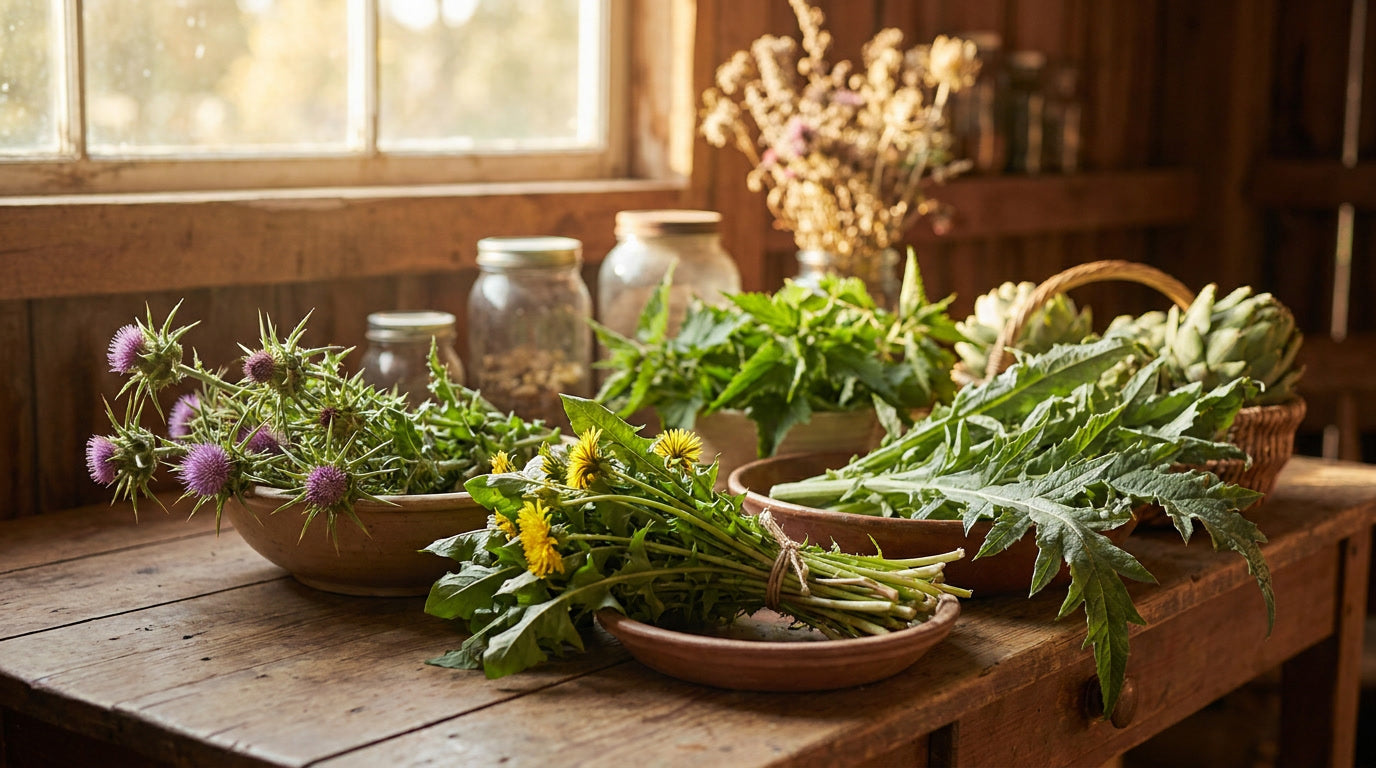
What makes the traditional use of these herbs so remarkable is their continuity: plants like milk thistle, artichoke, dandelion, and turmeric appear not only in medieval herbal books but also in modern phytotherapy. They have been traditionally used for centuries in connection with well-being after meals, during fasting phases, and for general revitalization—a wealth of experience spanning many cultures and eras.
What’s behind it? Bitter substances and the liver
Bitter plant compounds such as silymarin (from milk thistle), cynarin (from artichoke), or curcuminoids (from turmeric) are secondary plant substances that have been associated with the liver area in traditional use for centuries. They are found in numerous herbal formulas of monastic medicine and are today valued in naturopathy as part of a conscious, plant-based lifestyle. Important: The use of these herbs does not replace medical treatment—they are part of a traditional nutrition and lifestyle culture.
Overview of traditional liver herbs:
- Milk Thistle (Silybum marianum): Traditionally used since antiquity in the Mediterranean region and European monastic medicine. The seeds were historically regarded as a symbol of internal cleansing and were cultivated in monastery gardens.
- Artichoke (Cynara scolymus): Known in the Hildegard tradition and Mediterranean herbal medicine for centuries. Historically used in connection with well-being after rich meals.
- Dandelion (Taraxacum officinale): A classic spring herb of European folk medicine, traditionally used in fasting cures and spring cleanses. Fasting products
- Turmeric (Curcuma longa): Valued in Ayurvedic tradition for thousands of years and introduced into European monastic medicine via spice routes. Historically called the “golden root.”
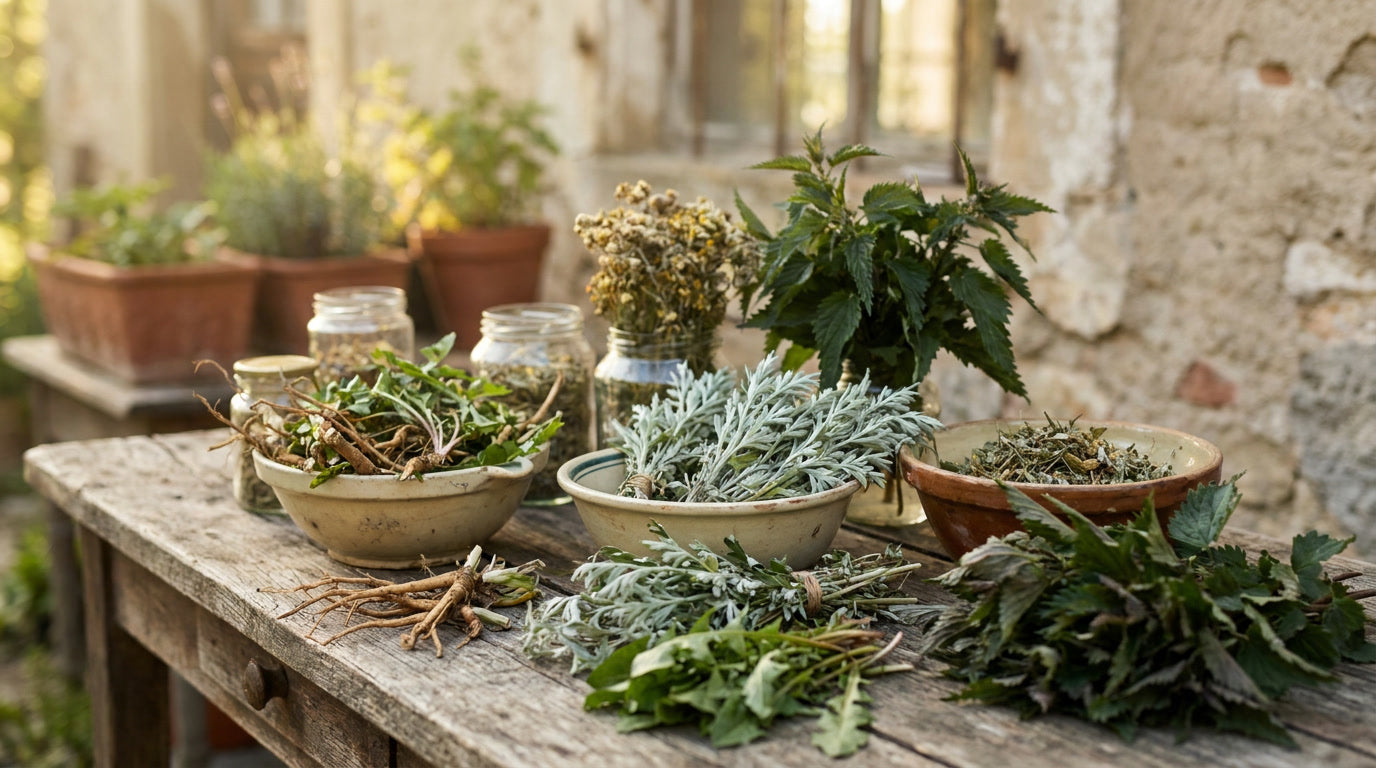
- Yarrow (Achillea millefolium): Hildegard of Bingen described yarrow as a valuable medicinal plant. In Central European folk medicine, it was traditionally used in connection with abdominal well-being.
“Milk thistle is one of the best-documented medicinal plants in the history of European phytotherapy. Its use can be traced back over 2000 years—from Roman antiquity through medieval monastery gardens to today’s naturopathy.” – From the historical overview of the European Pharmacopoeia on the genus Silybum
Herbs for the kidneys: Tradition from monastery gardens and folk medicine
The kidneys often receive less attention than the liver in modern health discussions—yet they are an equally fascinating organ. In Hildegard medicine, the kidneys were associated with the element water and the nightly regeneration process. Hildegard described various herbs she considered “kidney-friendly” and emphasized the importance of sufficient fluid intake and warming herbs for internal balance. This perspective sounds surprisingly modern when considering how central hydration is today in kidney care.
In folk medicine, herbs traditionally associated with water elimination and support of the urinary tract were especially valued for the kidneys. Nettle, birch, goldenrod, and bearberry are found in nearly every historical herbal collection of Central Europe when it comes to the kidney and urinary tract area. They were brewed as teas, drunk as fresh plant juices, or used in combination with other herbs as complex herbal formulas. The breadth of their traditional use testifies to how deeply this knowledge is rooted in European herbal culture.
Particularly interesting is the connection between kidney care and general well-being, as described by naturopathy for centuries. Many classic fasting cures—from medieval monastery fasts to modern detox protocols—consciously include both liver and kidney herbs. Fasting products This holistic view reflects the deep understanding that both organs should be considered together—a principle aptly described by the Bitterkraft philosophy of “adding instead of omitting.”
In monastic medicine, kidney herbs were never viewed in isolation: they were always part of a holistic herbal concept that understood liver, kidney, and internal balance as an inseparable unit.
Traditional kidney herbs from folk medicine:
- Nettle (Urtica dioica): One of the best-known and most versatile herbs of European folk medicine. Traditionally used as a spring tea for general vitality and in connection with kidney well-being.
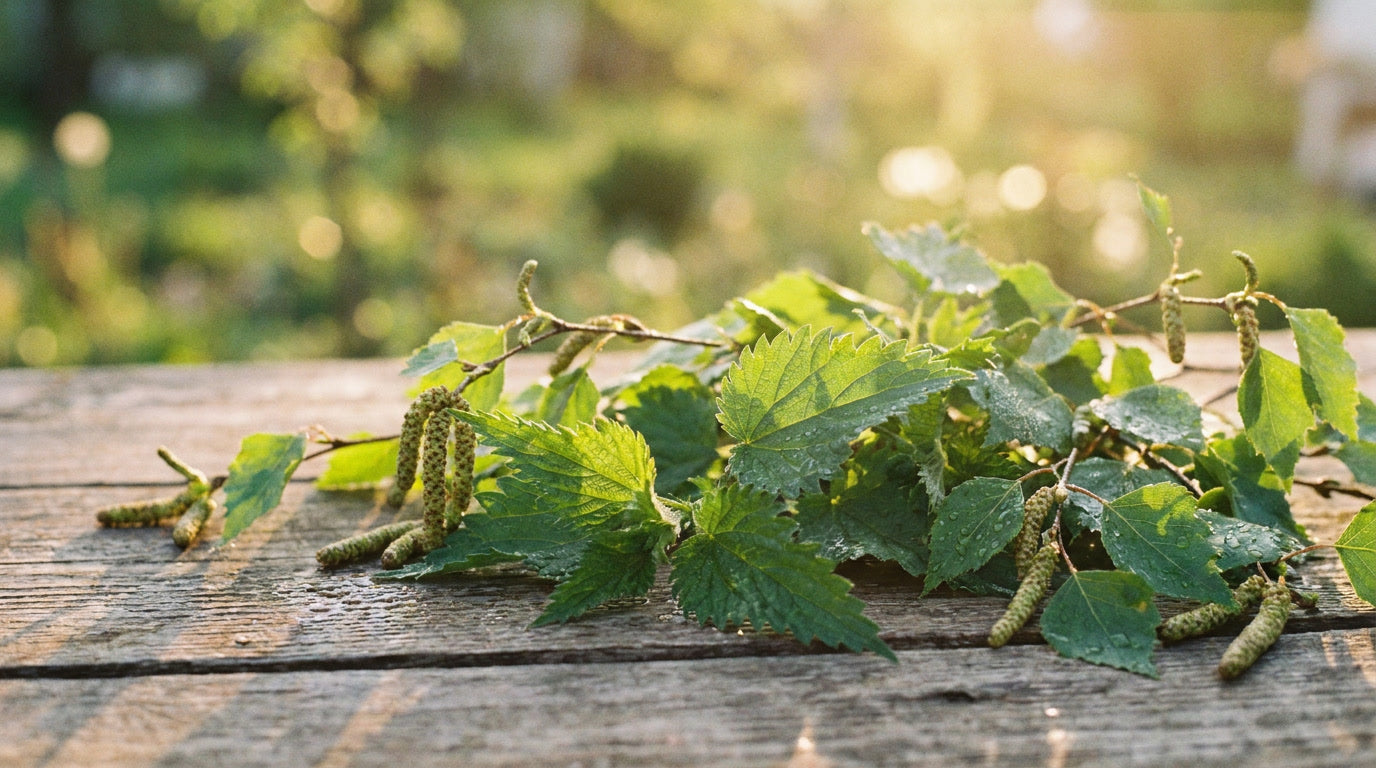
- Birch leaves (Betula pendula): Known in Northern European monastic medicine for centuries as “water herb.” Traditionally used as tea in spring and during fasting cures.
- Goldenrod (Solidago virgaurea): Valued by Hildegard of Bingen as a medicinal plant. Traditionally used in Central European folk medicine since the Middle Ages in connection with the urinary tract.
- Horsetail (Equisetum arvense): One of the oldest medicinal herbs ever—its history dates back to antiquity. Traditionally known in European naturopathy as a mineral-rich herb related to water metabolism.
- Bearberry (Arctostaphylos uva-ursi): Historically valued in Alpine medicine and Nordic monastic medicine. Traditionally used to support well-being in the urinary tract area.
“Nettle (Urtica dioica) appears in nearly all significant European herbal works from the early Middle Ages to modern times—from Hildegard’s Physica through Tabernaemontanus’ herbal book (1588) to Pastor Künzle’s works. Its continuous mention across centuries and cultural boundaries is a sign of its special status in European herbal tradition.” – From an overview of the ethnobotany of Urticaceae in Central Europe
Hildegard’s holistic view: Liver and kidneys as part of internal balance
What makes Hildegard of Bingen’s herbal knowledge so timeless is her holistic approach. She did not see the human body as a collection of individual organs to be treated independently but as a coherent system of fluids, warmth, and life force. In this system, the liver and kidneys had clearly defined roles—but they were always embedded in the bigger picture. Nutrition, sleep, emotional balance, and the rhythm of the seasons played a role for Hildegard just as much as the right herbs. Hildegard von Bingen products
Hildegard recommended, among other things, fennel for the body’s internal balance, which she described as warming and harmonizing, as well as bertram (Anacyclus pyrethrum)—a plant less known in modern naturopathy but significant in Hildegard medicine. For the liver area, she valued liverwort and various bitter plants, which she recommended as a counterbalance to an overly indulgent lifestyle. These recommendations are historically, culturally, and culinarily shaped—they reflect the world of the 12th century but contain wisdom that still inspires today.
Particularly interesting is Hildegard’s concept of Viriditas—the green life force she located as divine energy in plants and humans. This force was to be nurtured and preserved. Herbs that supported internal cleansing were considered means to maintain this Viriditas. From a modern perspective, one could say Hildegard intuitively understood that reducing burdensome substances and caring for internal organs is closely linked to overall well-being—a thought that is fully in vogue again in today’s naturopathy and preventive medicine.
Hildegard’s herbal philosophy in practice
Hildegard of Bingen distinguished in her natural science between “warm” and “cold” medicinal plants. For the liver, she preferred warming, bitter-aromatic herbs like yarrow, bertram, and dandelion. For the kidneys, she recommended rather cooling-moist herbs that support water balance. This classification by temperament and quality is a fascinating historical parallel to other traditional medical systems such as Traditional Chinese Medicine or Ayurveda—a sign that humanity’s intuitive knowledge about body care with plants is of universal nature.
For Hildegard, caring for the liver and kidneys was also inseparably linked to lifestyle: moderation in food and drink, regular fasting periods, sufficient sleep, and nurturing inner mood were just as important as herbal teas and herbal dishes. Sleep and relaxation products This holistic view is as relevant today as it was then—and it reminds us that herbs should never be understood as isolated “remedies” but as part of a conscious culture of living.
Practical herbal knowledge: How to integrate liver and kidney herbs into everyday life
Good news for all naturopathy enthusiasts: integrating liver and kidney herbs into daily life need not be complicated or time-consuming. Monastic medicine relied on simple, everyday forms—teas, herbal dishes, tinctures, and herbal spice blends. The principle of “adding instead of omitting” fits perfectly here: it’s not about radically changing habits but about consciously weaving valuable herbs into the existing lifestyle. BitterKraft Original
Especially popular and easy to implement is the traditional herbal tea. A classic liver tea, for example, combines milk thistle fruits, dandelion root, and yarrow—a mixture that has been used in European folk medicine for centuries in spring cures. For the kidneys, a tea made from nettle leaves, birch leaves, and horsetail is suitable, traditionally drunk with plenty of fluids. It is important to pay attention to the quality of the herbs: organically grown, gently dried herbs contain valuable plant substances in their original form—a quality feature that enjoys the highest priority in naturopathy.
Those who want to go beyond teas will find a wide range of options in naturopathy: herbal tinctures offering a concentrated form of plant substances, herbal oils for external use, or high-quality dietary supplements in capsule form containing standardized plant extracts. Combination products containing both liver and kidney herbs reflect the holistic approach of naturopathy—they consider the detox team as a whole, not as individual organs. Liver products from Bitterkraft
The easiest entry into traditional herbal care for liver and kidneys: a daily herbal tea based on traditional monastic medicine recipes—complemented by a conscious, moderate lifestyle according to Hildegard’s principles.
It is especially recommended to connect herbal cures with the seasons—as monastic medicine has always practiced. Spring is traditionally considered the ideal time for liver and kidney herbs: the first nettles and dandelion leaves sprout, and the body is ready to enter a more active rhythm after winter. A two- to four-week herbal cure rhythm in spring and autumn is a classic element of European naturopathy that can be easily integrated into modern everyday life without much effort. Fasting products
“Spring was the time of internal renewal in medieval monastic medicine. The first wild herbs—nettle, dandelion, yarrow—were consciously used as the first spring food and as tea. This practice of seasonal herb use is found in monastery rules from the early Middle Ages to the early modern period and reflects a deep understanding of the rhythm of nature and the body.” – From a historical overview of monastic medicine in the German-speaking area
Finally, a thought that unites both Hildegard’s philosophy and modern naturopathy: the best herbs are those used regularly and consciously—not as a quick fix but as part of a culture of living that meets the body and its self-regulating power with respect and trust. The liver and kidneys are silent, enduring workers—they deserve equally silent, enduring care with the treasures nature has provided for centuries.


Leave a comment
This site is protected by hCaptcha and the hCaptcha Privacy Policy and Terms of Service apply.