




Those who wake up in the morning with heavy legs, notice swollen ankles in the evening, or feel that their body is retaining water know the unpleasant sensation of an imbalanced water balance. Often, there is no great medical mystery behind it: the ratio of sodium to potassium in the body plays a central role in how well fluids are regulated and excreted. While sodium—mainly from table salt—binds water in the tissues, potassium traditionally acts as a natural counterbalance. The good news: by consciously choosing certain foods and medicinal herbs, as highly valued in monastic medicine, this balance can be gently supported.
Sodium and Potassium – two minerals, one delicate balance
Sodium and potassium are so-called electrolytes—charged minerals that play a fundamental role in every single body cell. Simply put: sodium is primarily found outside the cells and attracts water, while potassium is concentrated inside the cells and helps regulate fluid distribution. This interplay is called the sodium-potassium pump—a biological mechanism that has operated in the human body for thousands of years, long before science could name it.
The problem with modern diets: many people consume significantly more sodium daily than potassium. Ready-made meals, processed meats, cheese, and salted snacks provide sodium in amounts the body can hardly balance—especially when fresh vegetables, fruits, and legumes are lacking on the menu. Traditional monastic cuisine did not know this imbalance: herbs, roots, and seasonal vegetables naturally rich in potassium were prepared daily.
A permanently shifted sodium-potassium ratio—too much sodium, too little potassium—is considered one of the most common causes in naturopathy for the feeling of water retention and a heavy, bloated body sensation.
It is not about completely avoiding sodium. Salt is essential for life, and a deficiency is just as problematic as an excess. It’s about the ratio: nutritionists and naturopaths traditionally recommend consuming significantly more potassium than sodium. In traditional European herbal medicine—especially in the Hildegard tradition—this knowledge was intuitively present: fresh herbs, root vegetables, and bitter wild plants were not only used as seasonings but also regarded as daily care for inner balance.
The Benedictine Hildegard of Bingen described numerous plants and foods as part of a balanced lifestyle in her 12th-century work “Physica.” She clearly distinguished between foods that “burden” the interior and those that “ease” it—a description that aligns surprisingly well with modern knowledge about mineral balance and diuresis.
Potassium-rich foods the body knows and appreciates
Nature has produced a remarkably wide variety of foods naturally rich in potassium. The beauty is that most of these were already a staple in traditional Central European cuisine. Dried apricots, pumpkin, potatoes, spinach, avocado, lentils, and bananas are among the best-known potassium sources. But herbs like nettle, parsley, and lovage, which played a prominent role in monastic medicine, are also surprisingly rich in potassium.
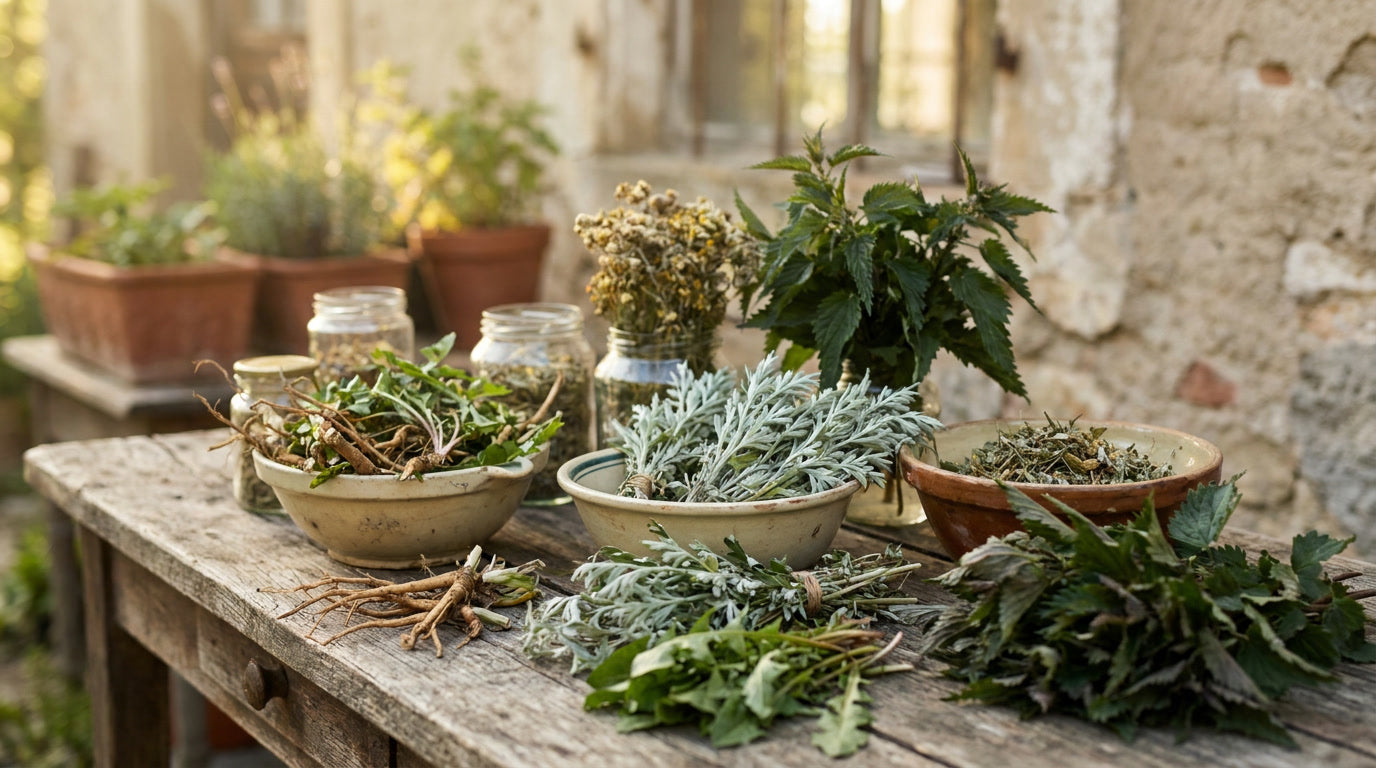
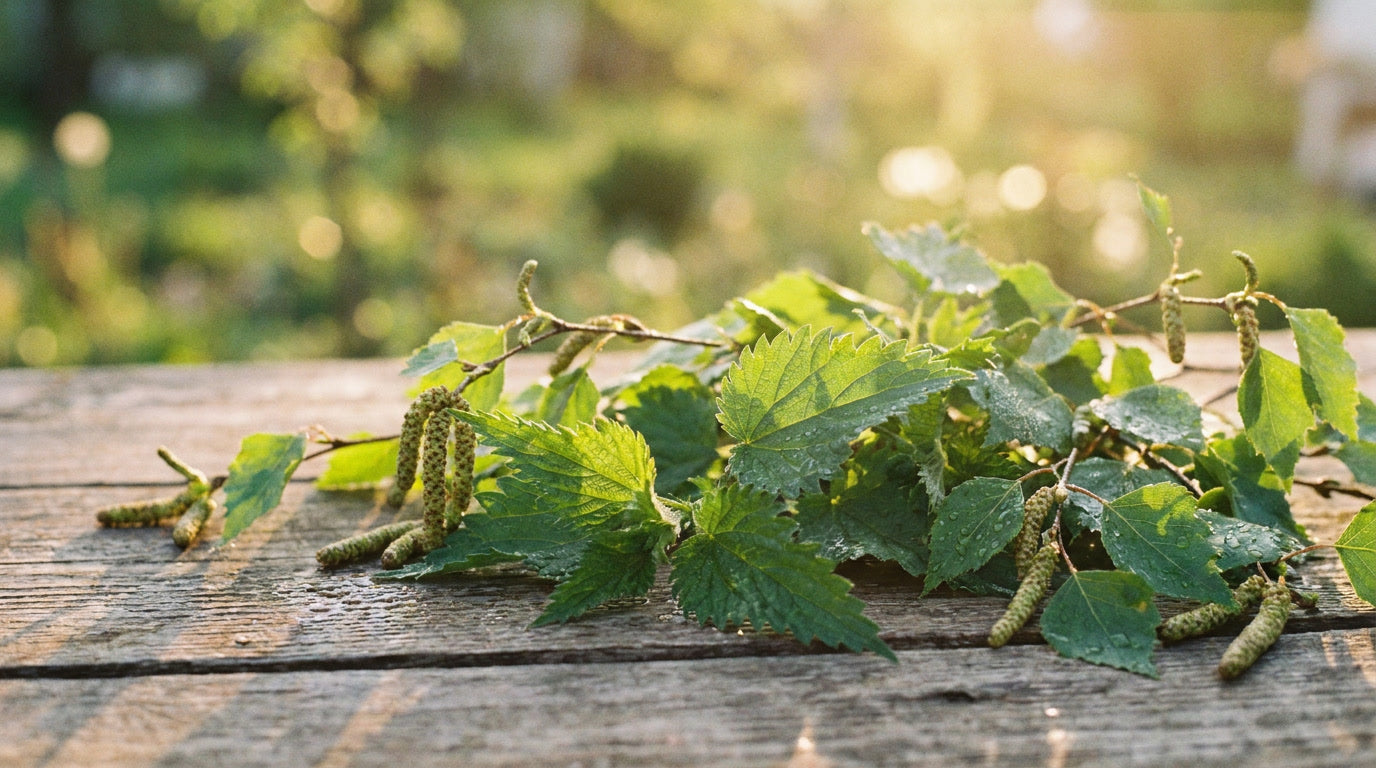
Particularly noteworthy is the nettle (Urtica dioica): it has been traditionally valued for centuries as one of the most precious spring herbs in European naturopathy and is naturally rich in minerals including potassium, magnesium, and iron. In monastic medicine, it was traditionally used as tea, soup, or fresh as a wild herb—not as a medicine but as a nourishing, cleansing food in spring when the body should be “awakened” after winter. Hildegard von Bingen products
Potatoes are often an underestimated potassium champion in Central European cuisine. A medium-sized cooked potato already provides a considerable portion of the daily potassium requirement. Although Hildegard von Bingen did not know the potato (it arrived in Europe only in the 16th century), her basic idea—to prefer root-like, soil-close vegetables as the basis of a balancing diet—is reflected in modern nutritional recommendations. Important: cook or steam potatoes with the skin on, as potassium is water-soluble and lost when boiled.
What’s behind it? Potassium in the daily diet
Potassium (chemical symbol: K) is an essential mineral that the human body cannot produce itself and must be taken in daily through food. It is mainly found in plant-based foods, especially those with high water content or intense cell growth. The bioavailability of potassium from natural foods is generally very good—the body can efficiently utilize it from fresh vegetables, legumes, and herbs. Those who eat a varied, plant-rich diet often meet their potassium needs through food alone.
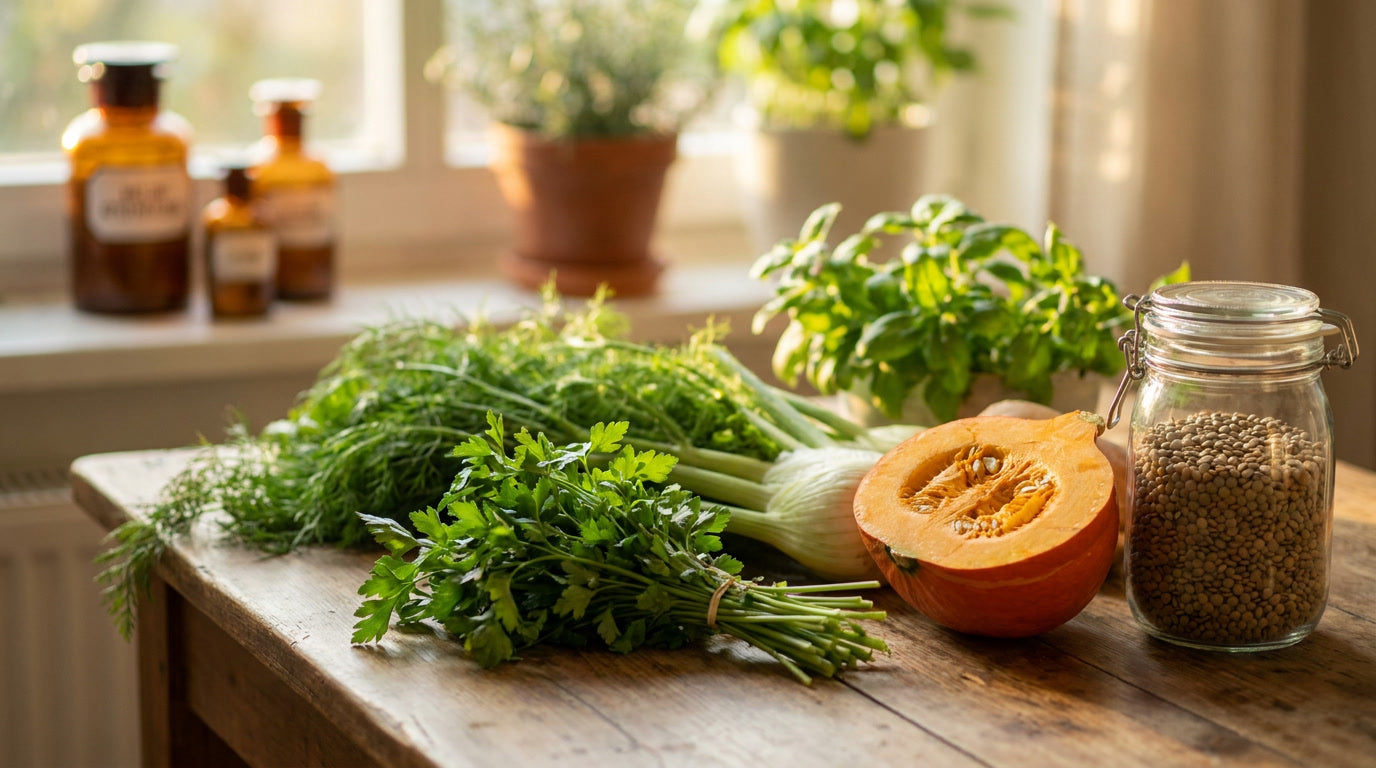
Among the potassium-rich foods in traditional European cuisine are: nettle, potatoes (with skin), spinach, parsley, pumpkin, lentils, dried apricots, and avocado—many of which were already a regular part of daily meals in medieval monastic kitchens.
These herbs and foods traditionally support potassium balance:
- Nettle (Urtica dioica): One of Europe’s most mineral-rich wild herbs, traditionally valued for centuries as a spring cure and in monastic cuisine. Passed down as tea or soup herb.
- Parsley (Petroselinum crispum): Known in Hildegard’s herbal medicine as a warming, invigorating kitchen herb—and at the same time a natural potassium source that can be used daily in cooking.
- Lovage (Levisticum officinale): The “Maggi herb” of monastery gardens. Hildegard von Bingen described it as a valuable seasoning herb; it is naturally rich in potassium and was traditionally used as part of a balancing diet.
- Pumpkin (Cucurbita): Seasonal autumn vegetable with considerable potassium content, regarded in monastic tradition as a nourishing and balancing food.
- Lentils and legumes: Known since the Middle Ages in Central European fasting traditions and monastic cuisine as a plant-rich protein source and important potassium supplier.
- Avocado: Although originally not from Europe, today one of the best-known potassium sources—with a particularly favorable sodium-potassium ratio.
Hildegard’s herbal knowledge and natural water balance
Hildegard von Bingen, the visionary 12th-century Benedictine, distinguished in her natural philosophy between foods and herbs that “moisten” or “dry,” that “weigh down” or “ease” the body. Although she did not know the terms sodium and potassium, she intuitively described the difference between foods that burden the tissues and those that help the body regain balance. In her writing “Causae et Curae,” she regularly recommended fresh herbs, root vegetables, and wild plants as part of a conscious life rhythm—not as therapy but as daily care. Hildegard von Bingen products
Special mention was given by Hildegard to fennel (Foeniculum vulgare), which she described as one of the most valuable everyday herbs. It was cultivated in monastery gardens and traditionally used both as a spice and as tea. Fennel is naturally rich in potassium and contains essential oils that give it its characteristic flavor. In Hildegard’s medicine, it was considered a pleasant, mild herb that could be used daily. Dill and caraway were similarly valued in monastic herbal medicine—aromatic companions of a balanced kitchen that are also natural mineral sources.
“Fennel is warm and dry. However it is eaten, it makes people cheerful and gives them pleasant warmth, good sweat, and a good smell.” – Hildegard von Bingen, Physica (12th century). This description points to the traditional appreciation of fennel as a practical wellness herb long before modern nutritional science.
What makes Hildegard’s herbal knowledge so timeless is its focus on everyday ritual: herbs were not seen as occasional interventions but as a natural part of every meal, every tea, every season. This exactly matches what modern nutritional approaches today call the “food-first” principle—the idea that nutrients from real food are better integrated than from isolated sources. Those who sprinkle parsley on their food daily, drink fennel tea, add nettles to soup, and regularly serve legumes approach this traditional ideal. BitterKraft Original
The idea of seasonal eating was also central in monastic medicine: in spring, mineral-rich wild herbs like nettle and ground elder; in summer, leafy greens; in autumn, pumpkin and root vegetables; in winter, dried legumes and herbal teas. This instinctive seasonality ensured the body was supplied year-round with a broad spectrum of minerals—including enough potassium to balance the naturally consumed sodium from meat and cured foods.
Practical dietary rituals for more balance in everyday life
Theory is one thing—but what does a potassium-rich, balanced diet look like in everyday life? The good news: no complicated diet, no expensive superfoods, and no radical changes are needed. It’s about—very much in the spirit of Hildegard’s thinking—consciously adding naturally mineral-rich foods, not eliminating. Fasting products
A simple, practical ritual: start the morning with a glass of warm water and a small bunch of fresh parsley or a teaspoon of chopped nettle (dried or blanched to neutralize the stinging hairs). For lunch, a potato soup with lovage and pumpkin; for dinner, lentils with steamed spinach and a splash of lemon. This combination already covers a large part of the daily potassium requirement—and in a way familiar to the body and certainly approved by Hildegard von Bingen. The key point: not isolated nutrients, but holistic foods, in the right quality, at the right time.
The most important dietary principle for a balanced sodium-potassium balance is: more fresh, seasonal vegetables, wild herbs, and legumes—and fewer heavily processed, salt-rich convenience foods. This principle is as old as monastic cuisine itself.
Practical tips for daily potassium intake—traditionally and modernly combined
1. Use fresh herbs daily: Add parsley, chives, dill, and lovage fresh to dishes—not just as decoration but as a conscious mineral supplement.
2. Steam potatoes instead of boiling: Since potassium is water-soluble, a significant amount is lost during long cooking in lots of water. Steaming or cooking in the skin is gentler.
3. Nettle tea as a spring ritual: Those with access to fresh nettles can pick them young, blanch briefly, and use as tea or soup ingredient—a monastic ritual with a long tradition.
4. Use dried fruits wisely: Dried apricots, figs, and dates are concentrated potassium sources—ideal as a small snack or in porridge and muesli.
5. Use low-salt herb spice blends: Instead of ready-made spice mixes high in sodium, make your own blends from herbs, turmeric, caraway, and pepper—more flavor, less sodium.
Those who want to take traditional herbal wisdom a step further should not forget the effect of bitter substances in relation to mineral balance. Bitter herbs like dandelion, artichoke, and chicory were traditionally considered part of a cleansing spring diet in monastic medicine. Dandelion, for example—highly valued in the Hildegard tradition as a wild plant—is not only rich in bitterness but also a natural potassium source. The beauty of traditional herbal medicine: taste and nutritional value often go hand in hand. BitterKraft Original
Finally, a thought often overlooked in naturopathy: the body’s water balance depends not only on diet. Drinking enough—ideally still water, unsweetened herbal teas, and mineral-rich spring water—is the foundation on which all other measures build. Monastic medicine also taught this: herbal teas were not the exception but the rule. Drunk daily, in varying compositions depending on season and need—a habit that would do modern life good. A nettle tea in the morning, a fennel-lovage tea at midday, and a mild linden blossom tea in the evening—that’s not effort, that’s tradition. And tradition passed down over centuries usually carries a good core within it.


Leave a comment
This site is protected by hCaptcha and the hCaptcha Privacy Policy and Terms of Service apply.