

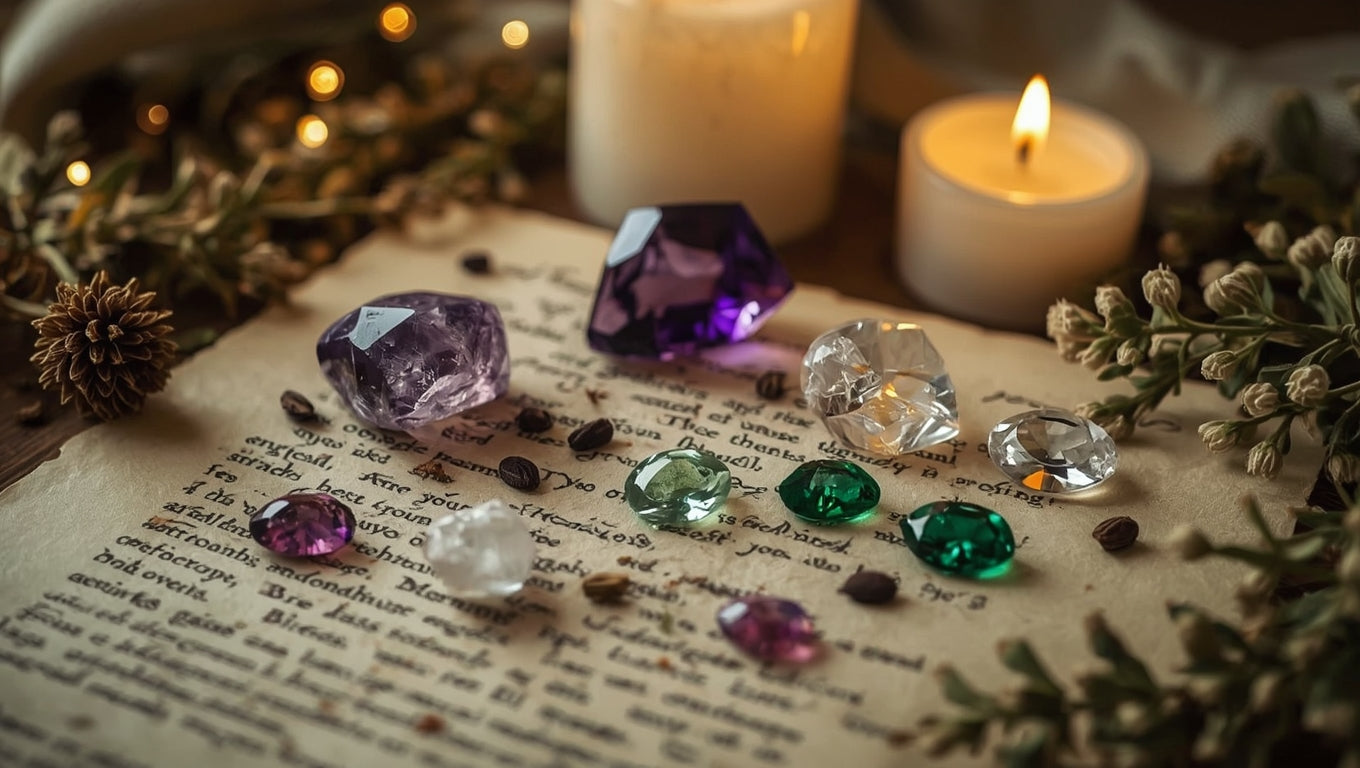
Hildegard von Bingen, die große Mystikerin und Heilkundige des 12. Jahrhunderts, betrachtete die Natur als Quelle göttlicher Heilkraft. Neben ihrem umfassenden Wissen über Heilpflanzen entwickelte sie auch eine faszinierende Lehre über die spirituellen und energetischen Eigenschaften von Edelsteinen und Mineralien. In ihrer Schrift "Physica" beschrieb sie detailliert, wie verschiedene Steine das Gleichgewicht von Körper, Geist und Seele unterstützen können. Diese jahrhundertealte Weisheit erlebt heute eine Renaissance, da immer mehr Menschen nach natürlichen Wegen suchen, ihr Wohlbefinden zu stärken.
📋 Inhaltsverzeichnis
Die Grundlagen von Hildegards Steinlehre
Hildegard verstand Edelsteine als lebendige Träger kosmischer Kräfte, die durch ihre spezifischen Schwingungen auf den Menschen einwirken können. Ihrer Lehre nach entstanden die Steine durch die Vereinigung der vier Elemente - Feuer, Wasser, Erde und Luft - und tragen daher besondere Heilenergien in sich. Diese Vorstellung basierte auf der mittelalterlichen Humoralpathologie, wonach Gesundheit durch das Gleichgewicht der Körpersäfte erreicht wird.
Die Benediktinerin kategorisierte verschiedene Mineralien nach ihrer Wirkung auf die menschliche Konstitution und die seelischen Verfassungen. Dabei unterschied sie zwischen "warmen" und "kalten" Steinen, die jeweils unterschiedliche Temperamente ausgleichen sollten. Warme Steine wie der Rubin wurden traditionell zur Stärkung der Lebenskraft verwendet, während kühlere Mineralien wie der Saphir für ihre beruhigenden Eigenschaften geschätzt wurden.
Besonders faszinierend ist Hildegards ganzheitlicher Ansatz: Sie betrachtete nie nur die körperlichen Aspekte, sondern bezog immer auch die geistige und spirituelle Dimension mit ein. Die Hildegard von Bingen Produkte Tradition lehrt uns, dass wahre Heilung nur durch die Harmonisierung aller drei Ebenen möglich ist - ein Prinzip, das heute in der modernen Naturheilkunde wieder großen Anklang findet.
Die wichtigsten Heilsteine nach Hildegard
In Hildegards umfassendem Werk finden sich Beschreibungen von über 20 verschiedenen Edelsteinen und deren traditionelle Anwendungsgebiete. Der Amethyst nimmt dabei eine besondere Stellung ein: Die Äbtissin schätzte ihn als "Stein der Klarheit", der traditionell zur Förderung geistiger Ruhe und innerer Balance verwendet wurde. Sie empfahl, den violetten Kristall bei sich zu tragen oder auf die Stirn zu legen, um den Geist zu beruhigen und die Konzentration zu fördern.
Der Bergkristall galt Hildegard als universeller Harmonisierer, der nach ihrer mittelalterlichen Lehre die natürlichen Erneuerungskräfte des Körpers unterstützen könnte. Sie beschrieb ihn als Stein, der traditionell verwendet wurde, um störende Einflüsse zu transformieren und die Verbindung zur eigenen inneren Weisheit zu stärken. Besonders interessant ist ihre Empfehlung, Bergkristall-Wasser herzustellen, indem man den Stein über Nacht in klares Quellwasser legt - eine Praxis, die auch heute noch von vielen Naturheilkundigen geschätzt wird.
Der Smaragd wurde von der Heiligen als "Stein des Herzens" verehrt und traditionell zur Stärkung der emotionalen Balance eingesetzt. Nach der traditionellen Hildegard-Lehre wurde angenommen, dass er besonders kraftvoll für Menschen sei, die unter seelischen Belastungen leiden. Historisch betrachtet sollte der grüne Edelstein das Herz öffnen und die Fähigkeit zu Mitgefühl und Vergebung fördern - Eigenschaften, die für das seelische Wohlbefinden von großer Bedeutung sind.
Anwendungsmethoden der mittelalterlichen Steinheilkunde
Hildegards Anwendungsmethoden für Edelsteine waren vielfältig und durchdacht. Am häufigsten empfahl sie das direkte Auflegen der Steine auf bestimmte Körperregionen, wobei sie großen Wert auf die richtige Platzierung legte. Für Herzangelegenheiten sollten Steine auf die Herzregion gelegt werden, für geistige Klarheit auf die Stirn oder den Scheitel. Diese Methode wird heute noch in der modernen Kristalltherapie angewendet.
Eine weitere traditionelle Anwendungsform war das Tragen von Edelsteinen als Schmuck oder Amulett. Hildegard betonte, dass der ständige Hautkontakt die Wirkung der Steine verstärken könne. Sie empfahl besonders Ringe und Anhänger, da diese nahe am Herzen oder an den Energiezentren der Hände getragen werden. Diese Praxis ermöglicht es, die subtilen Schwingungen der Mineralien kontinuierlich aufzunehmen und in den eigenen Energiehaushalt zu integrieren.
Die Herstellung von Edelsteinwässern stellte eine weitere wichtige Säule der hildegardischen Steinlehre dar. Diese Methode basiert auf der Annahme, dass Wasser als Informationsträger die energetischen Eigenschaften der Steine aufnehmen und speichern kann. Hildegard beschrieb detailliert, wie verschiedene Steinwässer zubereitet werden sollten und bei welchen Konstitutionstypen sie traditionell Anwendung fanden. Wichtig war ihr dabei immer die Qualität des verwendeten Wassers und die Reinheit der Steine.
Integration in den modernen Alltag
Die Weisheit Hildegards lässt sich durchaus in unser heutiges Leben integrieren, ohne dabei den wissenschaftlichen Verstand außer Acht zu lassen. Viele Menschen berichten von positiven Erfahrungen, wenn sie Edelsteine als Unterstützung für Meditation, Entspannungsübungen oder zur allgemeinen Stärkung des Wohlbefindens verwenden. Dabei geht es nicht um Wunderheilungen, sondern um subtile Impulse, die das körperliche und seelische Gleichgewicht fördern können.
Eine moderne Herangehensweise könnte darin bestehen, einzelne Steine gezielt für bestimmte Lebenssituationen zu verwenden. Ein Amethyst auf dem Nachttisch kann zu einem entspannteren Schlaf beitragen, während ein Bergkristall am Arbeitsplatz die Konzentration fördern mag. Wichtig ist dabei, mit Offenheit und gleichzeitig kritischem Verstand an die Sache heranzugehen und die eigenen Erfahrungen zu beobachten.
Die Edelsteintherapie nach Hildegard sollte immer als Ergänzung zu einem gesunden Lebensstil verstanden werden. Wie auch bei ihrer Hildegard von Bingen Produkte Kräuterheilkunde betonte die Mystikerin die Bedeutung einer ausgewogenen Lebensführung, die neben der Anwendung natürlicher Heilmittel auch gesunde Ernährung, ausreichend Bewegung und spirituelle Praxis umfasst. Nur in diesem ganzheitlichen Kontext können Edelsteine ihre traditionelle Wirkung als Unterstützer für Körper, Geist und Seele voll entfalten.
🤖 Das Beitragsbild dieses Artikels wurde mit Leonardo.ai mithilfe von Künstlicher Intelligenz generiert (gemäß EU AI Act Art. 50 gekennzeichnet).

Hinterlasse einen Kommentar
Diese Website ist durch hCaptcha geschützt und es gelten die allgemeinen Geschäftsbedingungen und Datenschutzbestimmungen von hCaptcha.