

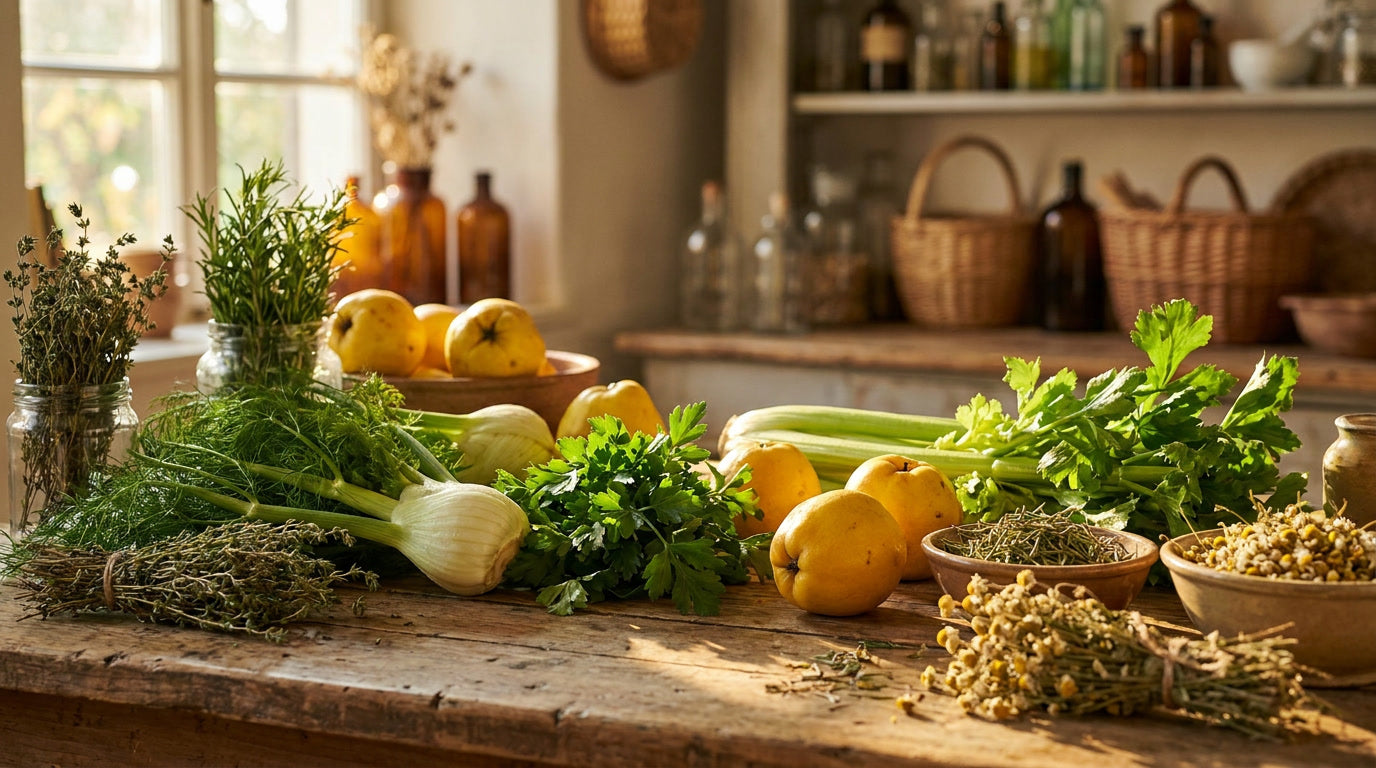
Wasser im Gewebe, ein Gefühl von Schwere und Fülle – viele Menschen kennen diese Empfindung, besonders in den wärmeren Jahreszeiten oder nach üppigen Mahlzeiten. Die mittelalterliche Äbtissin und Naturkundlerin Hildegard von Bingen (1098–1179) beschäftigte sich intensiv mit der Frage, wie bestimmte Nahrungsmittel das innere Gleichgewicht des Menschen beeinflussen können. In ihrer überlieferten Heilkunde, der sogenannten Klostermedizin, spielten Gemüse und Obst eine zentrale Rolle – nicht nur als Nahrung, sondern als bewusstes Mittel zur Pflege des Körpers. Wer auf der Suche nach traditionellen Wegen ist, das eigene Wohlbefinden mit natürlichen Lebensmitteln zu unterstützen, findet in Hildegards Werk eine faszinierende und bis heute lebendige Quelle des Wissens.
Hildegards Sicht auf Wasser, Säfte und das Gleichgewicht im Körper
Hildegard von Bingen entwickelte ihre Heilkunde auf der Grundlage der antiken Vier-Säfte-Lehre, die sie mit mystischen und spirituellen Elementen verband. In ihrem Hauptwerk Physica und dem Causae et Curae beschrieb sie detailliert, wie Lebensmittel die sogenannten Körpersäfte – Blut, Schleim, gelbe und schwarze Galle – beeinflussen. Ein Übermaß an wässrigen oder schleimigen Säften galt ihr als Ursache für Schwere, Trägheit und Unwohlsein. Bestimmte Gemüse- und Obstsorten wurden in der Klostermedizin traditionell eingesetzt, um das innere Gleichgewicht wiederherzustellen und die natürlichen Ausscheidungsprozesse des Körpers auf sanfte Weise zu unterstützen.
Besonders interessant ist Hildegards differenzierte Betrachtung der Nahrungsmittel: Sie unterschied zwischen Lebensmitteln, die Wärme und Trockenheit erzeugen, und solchen, die Kälte und Feuchtigkeit verstärken. Für Menschen, die sich häufig schwer und aufgedunsen fühlen, empfahl sie Kräuter und Gemüsesorten mit einer „trockenen" und „warmen" Qualität. Diese Klassifikation deckt sich in bemerkenswerter Weise mit modernen Erkenntnissen über sekundäre Pflanzenstoffe wie Flavonoide und Bitterstoffe, die in der Naturheilkunde seit Jahrhunderten geschätzt werden. Hildegard von Bingen Produkte
Das Konzept der Entwässerung war für Hildegard kein rein körperlicher Vorgang. Sie verstand ihn als Teil eines ganzheitlichen Reinigungsprozesses, der Körper, Geist und Seele gleichermaßen berührt. Nahrung war für sie nie neutral – sie war entweder heilsam oder schädlich, je nach Konstitution des Menschen und der Jahreszeit. Diese holistische Sichtweise macht Hildegards Lehre noch heute für viele Menschen attraktiv, die Gesundheit nicht auf einzelne Symptome reduzieren möchten, sondern den ganzen Menschen in den Blick nehmen wollen.
Hildegard schreibt in der Physica: „Der Mensch soll die Natur seiner Speisen kennen, denn was er isst, das wird er." – Diese Aussage verdeutlicht, wie eng Hildegard Ernährung und Wohlbefinden miteinander verknüpfte und wie zeitgemäß dieser Gedanke auch heute noch ist.
Entwässernde Gemüsesorten, die Hildegard besonders schätzte
Unter den Gemüsesorten, die in der Hildegard-Medizin traditionell als besonders wertvoll galten, nimmt der Fenchel eine herausragende Stellung ein. Hildegard widmete dem Fenchel außergewöhnlich viel Aufmerksamkeit und beschrieb ihn als eines der besten Gemüse für den Menschen überhaupt. Er wurde in der Klostermedizin jahrhundertelang verwendet, um das allgemeine Wohlbefinden zu fördern und das Gefühl innerer Leichtigkeit zu unterstützen. Der Fenchel galt als „warm und trocken" – ideal also für jene, die sich von Schwere und Wasseransammlungen befreien wollten. Heute ist er ein fester Bestandteil naturheilkundlicher Ernährungskonzepte.
Auch der Sellerie gehörte zu den Pflanzen, die Hildegard ausdrücklich empfahl. Sellerie – ob als Stauden- oder Knollensellerie – enthält viel Wasser, aber auch eine Vielzahl sekundärer Pflanzenstoffe, die in der traditionellen Naturheilkunde seit Jahrhunderten bekannt sind. Hildegard beschrieb Sellerie als Pflanze, die innerlich „reinigt" und den Körper von Überflüssigem befreit. In der modernen pflanzlichen Ernährungslehre wird Sellerie ebenfalls als entwässerndes Lebensmittel geschätzt – ein Beispiel dafür, wie traditionelles Wissen und zeitgemäße Erkenntnisse Hand in Hand gehen können.
Petersilie war in Hildegards Garten allgegenwärtig und galt nicht nur als Küchenkraut, sondern als echte Heilpflanze. Hildegard empfahl Petersilie in verschiedenen Zubereitungsformen – als Kraut, in Suppen oder als Bestandteil von Kräutermischungen. Besonders schätzte sie die Wurzel der Petersilie, der sie eine besondere Kraft im Umgang mit überschüssiger Feuchtigkeit im Körper zuschrieb. Bis heute ist Petersilie ein traditionell verwendetes Hausmittel, das in vielen europäischen Kulturen zur natürlichen Unterstützung der Nierenfunktion eingesetzt wird – stets im Rahmen einer ausgewogenen Ernährung und eines gesunden Lebensstils.
Diese entwässernden Gemüsesorten kennt die Hildegard-Medizin:
- Fenchel: In der Klostermedizin als „wärmendes und trocknendes" Gemüse geschätzt, wird Fenchel seit Jahrhunderten traditionell verwendet und ist historisch für seine Unterstützung des allgemeinen Wohlbefindens bekannt.
- Sellerie: Sowohl Stangen- als auch Knollensellerie gelten in der Hildegard-Tradition als reinigend; reich an Wasser und sekundären Pflanzenstoffen, seit Jahrhunderten in der Klosterküche verwendet.
- Petersilie: Historisch eines der meistgeschätzten Heilkräuter Hildegards, besonders die Wurzel wurde traditionell im Zusammenhang mit der Wasserausscheidung eingesetzt.
- Spargel: Im mittelalterlichen Kräuterwissen bekannt für seine „ausleitenden" Eigenschaften; wird traditionell als Frühjahrsgemüse zur inneren Reinigung verwendet.
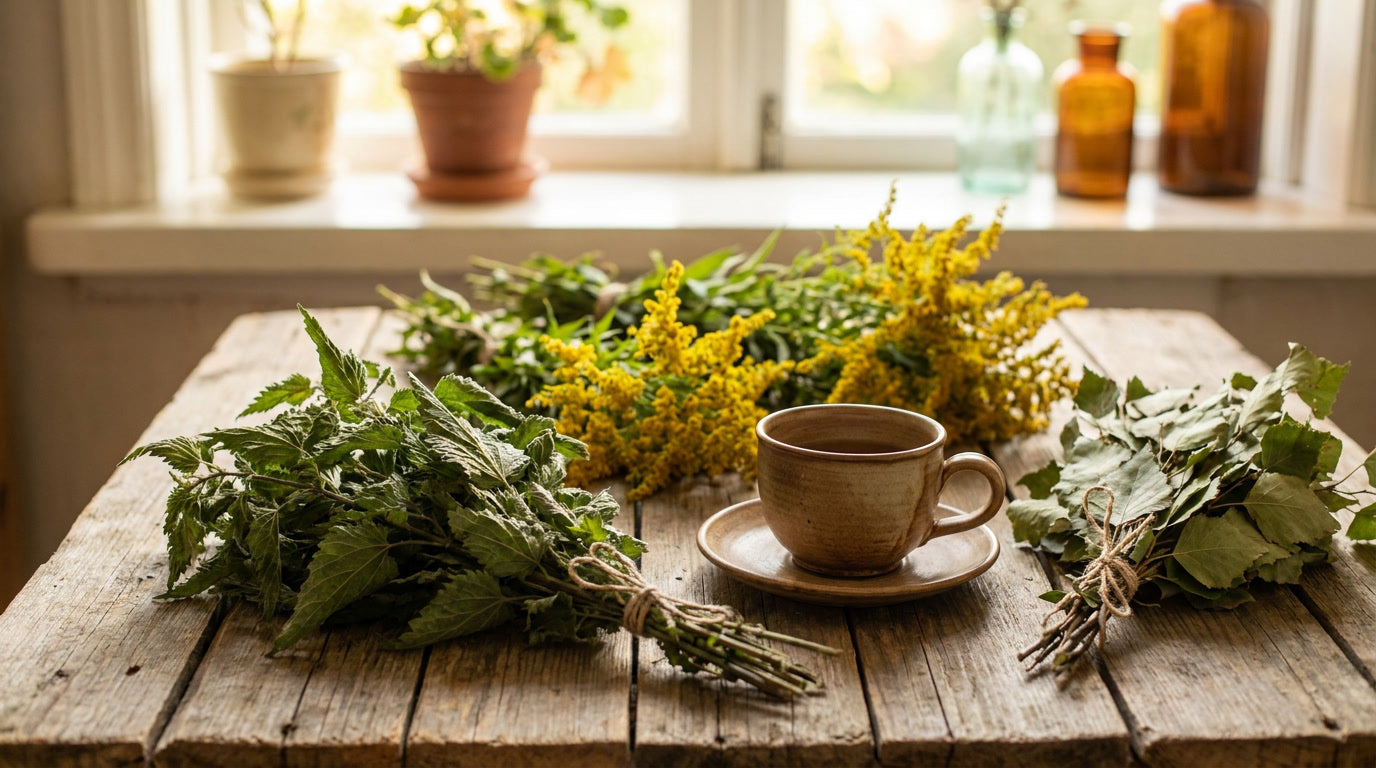
- Brennnessel: Als Wildgemüse in Hildegards Kräutergarten geschätzt, gilt die Brennnessel in der europäischen Naturheilkunde seit Jahrhunderten als klassisches entwässerndes Kraut.
Fenchel gilt in der Hildegard-Medizin als eines der wertvollsten Gemüse überhaupt – er wurde über Jahrhunderte hinweg traditionell eingesetzt, um das innere Gleichgewicht zu unterstützen und das allgemeine Wohlbefinden zu fördern.
Was steckt hinter der entwässernden Wirkung dieser Gemüse?
Viele der von Hildegard beschriebenen Gemüsesorten enthalten sekundäre Pflanzenstoffe wie Flavonoide, ätherische Öle und organische Säuren. Diese Stoffe sind in der traditionellen Naturheilkunde seit Jahrhunderten bekannt und werden in modernen Kräuterbüchern sowie naturheilkundlichen Standardwerken aufgeführt. Ihr traditioneller Ruf als entwässernde und reinigende Nahrungsmittel hat ihnen einen festen Platz in der europäischen Klostermedizin gesichert – ein Wissen, das heute in der Naturheilkunde neu entdeckt und wertgeschätzt wird.
Obstarten aus Hildegards Garten mit ausscheidungsfördernden Eigenschaften
Neben Gemüse spielte auch Obst eine wichtige Rolle in Hildegards Ernährungslehre – allerdings mit Einschränkungen. Die Äbtissin war nicht unkritisch gegenüber Früchten: Viele Obstsorten, die roh verzehrt werden, bezeichnete sie als „schwer für den Magen" oder „feucht". Dennoch empfahl sie einige ausgewählte Obstsorten ausdrücklich und in bestimmten Zubereitungsformen. Die Quitte war eine ihrer Lieblingspflanzen – roh oder gekocht, als Quittenbrot oder Aufguss, wurde sie als besonders wertvoll für das allgemeine Wohlbefinden beschrieben. Hildegard schätzte die zusammenziehende, trocknende Qualität der Quitte, die sie als Gegenmittel gegen übermäßige Feuchtigkeit im Körper verstand. BitterKraft Original
Besonders interessant ist Hildegards Empfehlung der Maulbeere. In ihrem Werk beschrieb sie die Maulbeere als Frucht, die sowohl für Gesunde als auch für Menschen mit Beschwerden geeignet sei – vorausgesetzt, sie wird maßvoll genossen. Die dunklen Maulbeeren enthalten eine Vielzahl von Polyphenolen und wurden in der mittelalterlichen Heilkunde traditionell als blutreinigend und ausscheidungsfördernd eingestuft. Heutzutage erleben Maulbeeren in der naturheilkundlichen Ernährungsberatung eine Renaissance – nicht zuletzt, weil ihr Gehalt an Antioxidantien und sekundären Pflanzenstoffen in der wissenschaftlichen Forschung Interesse weckt.
Auch die Heidelbeere findet in der Hildegard-Überlieferung Erwähnung. Ihr wurde eine reinigende Wirkung auf Blut und Gewebe zugeschrieben – ein Konzept, das in der gesamten Klostermedizin des Mittelalters verbreitet war. Hildegard empfahl kleine Mengen Heidelbeeren, vorzugsweise im Sommer, wenn die Früchte reif und die innere Hitze des Körpers am stärksten ist. Das traditionelle Wissen um die Heilkraft der Heidelbeere hat sich in der europäischen Naturheilkunde bis heute erhalten: Ob als frische Frucht, als Saft oder als Extrakt – sie gehört zu den am meisten geschätzten heimischen Heilfrüchten.
Die Quitte ist Hildegards Obst-Geheimtipp: Als eine der wenigen Früchte, die sie rückhaltlos empfahl, steht sie symbolisch für das Prinzip „trocknend und wärmend" – das Grundprinzip aller entwässernden Lebensmittel in der Hildegard-Medizin.
Im Kloster wurden Quitten zu Mus, Saft und getrocknetem Brot verarbeitet. Diese Zubereitungsformen galten als besonders bekömmlich und wurden in klösterlichen Schriften des 12. und 13. Jahrhunderts immer wieder als Mittel zur inneren Reinigung erwähnt – ein früher Beleg für den Stellenwert von Nahrung als Pflege des Wohlbefindens.
Diese Obstarten werden in der Hildegard-Tradition traditionell zur Ausscheidungsförderung verwendet:
- Quitte: Hildegards „Lieblingsfrücht" – in der Klostermedizin sowohl roh als auch gekocht verwendet, gilt als traditionelles Mittel zur Förderung der inneren Balance.
- Maulbeere: Im mittelalterlichen Kräuterwissen als blutreinigend und ausscheidungsfördernd bekannt, reich an Polyphenolen und seit Jahrhunderten in der europäischen Naturheilkunde geschätzt.
- Heidelbeere: Traditionell zur inneren Reinigung eingesetzt, gehört sie zu den bekanntesten heimischen Heilfrüchten und ist seit der Antike in der europäischen Medizingeschichte belegt.
- Birne: Im Gegensatz zu Äpfeln von Hildegard als weniger „feucht" eingestuft; traditionell als leicht bekömmliche Frucht mit ausscheidungsunterstützenden Eigenschaften beschrieben.
So lässt sich Hildegards Ernährungswissen heute im Alltag anwenden
Das Schöne an Hildegards Lehre ist ihre Alltagstauglichkeit. Die meisten der von ihr empfohlenen Lebensmittel sind keine exotischen Raritäten, sondern Gemüse und Früchte, die wir in jedem Supermarkt oder auf dem Wochenmarkt finden. Es geht nicht darum, strikte Diäten zu befolgen oder auf bestimmte Nahrungsmittel vollständig zu verzichten. Hildegards Ansatz war immer ganzheitlich: Mehr von dem Guten in den Alltag integrieren – das Prinzip „Hinzufügen statt Weglassen". Fasten-Produkte
Praktisch kann das so aussehen: Ein Fenchelsalat zum Mittagessen, eine Brennnesselsuppe als Abendessen, zwischendurch Petersilienwasser oder ein Tee aus getrockneten Maulbeerblättern. Hildegard empfahl, die Nahrung bewusst und mit Dankbarkeit zu sich zu nehmen – das geistliche Element war für sie untrennbar mit der körperlichen Pflege verbunden. Wer heute in der Naturheilkunde nach Inspiration sucht, wird in diesem jahrhundertealten Wissen eine erstaunlich moderne Botschaft finden: Bewusstes Essen, saisonale Lebensmittel und der Respekt vor den Kräften der Natur sind keine modischen Trends, sondern tradiertes Heilwissen. Hildegard von Bingen Produkte
Für alle, die tiefer in Hildegards Ernährungslehre einsteigen möchten, empfiehlt sich eine Kombination aus Lektüre ihrer Originalwerke (in modernen Übersetzungen zugänglich) und der Beratung durch erfahrene Heilpraktikerinnen und Heilpraktiker, die in der Tradition der Klostermedizin ausgebildet sind. Hildegards Wissen entfaltet seine Kraft am besten, wenn es nicht als Regelwerk, sondern als lebendige Einladung verstanden wird – eine Einladung, die eigene Ernährung bewusster und naturverbundener zu gestalten. Eine ergänzende Unterstützung durch hochwertige Naturprodukte, die auf Hildegards Heilpflanzenwissen basieren, kann diesen Weg bereichern. Darm- und Verdauungsprodukte
Hildegards Ernährungslehre ist kein Verzichtsprogramm – sie lädt dazu ein, bewusst mehr von den richtigen Lebensmitteln in den Alltag zu integrieren. Fenchel, Sellerie, Petersilie, Quitte und Maulbeere sind dabei die Stars einer Küche, die traditionell für innere Leichtigkeit und Wohlbefinden steht.
Tipps zur Alltagsintegration nach Hildegard:
Morgenritual: Ein Glas lauwarmes Wasser mit frischer Petersilie oder Fenchelscheiben kann als bewusster Tagesstart gestaltet werden – ein Ritual, das in der Klosterheilkunde seinen festen Platz hatte.
Saisonalität beachten: Hildegard betonte immer wieder die Bedeutung saisonaler Ernährung. Spargel im Frühling, Heidelbeeren im Sommer, Sellerie im Herbst und Fenchel im Winter – die Natur gibt den Rhythmus vor.
Zubereitung mit Bewusstsein: Hildegard empfahl, Nahrung nicht in Hast, sondern mit Ruhe und Dankbarkeit zuzubereiten. Dieser Aspekt der Achtsamkeit ist ein zeitloser Teil ihrer Heilkunde.
Ergänzende Kräuter: Wer Hildegards Wissen vertiefen möchte, kann ergänzend zu Bittertonika oder Kräuterextrakten greifen, die auf traditionellen Rezepturen basieren – als Ergänzung zu einer bewussten Ernährungsweise, niemals als Ersatz. BitterKraft Original
Wer Hildegards Wissen ernsthaft erkunden möchte, sollte auch die spirituelle Dimension nicht außer Acht lassen. Für die Äbtissin war Gesundheit kein rein körperlicher Zustand – sie war Ausdruck von Harmonie zwischen Mensch und Schöpfung. Nahrung war ein Geschenk der Natur, das mit Respekt und Weisheit genutzt werden sollte. Diese Haltung kann heute als Einladung verstanden werden, die eigene Ernährung nicht als lästige Pflicht, sondern als tägliche Möglichkeit zur Selbstpflege zu betrachten. In diesem Sinne ist Hildegards Erbe weit mehr als eine Liste von Heilpflanzen – es ist eine Philosophie des Lebens, die in ihrer Tiefe und Aktualität bis heute begeistert. Immunsystem-Produkte

Hinterlasse einen Kommentar
Diese Website ist durch hCaptcha geschützt und es gelten die allgemeinen Geschäftsbedingungen und Datenschutzbestimmungen von hCaptcha.