

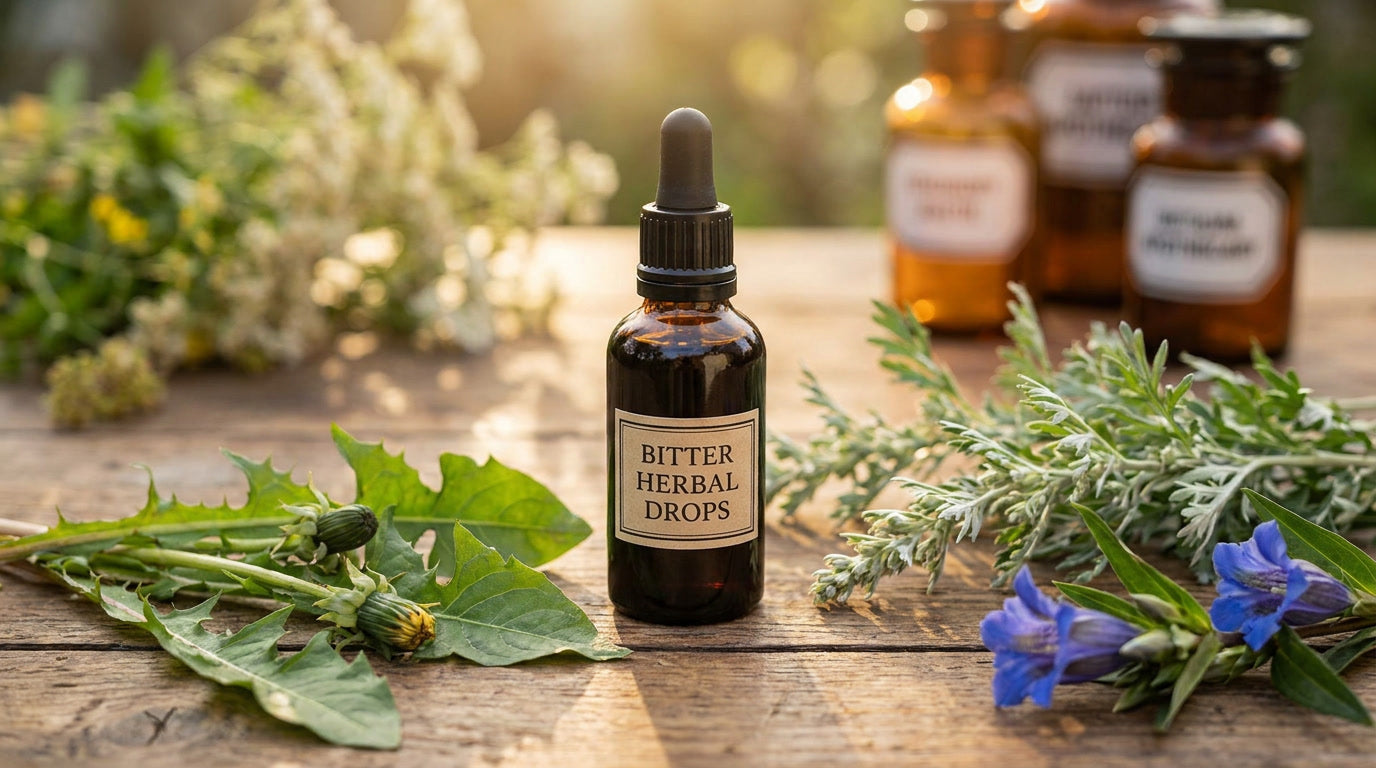
Wer sich nach dem Essen träge fühlt, morgens mit schweren Beinen aufwacht oder das Gefühl nicht loswird, dass der Körper irgendwie nicht richtig „fließt" – der ist damit nicht allein. Viele Menschen suchen nach natürlichen Wegen, um Verdauung und Ausscheidung wieder in Einklang zu bringen. In der Welt der Naturheilkunde rückt dabei ein uraltes Konzept zurück ins Bewusstsein: die Kraft der Bitterstoffe. Was Klostermedizinerinnen wie Hildegard von Bingen bereits im 12. Jahrhundert wussten, erleben heute immer mehr Menschen neu – nämlich dass Bittertropfen und Bitterstoffpräparate weit mehr sind als ein altes Hausmittel. Sie stehen am Schnittpunkt zweier grundlegender Körperfunktionen: der Verdauung und der Ausscheidung. Wie genau diese Verbindung aussieht und warum Bitterstoffe in der Tradition so hoch geschätzt wurden, zeigt dieser Artikel.
Die vergessene Sprache des Körpers – warum Bitterstoffe so besonders sind
Bitter ist in unserer modernen Ernährungswelt fast vollständig verschwunden. Industriell verarbeitete Lebensmittel sind süß, salzig oder fettig – doch kaum noch bitter. Dabei ist der Bittergeschmack evolutionär tief in uns verwurzelt. Schon unsere Vorfahren haben ihn genutzt, um den Organismus auf die Verdauung vorzubereiten. In der Naturheilkunde gilt die Empfindlichkeit für Bitteres nicht als unangenehme Eigenschaft, sondern als Zeichen eines lebendigen, aufmerksamen Körpers. Das Problem: Wer Jahrzehnte lang keine Bitterstoffe mehr zu sich nimmt, verliert nicht nur den Geschmack dafür – er verliert auch das Gespür dafür, wie sich ein „laufendes" Verdauungssystem eigentlich anfühlt.
In der traditionellen Pflanzenheilkunde werden Bitterstoffe seit Jahrhunderten als sogenannte Amara eingesetzt. Dieser Begriff stammt aus dem Lateinischen und bedeutet schlicht „die Bitteren". Gemeint sind Pflanzenstoffe, die ausschließlich über den Bittergeschmack auf den Organismus einwirken – also keine Gerbstoffe, keine ätherischen Öle, keine Alkaloide. Ihre Besonderheit liegt darin, dass sie bereits im Mund, über spezifische Rezeptoren auf der Zunge, wahrgenommen werden. Dieser Moment des Erkennens ist nach traditioneller Überzeugung der Beginn einer ganzen Kette von Körperreaktionen – eines Prozesses, der von der Mundschleimhaut bis in den Darm reicht und der historisch als umfassendes „Erwecken" des Verdauungsapparates beschrieben wurde.
Hildegard von Bingen beschrieb in ihren Schriften – insbesondere in der „Physica" und dem „Causae et Curae" – zahlreiche bittere Pflanzen als unverzichtbaren Teil einer ausgewogenen Ernährungs- und Heilweise. Für sie war Bitterkeit kein Fehler der Natur, sondern eine Tugend. Sie empfahl Kräuter wie Wermut, Enzian und Schafgarbe als Mittel, um das innere Gleichgewicht des Körpers zu wahren. Diese Sichtweise deckt sich erstaunlich gut mit dem, was die moderne Phytotherapie über Amara-Drogen lehrt – und was viele Menschen, die heute wieder auf Bittertropfen setzen, intuitiv spüren.
„Hildegard von Bingen schrieb im 12. Jahrhundert: ‚Der Wermut ist warm und hat mäßige Feuchtigkeit in sich, und er ist gesund und nützlich.' Sie empfahl ihn regelmäßig als Teil der täglichen Kräuterpflege – eine Tradition, die in der Klostermedizin bis heute lebendig ist." – Aus den Schriften der Hildegard von Bingen, überliefert in der Physica, Buch I.
Bitterstoffe sind in der modernen Ernährung nahezu verschwunden – dabei gelten sie in der Naturheilkunde seit Jahrhunderten als Schlüssel zu einem ausgeglichenen Verdauungssystem und einer gesunden Ausscheidung.
Der Weg vom Magen zum Gewebe – wie Verdauung und Ausscheidung zusammenhängen
Viele Menschen denken bei „Verdauung" an den Magen, bei „Ausscheidung" an den Darm – und sehen beides als getrennte Prozesse. Doch aus ganzheitlicher Sicht der Naturheilkunde sind diese beiden Funktionen untrennbar miteinander verbunden. Wenn die Verdauung stockt, kommt auch die Ausscheidung ins Stocken. Wenn der Körper Nahrung nicht vollständig verarbeiten kann, sammeln sich in der traditionellen Betrachtungsweise „Schlacken" und Belastungen an – ein Begriff, der in der modernen Medizin wenig Verwendung findet, in der Klostermedizin aber ein zentrales Erklärungsmodell für Trägheit, Schwellungsgefühle und innere Schwere darstellt.
Die Verbindung zwischen Verdauung und Entwässerung ist in der Naturheilkunde gut beschrieben: Ein Körper, der gut verdaut, scheidet auch gut aus – nicht nur über den Darm, sondern auch über Nieren, Haut und Lymphe. In der traditionellen chinesischen Medizin wie auch in der europäischen Kräutermedizin gilt die Leber als zentrales Organ dieser Verbindung. Sie verarbeitet, was aus dem Verdauungstrakt kommt, und bereitet es für die Ausscheidung vor. Wenn dieser Prozess ins Stocken gerät – etwa durch schwere Ernährung, Bewegungsmangel oder chronischen Stress –, zeigt sich das häufig durch Wassereinlagerungen, ein Schweregefühl in den Beinen oder eine allgemeine Mattigkeit. Leber-Produkte von Bitterkraft
Genau hier setzt das traditionelle Konzept der Bittertropfen an. Indem bittere Pflanzenextrakte im Mund wahrgenommen werden, setzt nach überlieferter Vorstellung eine Art „Startsignal" ein, das sich wie eine Welle durch den gesamten Verdauungstrakt bewegt. Historisch beschrieben Kräuterkundige diesen Effekt als „Erweckung" des Körpers – eine Aktivierung der Lebendigkeit, die mit modernen Begriffen wie „Stoffwechselanregung" oder „Ausleitung" nur unvollständig beschrieben wäre. Für die Naturheilkunde ist es ein ganzheitlicher Impuls: Der Körper wird eingeladen, das zu tun, was er ohnehin kann – er braucht nur den richtigen Anstoß. Darm- und Verdauungsprodukte
Was steckt hinter dem Begriff „Entwässerung" in der Naturheilkunde?
In der Naturheilkunde meint Entwässerung nicht die medizinische Behandlung von Ödemen, sondern die traditionelle Unterstützung der körpereigenen Ausscheidungsprozesse. Dazu gehört das Fördern der Nierentätigkeit durch harntreibende Kräuter (sogenannte Diuretika), das Anregen der Lymphe durch Bewegung und pflanzliche Mittel sowie die traditionelle Pflege der Darmpassage. Bittertropfen werden in diesem Zusammenhang als Teil einer umfassenden Ausscheidungspflege betrachtet – eingebettet in Ernährung, Bewegung und Kräuterrituale.
Die Verbindung zwischen Verdauung und Entwässerung lässt sich auch historisch in den Quellen der Klostermedizin nachvollziehen. Mönche und Nonnen in mittelalterlichen Klöstern bereiteten regelmäßig Kräuterbittertinkturen zu – nicht nur als Medizin, sondern als tägliches Ritual der Körperpflege. Diese sogenannten „Magenbitter" waren fester Bestandteil der Speisepläne großer Klöster und wurden vor oder nach den Mahlzeiten eingenommen. Die Vorstellung dahinter: Wer täglich für seinen inneren Fluss sorgt, bleibt vitaler und leistungsfähiger. Hildegard von Bingen Produkte
Bittere Helfer aus der Pflanzenwelt – die wichtigsten Kräuter im Überblick
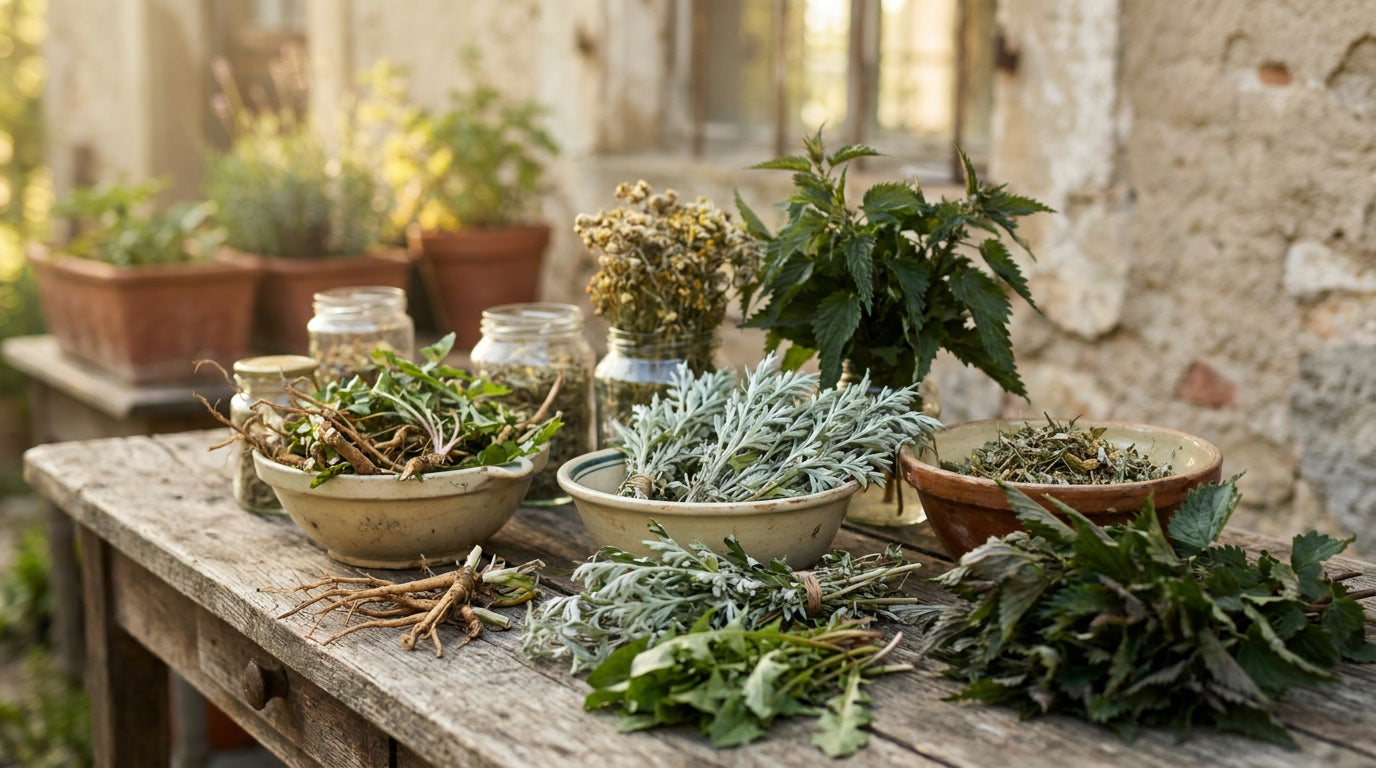
Die Welt der bitter schmeckenden Heilpflanzen ist erstaunlich vielfältig. Von der zarten Schafgarbe bis zur wuchtigen Mariendistel, vom zitrusartig-frischen Enzian bis zum herb-würzigen Wermut – jede Pflanze bringt ihr eigenes Profil mit. In hochwertigen Bitterstoffpräparaten werden diese Kräuter häufig kombiniert, um ein breites Spektrum der traditionellen Wirksamkeit abzudecken. Die Synergie verschiedener Bitterpflanzen gilt in der Naturheilkunde als besonders wertvoll, weil sie die verschiedenen Bereiche des Verdauungsweges ganzheitlich ansprechen soll.
Besondere Beachtung verdienen dabei Pflanzen, die gleichermaßen für ihre verdauungsunterstützenden wie entwässernden Eigenschaften in der Tradition bekannt sind. Löwenzahn etwa ist eine dieser Brückenpflanzen: Er enthält sowohl Bitterstoffe (Taraxacin, Taraxacerin) als auch harntreibende Eigenschaften und wird in der Volksmedizin seit Jahrhunderten sowohl als Leberkraut als auch als mildes Entwässerungsmittel genutzt. Ähnliches gilt für die Artischocke, die in Südeuropa als Genussmittel und Heilpflanze gleichermaßen verehrt wird. Auch Schafgarbe und Tausendgüldenkraut zeigen dieses doppelte Profil – bitter und ausscheidungsfördernd zugleich.
Für die Wahl eines guten Bitterstoffpräparats ist die Qualität der Pflanzenextrakte entscheidend. Traditionelle Tinkturen – also alkoholische Auszüge aus frischen oder getrockneten Kräutern – gelten als besonders hochwertig, weil der Alkohol sowohl wasserlösliche als auch fettlösliche Inhaltsstoffe löst. Wichtig ist auch die Konzentration der Bitterstoffe: Der sogenannte Bitterwert einer Pflanze beschreibt, wie stark verdünnt eine Zubereitung sein muss, damit der Bittergeschmack noch wahrnehmbar ist. Hochwertige Präparate kommunizieren diesen Bitterwert transparent – ein Zeichen für Seriosität und handwerkliche Sorgfalt in der Herstellung.
Diese Heilkräuter werden traditionell für Verdauung und Ausscheidung genutzt:
- Enzian (Gentiana lutea): Einer der intensivsten Bitterpflanzen Europas, seit der Antike in der Volksmedizin bekannt. Wird traditionell als klassisches Amarum eingesetzt und ist historisch fester Bestandteil von Klosterapotheken.
- Wermut (Artemisia absinthium): Von Hildegard von Bingen als bedeutendes Heilkraut beschrieben. Wird seit Jahrhunderten traditionell als Kräuterbitter genutzt und gilt als eine der ältesten Kulturpflanzen der Menschheit.
- Löwenzahn (Taraxacum officinale): In der europäischen Kräutermedizin für seine Bitterstoffe und seine milde harntreibende Tradition bekannt. Frühjahrs-Kuren mit Löwenzahn haben eine lange volksmedizinische Geschichte.
- Artischocke (Cynara scolymus): Traditionell in der mediterranen Kräutermedizin als Leber- und Verdauungspflanze geschätzt. Historisch bereits bei den alten Römern als Genuss- und Heilpflanze dokumentiert.
- Mariendistel (Silybum marianum): Seit dem Mittelalter in Klostergärten kultiviert und in der überlieferten Kräuterheilkunde eng mit der Leberpflege verbunden. Enthält Silymarin-Komplex als charakteristischen Inhaltsstoff. Leber-Produkte von Bitterkraft
- Schafgarbe (Achillea millefolium): Nach der Legende bereits von Achilles genutzt, ist sie eine der vielseitigsten Kräuterpflanzen der europäischen Volksmedizin. Sowohl bitter als auch adstringierend, wird sie traditionell bei Verdauungsbeschwerden geschätzt.
- Tausendgüldenkraut (Centaurium erythraea): Trotz seines Namens kein besonders wertvolles Kraut im wirtschaftlichen Sinne – aber in der traditionellen Heilkunde: eine der reinsten Bitterpflanzen überhaupt. In der Volksmedizin seit Jahrhunderten als sanftes Bittermittel überliefert.
„In einem Übersichtsartikel der Zeitschrift 'Phytomedicine' wurde festgestellt, dass Bitterpflanzen wie Gentiana, Artemisia und Centaurium zu den am längsten dokumentierten Heilpflanzen Europas gehören – mit schriftlichen Quellen, die bis in die griechische Antike zurückreichen." – Phytomedicine, historische Übersicht zu europäischen Amara-Drogen.
Die Kombination aus bitteren und entwässernden Heilpflanzen – wie Löwenzahn, Wermut und Artischocke – wird in der Naturheilkunde seit Jahrhunderten traditionell genutzt, um Verdauung und Ausscheidung gemeinsam zu unterstützen.
Bittertropfen richtig anwenden – Rituale, Dosierung und Alltag
Die Art und Weise, wie Bittertropfen eingenommen werden, spielt in der traditionellen Kräutermedizin eine fast ebenso große Rolle wie die Inhaltsstoffe selbst. Der Bittergeschmack muss auf der Zunge wahrgenommen werden – das ist der entscheidende erste Schritt. Deshalb werden Bittertropfen nie in Wasser aufgelöst oder mit einem Schluck Saft heruntergeschluckt. Stattdessen gibt man die Tropfen direkt unter die Zunge oder auf den hinteren Zungenbereich, lässt sie kurz einwirken und schluckt dann bewusst. Dieses kleine Ritual hat einen echten Hintergrund: Die Bitterrezeptoren auf der Zunge sind der Startpunkt des gesamten Prozesses.
Viele Anwenderinnen und Anwender berichten, dass sie die Bittertropfen am wirkungsvollsten empfinden, wenn sie diese etwa 15–20 Minuten vor einer Mahlzeit einnehmen – als bewusste Einstimmung auf das Essen. Andere bevorzugen die Einnahme nach dem Frühstück oder am späten Nachmittag, wenn sich ein Gefühl der Schwere einstellt. Grundsätzlich gilt in der traditionellen Anwendung: Regelmäßigkeit ist wichtiger als die perfekte Tageszeit. Wer täglich ein kleines Bitterritual pflegt, kommt dem Ideal der Klostermedizin am nächsten – nämlich dem Gedanken, den Körper kontinuierlich zu pflegen, statt ihn nur im Ausnahmezustand zu behandeln.
Besonders in der Fastenzeit oder bei saisonalen Reinigungskuren werden Bittertropfen traditionell intensiver eingesetzt. In Anlehnung an das klösterliche Fastenkonzept empfehlen viele Naturheilkundlerinnen heute mehrtägige oder mehrwöchige Bitterstoff-Rituale, bei denen Bittertropfen mit unterstützenden Maßnahmen wie viel Wasser trinken, Kräutertees, leichter Ernährung und Bewegung kombiniert werden. Diese ganzheitliche Herangehensweise entspricht dem Hildegard'schen Prinzip der „Ordnung" – der Überzeugung, dass Gesundheit nicht durch einzelne Maßnahmen entsteht, sondern durch das Zusammenspiel vieler kleiner, täglicher Gewohnheiten. Fasten-Produkte
Praktische Anleitung: So nimmt man Bittertropfen traditionell ein
1. Zeitpunkt: Idealerweise 15–20 Minuten vor einer Mahlzeit oder nach Bedarf am Nachmittag.
2. Einnahme: Tropfen direkt auf die Zunge geben – nicht in Wasser auflösen. Den Geschmack bewusst wahrnehmen.
3. Dosierung: In der Regel 10–20 Tropfen, je nach Präparat und Herstellerempfehlung.
4. Ritual: Die Einnahme als bewusstes Moment der Körperpflege gestalten – tief ein- und ausatmen, inne halten.
5. Trinken: Im Anschluss ein Glas stilles Wasser oder warmen Kräutertee trinken, um den Prozess zu begleiten.
Hinweis: Bittertropfen enthalten in der Regel Alkohol als Trägerstoff – für Personen, die Alkohol meiden möchten, gibt es alkoholfreie Alternativen auf Glycerinbasis.
Ein häufig unterschätzter Aspekt: Bitterstoffpräparate sind keine kurzfristige Notlösung, sondern ein traditionelles Präventionswerkzeug. Wer sie regelmäßig und langfristig in seinen Alltag integriert, berichtet häufig von einem veränderten Körpergefühl – weniger Schweregefühl nach dem Essen, einem Gefühl von innerer Leichtigkeit und einem stabileren Energieniveau über den Tag. Dies lässt sich nicht mit pharmakologischen Wirkungsversprechen beschreiben, sondern entspricht dem, was die Naturheilkunde seit Jahrhunderten als „Wohlbefindenspflege" versteht: das tägliche Hinzufügen von Gutem, das den Körper in seinem eigenen Rhythmus unterstützt. alle Bitterkraft Produkte
Für wen eignen sich Bitterstoffpräparate besonders – und was sollte man wissen?
Bitterstoffpräparate und Bittertropfen sind in der Naturheilkunde für eine breite Zielgruppe geeignet – von Menschen, die präventiv etwas für ihr Wohlbefinden tun möchten, bis hin zu solchen, die nach langen Phasen unausgewogener Ernährung eine sanfte Neuorientierung suchen. Besonders in der Übergangszeit – Frühjahr und Herbst – hat die traditionelle Einnahme von Bitterstoffen eine lange Geschichte. Der Frühling galt in der Volksheilkunde als Zeit der Erneuerung, in der bittere Kräuter wie Löwenzahn und Brennnessel aus der Erde kommen und dem Körper nach dem Winter genau das bieten, was er braucht: Bitterstoffe, Mineralien und eine Einladung zur Erneuerung.
Frauen profitieren häufig in besonderem Maße von einer Bitterstoffpflege, da Hormonschwankungen die Verdauungstätigkeit beeinflussen können und viele Frauen in den Wechseljahren über Wassereinlagerungen und Schwellegefühle berichten. In der Klostermedizin galten bittere Frauenkräuter wie Frauenmantel, Schafgarbe und Beifuß als besondere Verbündete – Pflanzen, die nicht nur bitter, sondern auch hormonell ausgleichend in ihrer traditionellen Anwendung beschrieben wurden. Produkte für Frauengesundheit
Wichtig zu wissen: Bitterstoffpräparate sind keine Arzneimittel und keine Behandlung von Erkrankungen. Sie sind Nahrungsergänzungen oder traditionelle Kräuterzubereitungen, die als Ergänzung eines gesunden Lebensstils betrachtet werden. Personen mit bestimmten Erkrankungen – etwa Magengeschwüren, Gallensteinleiden oder empfindlicher Magenschleimhaut – sollten vor der Einnahme Rücksprache mit einer Ärztin oder einem Arzt oder einer Heilpraktikerin halten. Gleiches gilt für Schwangere und Stillende. Bei Personen, die regelmäßig Medikamente einnehmen, kann eine Fachberatung sinnvoll sein, da einige Bitterstoffe die Resorption anderer Substanzen beeinflussen können.
Bitterstoffe sind kein kurzfristiges Mittel, sondern ein traditionelles Instrument der täglichen Körperpflege – am wirkungsvollsten entfalten sie ihr Potenzial, wenn sie regelmäßig und mit Bewusstsein eingenommen werden.
Letztlich sind Bittertropfen ein wunderbares Beispiel dafür, wie alt überliefertes Pflanzenwissen und modernes Bewusstsein für den eigenen Körper zusammenfinden können. Die Klostermedizin des Mittelalters kannte keine Laborwerte, keine Doppelblindstudien – aber sie kannte den Menschen als ganzheitliches Wesen, das täglicher Pflege bedarf. Hildegard von Bingen formulierte es in ihrer unnachahmlichen Weise: Der Mensch braucht Ordnung – in der Ernährung, in der Bewegung, im Schlaf und in der Anwendung der Kräuter. Bittertropfen sind in diesem Sinne keine Medizin, sondern ein Ritual der Achtsamkeit gegenüber dem eigenen Körper – eine tägliche Einladung, innen zu beginnen. Hildegard von Bingen Produkte

Hinterlasse einen Kommentar
Diese Website ist durch hCaptcha geschützt und es gelten die allgemeinen Geschäftsbedingungen und Datenschutzbestimmungen von hCaptcha.