

Schwellende Füße, schwere Beine und das Gefühl, als hätte man über Nacht zugenommen – Wassereinlagerungen gehören für viele Schwangere zum Alltag. Besonders im zweiten und dritten Trimester klagen werdende Mütter über dieses typische Begleitphänomen. Gleichzeitig ist die Frage, was man in dieser besonderen Lebensphase überhaupt tun darf, oft mit Unsicherheit verbunden. Die konventionelle Medizin rät zu Vorsicht, und das ist berechtigt. Doch auch die traditionelle Heilkunde – allen voran das überlieferte Wissen von Hildegard von Bingen – hat über Jahrhunderte Antworten entwickelt, die heute wieder an Bedeutung gewinnen. Dieser Artikel beleuchtet, warum Wassereinlagerungen in der Schwangerschaft entstehen, was traditionell überlieferte Pflanzen dazu beitragen können, und welche Grenzen unbedingt zu beachten sind. Produkte für Frauengesundheit
Warum Wassereinlagerungen in der Schwangerschaft entstehen
Der schwangere Körper ist ein Wunderwerk der Anpassung. Um das wachsende Kind optimal zu versorgen, steigt das Blutvolumen einer Schwangeren um bis zu 50 Prozent. Dazu kommen hormonelle Veränderungen, vor allem der erhöhte Progesteronspiegel, der die Gefäßwände weicher macht und die Flüssigkeitsverteilung im Gewebe beeinflusst. Das Ergebnis: Flüssigkeit tritt leichter aus den Blutgefäßen ins umliegende Gewebe über und sammelt sich dort. Dieser Prozess ist in einem gewissen Rahmen vollkommen physiologisch und gehört zur natürlichen Vorbereitung des Körpers auf Geburt und Stillzeit.
Besonders betroffen sind die Knöchel, Unterschenkel, Hände und gelegentlich auch das Gesicht. Die Schwellungen sind morgens oft geringer und nehmen im Laufe des Tages zu – ein klassisches Zeichen dafür, dass es sich um lageabhängige Ödeme handelt, die durch die Schwerkraft begünstigt werden. Warme Temperaturen, langes Stehen oder Sitzen sowie eine salzreiche Ernährung können das Ausmaß verstärken. Für die meisten Frauen sind diese Beschwerden zwar lästig, aber harmlos. Dennoch gilt: Plötzliche, starke Schwellungen – insbesondere im Gesicht und an den Händen – in Verbindung mit Kopfschmerzen oder erhöhtem Blutdruck sollten immer ärztlich abgeklärt werden, da sie auf eine Präeklampsie hinweisen können.
Leichte bis moderate Wassereinlagerungen in der Schwangerschaft sind ein normales Begleitphänomen und betreffen schätzungsweise 80 Prozent aller Schwangeren – sie sind in den meisten Fällen kein Zeichen einer Erkrankung, sondern Ausdruck der tiefgreifenden körperlichen Umstellung.
Die traditionelle Heilkunde betrachtete diesen Zustand nicht isoliert, sondern immer im Kontext des gesamten Wohlbefindens der werdenden Mutter. Sanfte Pflanzenkunde, Ernährungsanpassungen und Lebensrhythmus spielten dabei eine zentrale Rolle – eine Perspektive, die auch heute noch ihre Berechtigung hat. Hildegard von Bingen Produkte
Was die traditionelle Heilkunde – und Hildegard von Bingen – überliefert haben
Hildegard von Bingen (1098–1179) gilt als eine der bedeutendsten Naturheilerinnen des Mittelalters. In ihren Werken „Physica" und „Causae et Curae" beschrieb sie detailliert die Eigenschaften von Pflanzen, Steinen und Nahrungsmitteln und deren Wirkung auf den menschlichen Körper. Ihr Weltbild war ganzheitlich: Der Mensch galt als Teil der Natur, und Gesundheit entstand aus dem Gleichgewicht der sogenannten Viriditas – der grünen Lebenskraft, die alles Lebendige durchdringt. Für Schwangere sah Hildegard eine besonders achtsame Lebensweise vor, die auf Ruhe, leichte Kost und ausgewählte Kräuter setzte.
„Hildegard von Bingen schrieb in ihrer ‚Physica' über Fenchel: ‚Wie immer man Fenchel isst, er macht den Menschen fröhlich und gibt ihm angenehme Wärme.' Die Wertschätzung für diese Pflanze zog sich durch die gesamte Klostermedizin des Mittelalters." – Aus: Hildegard von Bingen, Physica (12. Jahrhundert), überliefert in den Schriften der Benediktinerabtei.
In der Klostermedizin, die stark auf Hildegards Erbe aufbaute, wurde der Zustand einer Schwangeren mit Wassereinlagerungen durch sanfte, wärmende Kräuter begleitet. Erkältende, stark treibende oder bitter-aggressive Pflanzen galten als ungeeignet. Stattdessen setzte man auf Kräuter, die traditionell als verträglich und ausgleichend bekannt waren. Brennnessel, Fenchel und Petersilienwurzel – in maßvollen Mengen – finden sich in historischen Überlieferungen als typische Begleiter für Frauen in der zweiten Lebenshälfte der Schwangerschaft. Die Klostermedizin betonte dabei stets das Prinzip der Sanftheit: Nichts sollte erzwungen, alles sollte behutsam unterstützt werden.
Was Hildegard und die ihr nachfolgende Kräutertradition besonders auszeichnet, ist das Prinzip der individuellen Konstitution. Nicht jede Pflanze passt zu jeder Frau. Hildegard unterschied zwischen feurigen, phlegmatischen und melancholischen Temperamenten – und empfahl entsprechend unterschiedliche Kräuteransätze. Dieses konstitutionsbezogene Denken ist heute in der Naturheilkunde wieder sehr lebendig und findet sich auch in modernen ganzheitlichen Therapiekonzepten wieder. BitterKraft Original
Traditionelle Kräuter im Blick: Was historisch als begleitend bekannt ist
Nicht alle Kräuter, die im Bereich der natürlichen Entwässerung bekannt sind, eignen sich für die Schwangerschaft. Einige traditionell hochgeschätzte Pflanzen – etwa Liebstöckel, Wacholderbeeren oder stark konzentrierte Petersilienextrakte – werden in der Schwangerschaft aus gutem Grund gemieden, da sie historisch mit wehenauslösenden oder gebärmutterstimulierenden Eigenschaften in Verbindung gebracht wurden. Umso wichtiger ist es, genau hinzuschauen, welche Kräuter die Überlieferung als verträglich eingestuft hat.
Was steckt hinter den traditionellen Kräutern?
Die Klostermedizin unterschied zwischen „treibenden" Kräutern (stark, schnell, nicht immer verträglich) und „begleitenden" Kräutern (sanft, ausgleichend, langfristig). Für Schwangere empfahl man fast ausschließlich Letztere. Wärme, Sanftheit und die Abwesenheit aggressiver Wirkstoffe galten als zentrale Auswahlkriterien. Hildegard selbst betonte in ihren Schriften wiederholt, dass in der Schwangerschaft Zurückhaltung bei stark wirkenden Mitteln geboten sei.
Diese Kräuter sind traditionell als begleitend für Schwangere bekannt:
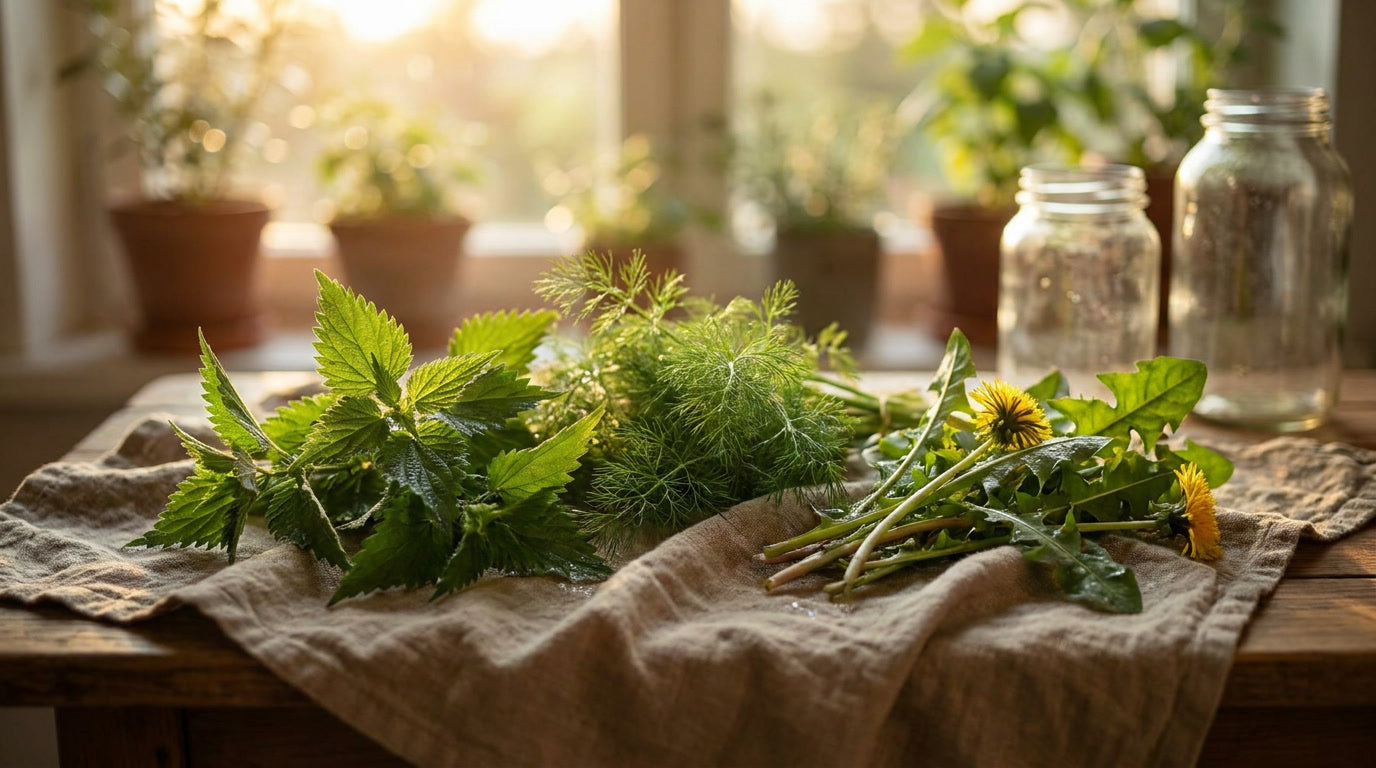
- Brennnessel (Urtica dioica): Seit Jahrhunderten in der europäischen Volksmedizin geschätzt, wird die Brennnessel traditionell als mineralstoffreiches Kraut beschrieben. In der Klostermedizin galt sie als ausgleichend und wurde als Tee oder in Speisen verwendet – in normalen Mengen als Teil der täglichen Ernährung.
- Fenchel (Foeniculum vulgare): Von Hildegard von Bingen ausdrücklich positiv erwähnt, gilt Fenchel in der traditionellen Heilkunde als wärmendes, sanftes Kraut. Als Tee in üblichen Mengen ist er seit langer Zeit Teil der europäischen Schwangerschaftsbegleitung.
- Birkenblätter (Betula pendula): In der nordeuropäischen Volksmedizin seit Generationen traditionell verwendet, gelten Birkenblätter als sanftes Begleitkraut. Birkenblättertee ist historisch in vielen Kulturen als alltagsbegleitendes Getränk bekannt.
- Löwenzahn (Taraxacum officinale): In der europäischen Kräuterheilkunde seit dem Mittelalter bekannt, wurde Löwenzahn – Blätter wie Wurzel – traditionell als Bestandteil der Frühlingsküche und Kräuterküche geschätzt. Als Salat oder milder Tee hat er in der Volksmedizin eine lange Geschichte.
- Schachtelhalm (Equisetum arvense): In der Klostermedizin als mineralstoffreiches Kraut bekannt, wurde Schachtelhalm traditionell für seine ausgleichenden Eigenschaften geschätzt. Die Anwendung in der Schwangerschaft sollte jedoch immer in Absprache mit einer Fachperson erfolgen.
Grundsatz der traditionellen Heilkunde: In der Schwangerschaft gilt das Prinzip „so wenig wie nötig, so sanft wie möglich" – kein Kraut, keine Pflanze sollte ohne Rücksprache mit einer hebammenkundigen oder heilpraktisch geschulten Fachperson eingesetzt werden.
Ein wichtiger Aspekt, den die traditionelle Heilkunde stets betonte: Die Art der Zubereitung macht den Unterschied. Ein milder Tee aus Birkenblättern ist etwas völlig anderes als ein hochkonzentrierter Extrakt. Die Volksmedizin kannte Tees, Breie, Bäder und Umschläge – jede Darreichungsform hatte ihre eigene Intensität und ihren eigenen Anwendungsbereich. Wer heute traditionelle Kräuter in der Schwangerschaft in Betracht zieht, sollte dies immer in enger Absprache mit Hebamme oder Arzt tun. Produkte für Frauengesundheit
Ernährung, Lebensrhythmus und sanfte Maßnahmen im Alltag
Die traditionelle Heilkunde war niemals nur Kräuterkunde – sie war immer auch Lebenskunst. Hildegard von Bingen widmete in ihren Schriften der Ernährung mindestens ebenso viel Aufmerksamkeit wie den Heilpflanzen. Für Schwangere empfahl sie eine leichte, nährstoffreiche Kost mit viel frischem Gemüse, vollwertigem Getreide und ausreichend Flüssigkeit. Das mag intuitiv widersprüchlich klingen – mehr trinken bei Wassereinlagerungen? Doch tatsächlich kann eine gute Flüssigkeitszufuhr den Körper dabei unterstützen, seinen eigenen Haushalt auszubalancieren. Hildegard empfahl vor allem warme Getränke und gedünstetes Gemüse, da sie „kalte Speisen" als beschwerende Elemente betrachtete.
Aus heutiger Sicht ergänzen weitere sanfte Alltagsmaßnahmen das Bild sinnvoll: Hochlagern der Beine, regelmäßige Bewegung wie Spazierengehen oder Schwimmen, Wechselgüsse nach Kneipp'scher Tradition (sofern ärztlich unbedenklich) und das bewusste Reduzieren von sehr salzreichen Mahlzeiten. Die Klostermedizin kannte das Salzthema übrigens ebenfalls gut – Hildegard riet zu einem maßvollen Umgang mit Salz und betonte, dass übermäßiger Salzgenuss den Körper „austrockne und zugleich aufblähe", ein Paradox, das die moderne Ernährungsmedizin ähnlich beschreibt. Der Zusammenhang zwischen Natriumzufuhr und Wasserhaushalt war also bereits im Mittelalter intuitiv bekannt.
„Traditionelle Konzepte wie die Klostermedizin nach Hildegard von Bingen betonen seit Jahrhunderten den Wert eines ausgewogenen Lebensrhythmus mit ausreichend Ruhe, Bewegung und einfacher Kost – Prinzipien, die auch in modernen ganzheitlichen Gesundheitskonzepten für Schwangere Berücksichtigung finden." – Zusammenfassung aus dem Bereich Geschichte der Naturheilkunde, Haug Verlag, München.
Besonders hervorzuheben ist die Bedeutung des Lebensrhythmus – ein Konzept, das in der modernen Hektik leicht untergeht. Hildegard sprach von den „discretio"-Tugenden: das rechte Maß in allem. Zu viel Ruhe lähmt, zu viel Aktivität erschöpft. Für Schwangere bedeutete das konkret: moderate Bewegung, ausreichend Schlaf, bewusste Erholungsphasen und das Vermeiden von extremem Stress. Der Körper brauche, so die Klostermedizin, den Raum, um seine eigene Ordnung zu finden. Schlaf- und Entspannungsprodukte Diese Überzeugung ist heute, in einer Zeit zunehmender Forschung über die Auswirkungen von Schlaf und Stressregulation auf den Flüssigkeitshaushalt, erstaunlich aktuell.
Grenzen der Naturheilkunde: Wann ärztliche Abklärung unbedingt nötig ist
So wertvoll das traditionelle Pflanzenwissen ist – es hat klare Grenzen, die in der Schwangerschaft besonders ernst genommen werden müssen. Wassereinlagerungen sind nicht immer harmlos. Wenn Schwellungen plötzlich stark zunehmen, einseitig auftreten (was auf eine Thrombose hinweisen kann), mit Kopfschmerzen, Sehstörungen, Oberbauchschmerzen oder erhöhtem Blutdruck verbunden sind, handelt es sich um Warnsignale, die sofortige ärztliche Abklärung erfordern. Eine Präeklampsie – früher als Schwangerschaftsvergiftung bezeichnet – ist eine ernsthafte Erkrankung, die nicht mit Hausmitteln behandelt werden kann und darf.
Kein Kraut der Welt, so heilsam es auch traditionell gilt, ersetzt in der Schwangerschaft die Kontrolle durch Hebamme oder Gynäkolog:in. Die Naturheilkunde ist als Ergänzung gedacht – nicht als Ersatz für medizinische Begleitung.
Die traditionelle Heilkunde selbst war sich dieser Grenze übrigens sehr bewusst. Hildegard von Bingen und ihre Zeitgenossen in den Klöstern waren keine Konkurrenten der damaligen Mediziner – sie ergänzten deren Arbeit. Die Klostermedizin verstand sich als Fürsorge für den Alltag, für chronische Beschwerden und für die Vorbeugung. Bei akuten, ernsten Zuständen in der Schwangerschaft wurde immer auf die erfahrene Hebamme oder den Arzt verwiesen. Diese Bescheidenheit ist ein Qualitätsmerkmal guter Naturheilkunde – damals wie heute.
Wer sich für pflanzliche Begleitung in der Schwangerschaft interessiert, ist gut beraten, eine Hebamme mit naturheilkundlicher Ausbildung oder eine erfahrene Heilpraktikerin zu konsultieren. Gerade beim Thema Kräutertees gilt: Nicht alles, was natürlich ist, ist automatisch unbedenklich in der Schwangerschaft. Einige Kräuter, die außerhalb der Schwangerschaft sehr geschätzt werden – wie Salbei, Rosmarin in großen Mengen, Schafgarbe oder Ingwer in Extraktform – werden für Schwangere, insbesondere im ersten Trimester, von Fachleuten nicht empfohlen. Der Rat einer Fachperson ist hier kein Zeichen von Unsicherheit, sondern von Verantwortung gegenüber sich selbst und dem werdenden Kind. Produkte für Frauengesundheit
Bitterkräuter, Leber und der ganzheitliche Blick in der Schwangerschaft
Ein Aspekt, der in der Diskussion um Wassereinlagerungen oft übersehen wird, ist die Bedeutung eines gut funktionierenden Stoffwechsels für den gesamten Flüssigkeitshaushalt. In der traditionellen Heilkunde – und besonders bei Hildegard von Bingen – spielte die Leber eine zentrale Rolle als „Herd des Körpers". Sie galt als Sitz der Vitalität und als Schlüsselorgan für die Qualität des Blutes und der Körpersäfte. Wenn dieser „Herd" nicht ausreichend genährt werde, so die Überzeugung, könnten sich Trägheit und Stagnation im Körper ausbreiten – was wir heute vielleicht als einen weniger effizienten Stoffwechsel beschreiben würden.
Bitterkräuter in der Klostermedizin:
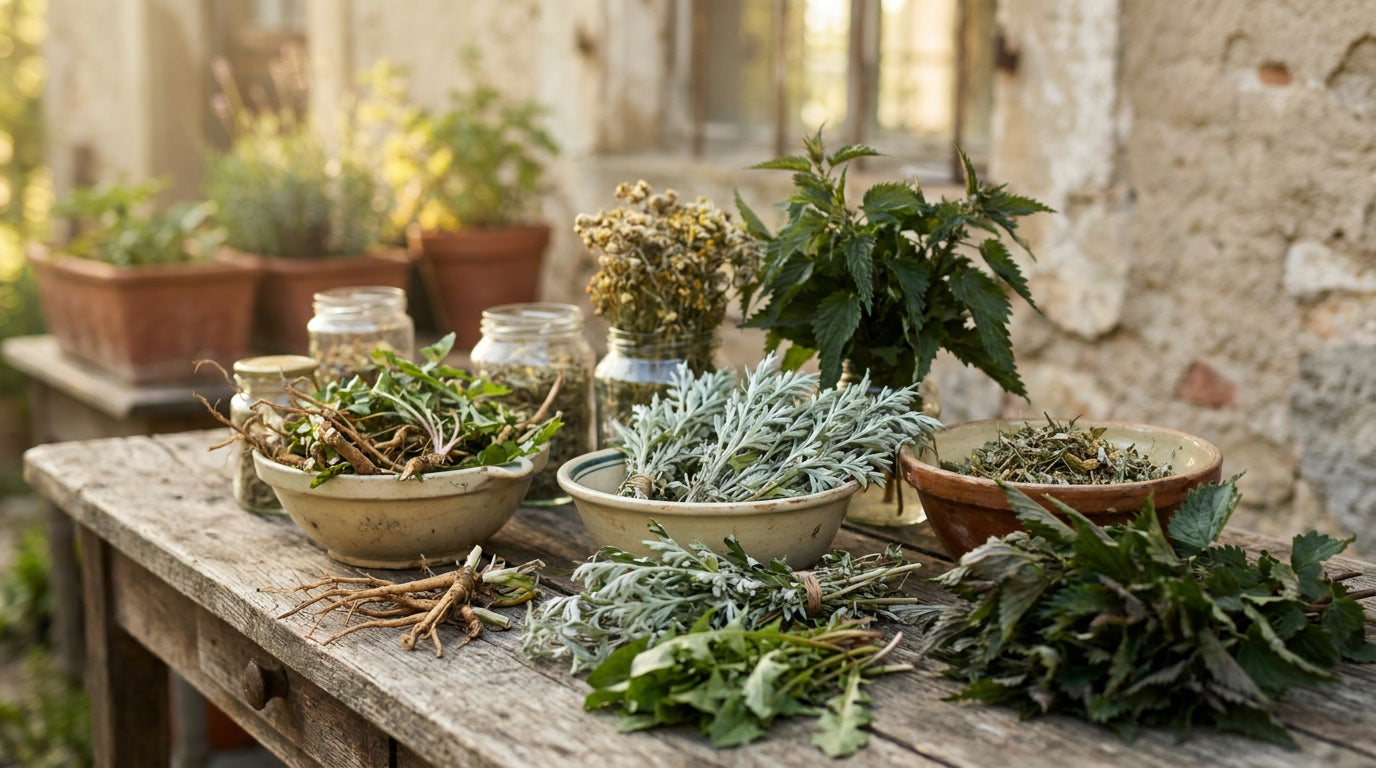
Hildegard von Bingen schätzte bittere Kräuter wie Wermut, Enzian und Galgant als Grundpfeiler ihrer Heilküche. In der Klostermedizin wurden Bitterstoffe als belebend für den gesamten Organismus betrachtet – nicht im pharmakologischen Sinne, sondern als Impulsgeber für die Lebenskraft. Für Schwangere galten stark bittere Kräuter jedoch als zu intensiv; stattdessen setzte man auf mildere Bitterpflanzen wie Löwenzahn oder leichte Artischockenblätter, die seit Jahrhunderten als verträglicher eingestuft wurden.
Die Idee, den Körper in seiner natürlichen Ordnung zu unterstützen – durch Ernährung, Bewegung, Schlaf, sanfte Kräuter und Rituale –, ist das Herzstück der Hildegard-Medizin. Bitterkräuter nehmen darin eine besondere Stellung ein, weil sie in der Überlieferung als Impulsgeber für die Lebendigkeit des Organismus galten. Für Schwangere bedeutet das: nicht die stärksten Mittel, sondern die sanftesten, auf den individuellen Zustand abgestimmten Begleiter zu wählen. BitterKraft Original Leber-Produkte von Bitterkraft
Wer neugierig auf das Potenzial traditioneller Pflanzenkunde für die Begleitung von Schwangerschaftsbeschwerden ist, dem sei empfohlen, sich von einer fachkundigen Person begleiten zu lassen und das reiche Erbe der Klostermedizin als Inspirationsquelle zu nutzen – nicht als Rezeptbuch, das blind abgearbeitet wird, sondern als lebendige Weisheitstradition, die den Menschen in seiner Ganzheit sieht. Denn genau das war Hildegards tiefste Überzeugung: Der Mensch ist nicht ein Problem, das gelöst werden muss, sondern ein Wesen, das begleitet, genährt und in seiner Kraft gestärkt werden darf. Hildegard von Bingen Produkte


Hinterlasse einen Kommentar
Diese Website ist durch hCaptcha geschützt und es gelten die allgemeinen Geschäftsbedingungen und Datenschutzbestimmungen von hCaptcha.