





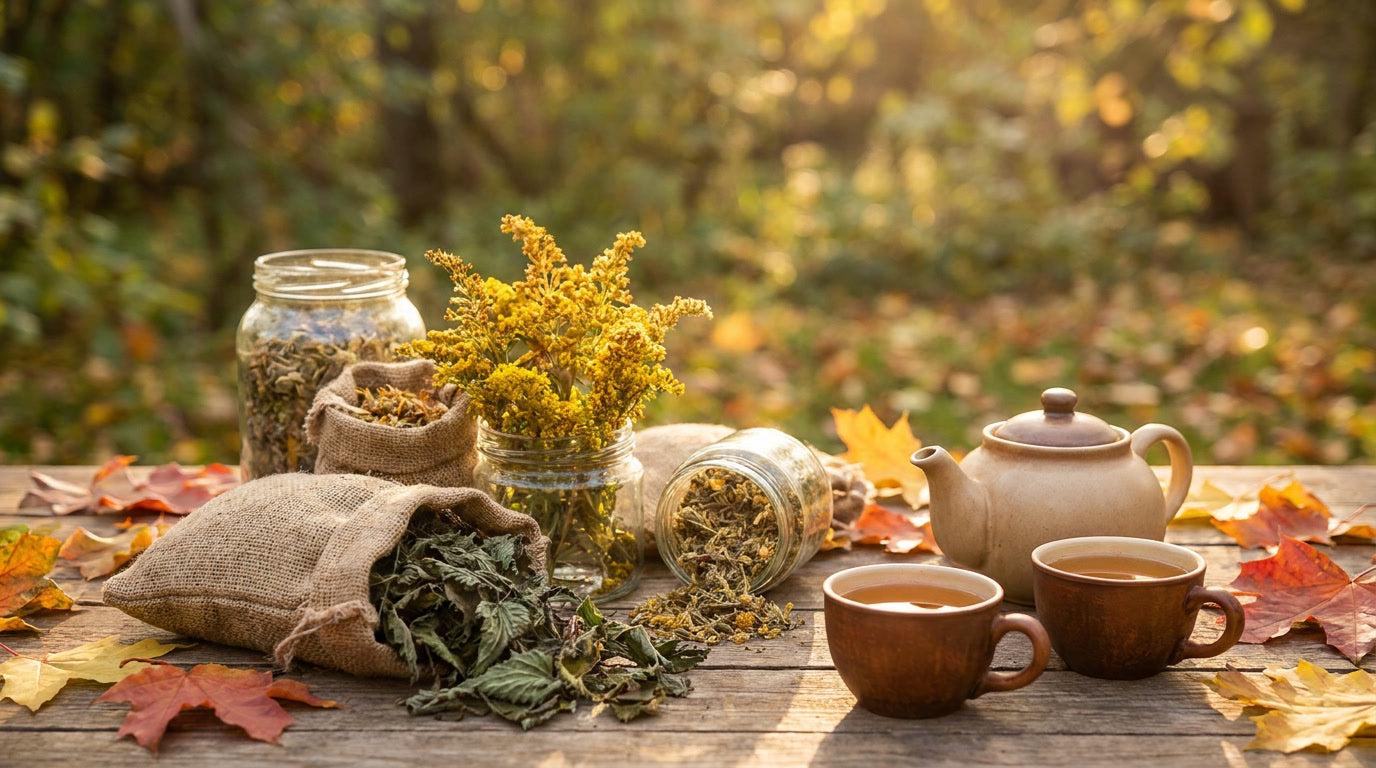
When the days grow shorter, the air clearer, and the first leaves fall, many people feel a natural longing for change – not only outwardly but also inwardly. Autumn has been a time of harvest, letting go, and preparation for the quiet season for centuries. In traditional naturopathy, this transitional period is considered especially favorable for gently relieving the body. One practice at the center of this is gentle drainage and traditional kidney support – two organs that have always received great attention in monastic medicine and traditional herbal knowledge. Those seeking advice in folk medicine repeatedly heard the same message: When autumn comes, it’s time to do good for the body.
What autumn does to our body – and why we should act now
The transition from summer to autumn is anything but trivial for the human organism. The dropping temperatures, changing light levels, and shorter days have always triggered internal adjustment processes, often accompanied by rituals in many cultures. In traditional European naturopathy, autumn was understood as a time when the body wants to break down excess water and accumulated substances from summer – a kind of natural renewal phase that can be consciously used.
Many people notice a vague feeling of heaviness or fatigue in autumn, different from summer tiredness. Folk medicine interpreted this phenomenon as a signal from the body, which after a phase of intensity – much activity, warmth, and enjoyment – moves into a phase of cleansing. This is not a sign of weakness but a sign of inner intelligence. Those who follow this signal and consciously use autumn for gentle internal cleansing create a good foundation for the colder months.
What is particularly interesting is that many traditional medicinal herbs used for the kidneys for centuries are still available fresh or on the market in autumn. Nettle, goldenrod, birch leaves – these plants have been passed down from generation to generation as autumn companions meant to ease the transition into the dark season. Those who connect with nature’s rhythm find not only colorful forests in autumn but also the wisdom of millennia-old plant knowledge.
In traditional naturopathy, autumn is considered the ideal time to gently relieve the body after summer – with a special focus on the kidneys in the traditional herbal knowledge.
The kidneys in naturopathy: More than just a filtering organ
In modern medicine, the kidneys are mainly known as filtering organs that cleanse the blood of metabolic waste products. But in traditional naturopathy – especially in medieval monastic medicine – the kidneys had a much broader significance. Hildegard of Bingen, the great abbess and natural scholar of the 12th century, devoted special attention to the kidneys in her writings and understood them as central organs of inner balance.
Hildegard of Bingen wrote in her “Physica” about the importance of internal cleansing and recommended various herbs and spices she classified as “warm and dry” – a quality linked in her humoral theory to a relieving effect on the kidneys. Her works remain an important historical source for the traditional herbal knowledge of Central Europe.
In the folk medicine of many European cultures, the kidneys were associated with the element water and the rhythm of life. Impairments in well-being were often linked to an imbalance in this area – and accordingly, traditional recommendations aimed to restore this balance. Herbal teas, baths, special foods, and rest periods were combined to support the body. Hildegard von Bingen products
Water is especially significant in this context. It has been known since antiquity that adequate fluid intake plays a crucial role in general well-being. In autumn, when the summer heat subsides, many people unconsciously drink less – and this is exactly where traditional knowledge comes in: herbal teas made from diuretic plants were understood not only as a pleasure but as a conscious practice to accompany the body’s natural cleansing work.
Hildegard of Bingen described internal cleansing as a central pillar of health care – linking kidney well-being with the overall balance of the body.
Traditional medicinal herbs for kidney support in autumn
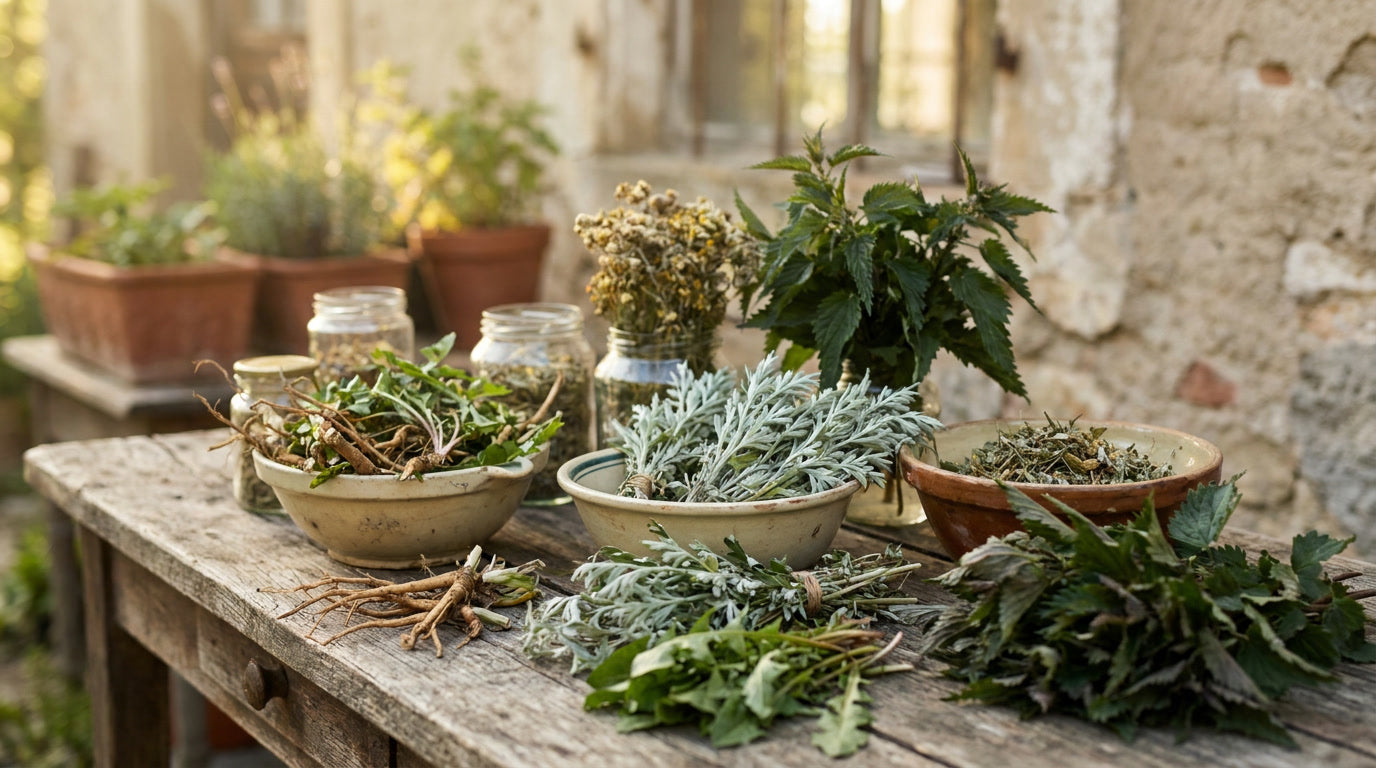
The herbal knowledge surrounding the kidneys is extraordinarily rich in Europe. For centuries, herbalists, monastery doctors, and wise women gathered experience with plants traditionally valued for supporting water balance and internal cleansing. These plants were not understood as medicine in the modern sense but as part of a lifestyle that viewed body, mind, and nature as an inseparable unity. Many of these plants are still present in naturopathy today and are appreciated in autumn herbal practice. BitterKraft Original
These medicinal herbs are traditionally used for kidney support:
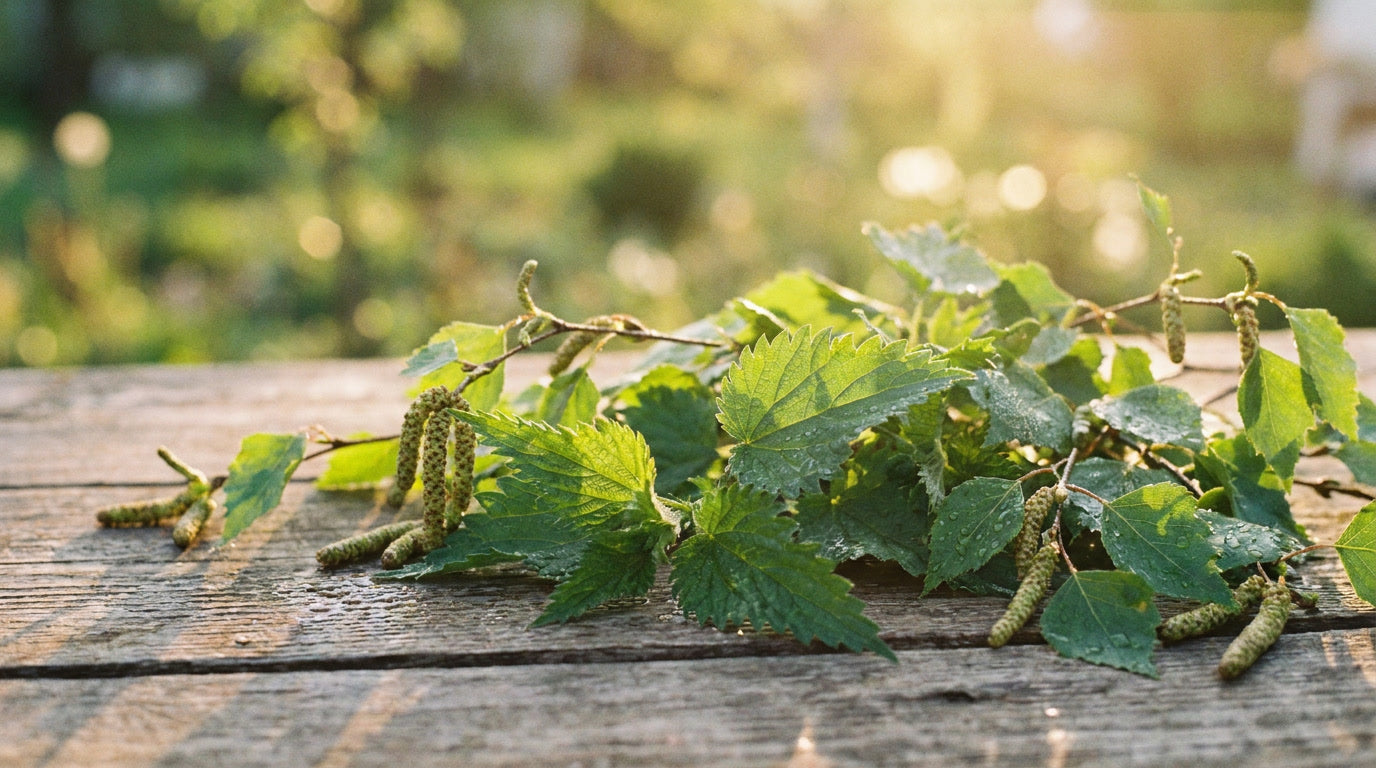
- Nettle (Urtica dioica): Nettle is one of the best-known medicinal plants in European folk medicine and has been traditionally used for centuries to help the body eliminate excess fluid. In monastic medicine, it was considered a valuable spring and autumn plant.
- Goldenrod (Solidago virgaurea): Goldenrod was highly valued in medieval monastic medicine and historically associated with kidney care. Its golden-yellow glow in autumn made it a symbol of the transitional period.
- Birch leaves (Betula pendula): Birch leaves have been known since antiquity as a diuretic medicinal plant and were traditionally used in Northern European folk medicine as a “spring and autumn cure.” They are considered gentle and well tolerated.
- Horsetail (Equisetum arvense): Horsetail is one of the oldest medicinal plants in the world and was already valued in antiquity for its traditional role in internal cleansing. In monastic medicine, it was considered especially valuable for transitional periods.
- Parsley (Petroselinum crispum): Parsley is much more than a kitchen herb – in traditional naturopathy, it has been valued for centuries as a diuretic plant. Hildegard of Bingen mentioned it in her writings as a helpful companion for internal balance.
- Lovage (Levisticum officinale): Lovage, also called “Maggi herb,” was widespread in medieval monastery gardens and traditionally used for kidney health. Its strong, spicy aroma made it an unmistakable part of herbal medicine.
What’s behind these herbs?
All these medicinal plants share a long history of traditional use in European naturopathy. They were not viewed in isolation but as part of holistic care – combined with sufficient fluids, light diet, and rest. In monastic medicine, they were often used as teas or herbal formulations passed down through generations. Their significance lies not in individual chemical compounds but in the entirety of their traditional application and integration into a conscious lifestyle. Hildegard von Bingen products
It is especially interesting that many of these plants are harvested or available in good quality in autumn. This is no coincidence: in folk medicine, harvesting followed the rhythm of the seasons, and autumn was traditionally the time when herbs were dried and stored for the coming months. Those who rely on natural products today connect with a millennia-old practice that brought humans and nature into harmony.
An autumn drainage cure: How to integrate it into everyday life
A traditional drainage cure in autumn doesn’t have to be complicated or elaborate. On the contrary: the philosophy of monastic medicine was always “adding instead of subtracting” – not radical renunciation but conscious supplementation of everyday life with healing practices. Such a cure can begin with small, consistent steps over two to four weeks. Fasting products
The focus is initially on fluid intake. Two to three liters daily, preferably in the form of still water and herbal teas made from the plants mentioned above, are considered the foundation of any traditional drainage phase. Choosing warm drinks is especially soothing – a recommendation found both in Hildegard medicine and Ayurvedic tradition. Warm fluids are described in these systems as gentler for the organism during the cooler season. Hildegard von Bingen products
Practical guidance for the autumn drainage phase:
Morning: A large glass of lukewarm water, optionally with a splash of lemon – traditionally appreciated as a gentle start to the day.
During the day: Herbal teas made from nettle, goldenrod, or birch leaves, freshly brewed and enjoyed warm. Drink enough water between cups.
Evening: A light, warming meal with autumn vegetables – pumpkin, parsnip, beetroot – and herbs like parsley and lovage.
Additionally: Plan sufficient rest periods, as autumn is considered a time of inner gathering in naturopathy. Walks in the fresh autumn air naturally complement herbal care.
Nutrition is also important. In monastic medicine, the drainage phase was traditionally accompanied by a light, alkaline diet – less meat, less salt, more vegetables, herbs, and legumes. Hildegard of Bingen recommended her students use transitional periods to simplify their diet – not as a punishment but as a gift to their own body. Those who follow this advice today connect with wisdom that has endured for centuries. Gut and digestion products
Another essential aspect is regularity. A single cup of nettle tea has little effect – it is the daily, conscious practice over several weeks that was considered significant in folk medicine. This continuity creates not only physical but also mental effects: the daily ritual of brewing tea, drinking mindfully, and pausing is itself a form of health care that can support overall well-being.
The secret of the traditional autumn cure lies in regularity and mindfulness – not in a single herbal tea but in consistent, attentive practice over weeks.
Hildegard’s herbal wisdom and the connection to modern naturopathy
It is remarkable how much of what Hildegard of Bingen wrote in the 12th century is still alive today. At a time when people increasingly seek authentic, nature-based alternatives, the knowledge of Hildegard medicine is experiencing a true renaissance. Her holistic view, which regarded body, mind, and soul as an inseparable unity, appeals to many who seek a complement to modern medicine. Hildegard von Bingen products
Hildegard of Bingen wrote in her “Causa et Curae”: “A person is in balance when body and soul are in harmony.” This fundamental conviction runs through her entire medical work and makes it a source still relevant today for holistic thinking in naturopathy. Historians and naturopaths worldwide refer to her writings as an important cultural and medical-historical reference.
What Hildegard passed down for the kidneys and drainage was embedded in a comprehensive care system. Herbs were not viewed in isolation but combined with fasting, prayer, movement, and social community. This integrative approach is what makes Hildegard’s thinking so timeless – and reminds us today that true health care is always more than taking a single preparation. It is an attitude toward life, a decision for mindfulness and connectedness. Fasting products
For the Bitterkraft community, already familiar with the knowledge of bitter substances, herbs, and traditional remedies, the connection to Hildegard medicine is especially close. Many of the herbs Hildegard valued – including bitter plants like wormwood, angelica, and gentian – are found in the context of kidney support and general relief cures. Bitterness was not an unpleasant trait for Hildegard but a sign of a plant’s strength. BitterKraft Original
Modern naturopaths who draw on traditional knowledge often recommend a combination of inherited herbal wisdom and conscious lifestyle – just as monastic medicine practiced. It is not about nostalgia or blind faith but about appreciating experiential knowledge tested over many generations. In this sense, the autumn drainage phase is not only a physical practice but also a cultural heritage to be preserved.
Drainage in autumn – a ritual for body and soul
At the end of this article, it becomes clear: the autumn drainage phase is much more than a physical measure. It is a ritual, a conscious gesture of self-care rooted in a long cultural tradition. When we take the time to brew a herbal tea daily, drink it mindfully, and pay attention to our own body, we connect with something greater – with the knowledge of our ancestors, the rhythm of nature, and a form of health care that sees the human being as a whole.
The kidneys, these quiet organs that perform their work daily without demanding much attention, deserve special appreciation. And autumn, with its inviting stillness and clear air, is the ideal time to translate this appreciation into practice. Whether as a multi-day tea cure, dietary adjustment, or comprehensive autumn ritual – every step counts. Immune system products
Those interested in autumn drainage will find at Bitterkraft a carefully selected range of traditional herbs and natural products to accompany this path. All products are chosen in the tradition of inherited herbal knowledge and meet the high quality standards that conscious naturopathy deserves. Autumn calls – and the wisdom of the herbs responds. all Bitterkraft products


Leave a comment
This site is protected by hCaptcha and the hCaptcha Privacy Policy and Terms of Service apply.