





Anyone living with lipedema knows the feeling: the legs feel heavy and tight, the skin reacts sensitively to touch, and despite all efforts, the tissue stubbornly retains fluid. Lipedema is a chronic disease of the fatty tissue that primarily affects women, and its causes are still not fully understood. However, many affected individuals report that the accompanying water retention, known as secondary lymphedema, is particularly burdensome. This is where centuries-old natural medicine comes in—with plants that have been traditionally valued for generations and can support overall well-being. This article takes you on a journey through the herbal knowledge of monastic medicine and shows how gentle plant-based support can be integrated into everyday life. Products for women's health
Understanding water retention in lipedema – what’s behind it?
Lipedema is more than “just” a cosmetic change. It is a pathological increase of subcutaneous fatty tissue, typically symmetrical on the legs, hips, and sometimes arms. This altered fatty tissue reacts differently than healthy tissue—it is pressure-sensitive, prone to inflammation, and disrupts the delicate balance of the surrounding lymphatic system. The result: lymph fluid accumulates, the tissue swells, and those affected experience the heavy, sometimes burning tension that can make daily life difficult.
It is important to understand that lipedema itself is not a pure edema—meaning not just water retention. Nevertheless, many affected individuals develop a lymphatic component over time, called lipo-lymphedema. The lymphatic system, which normally absorbs and transports tissue fluid, is overloaded or structurally altered in its capacity. This is exactly where accompanying herbal support can help—not as a medical therapy, but as a complementary daily routine that supports the body’s natural balance.
Lipedema affects an estimated 10–15% of all women—and yet often remains undiagnosed or misdiagnosed for years. Awareness of this condition is slowly but steadily growing.
In natural medicine, the human body is viewed holistically. This means water retention is not seen in isolation but in connection with the entire organism—nutrition, gut, liver, lymphatic system, and emotional balance all play a role. This comprehensive view is what makes traditional herbal medicine so valuable. It does not only ask about the symptom but about the person behind it. Liver products from Bitterkraft
According to a review in the Journal of Clinical Medicine (2021), inflammatory processes in fatty tissue are a central feature of lipedema—an aspect that holistic natural medicine has long considered, even though scientific research is still in its early stages.
The legacy of monastic medicine: Hildegard von Bingen and diuretic herbs
Hildegard von Bingen, the 12th-century Benedictine nun, is regarded as one of the most important figures in Western medical history. In her works “Physica” and “Causae et Curae,” she describes in detail the properties of plants, stones, and foods and their influence on human well-being. For Hildegard, the body was a delicate network of forces and fluids—when this balance was disturbed, she sought plants that could gently restore it. Especially herbs she described as “warming” and “drying” were considered valuable for people prone to heaviness and congestion. Hildegard von Bingen products
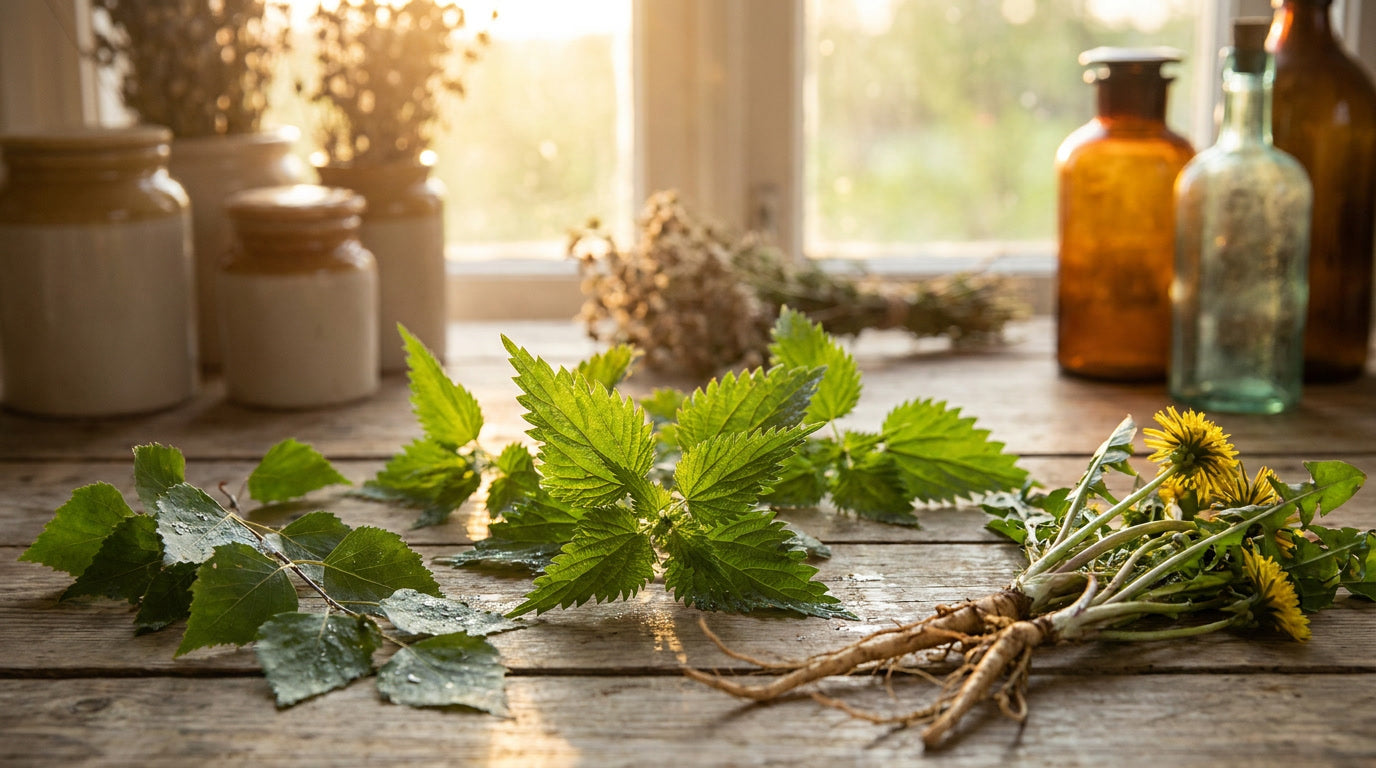
In monastic medicine, plants like nettle, birch, and dandelion were not seen as mere ingredients but as gifts of nature with deep healing potential. Monastery gardens were both pharmacies and experimental fields. Monks and nuns collected, dried, prepared teas and tinctures, and passed their knowledge down through generations. This knowledge is alive today in modern natural medicine—and is especially valued for issues like water retention and lymphatic support.
Hildegard wrote about nettle: “The nettle is warm and dry and has a certain power within it.” – Physica, chapter on herbs. This characterization corresponds to its traditional use as a diuretic and invigorating herb, which has held a firm place in European folk medicine for centuries.
What makes Hildegard’s herbal knowledge so timeless is its embedding in a holistic worldview. Plants were not evaluated by individual active ingredients but perceived as whole beings with character, temperament, and affinity to certain human constitutions. For people prone to congestion, heaviness, and cold—a description that fits many lipedema sufferers—monastic medicine recommended warming, moving, and diuretic herbs as daily companions. This tradition is worth rediscovering.
Hildegard von Bingen is considered a pioneer of holistic medicine, which viewed body, soul, and spirit as an inseparable unity—a concept that is more relevant than ever in modern natural medicine.
These medicinal plants are traditionally valued for diuretic support
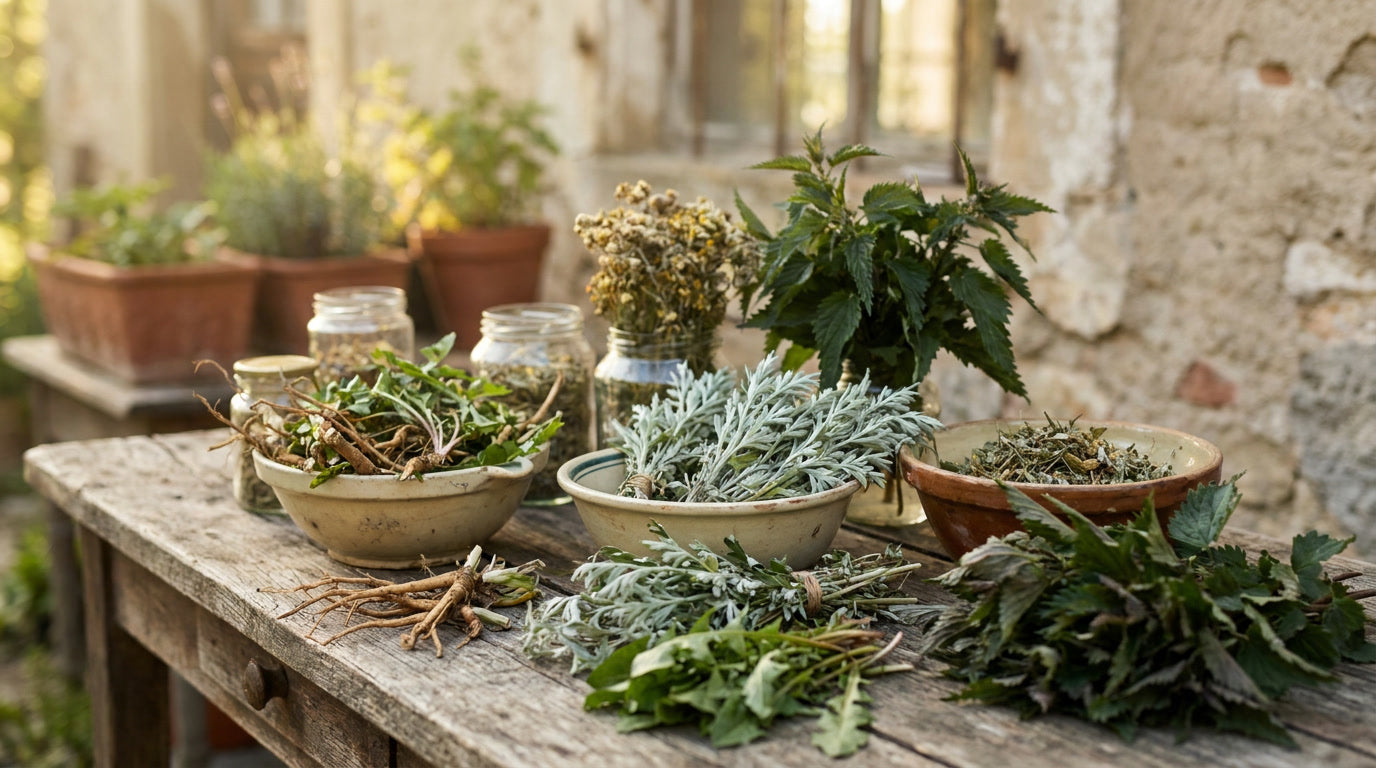
Nature offers an impressive variety of plants that have been traditionally used for centuries to balance body fluids. Many of these plants are deeply rooted in European folk medicine—they once grew in every peasant garden and were used equally in the kitchen and home pharmacy. Today, they are experiencing a renaissance, partly because more people seek gentle, natural supplements for everyday life. For lipedema and accompanying water retention, the following plants are especially traditionally valued:
These medicinal plants are traditionally used for diuretic support:
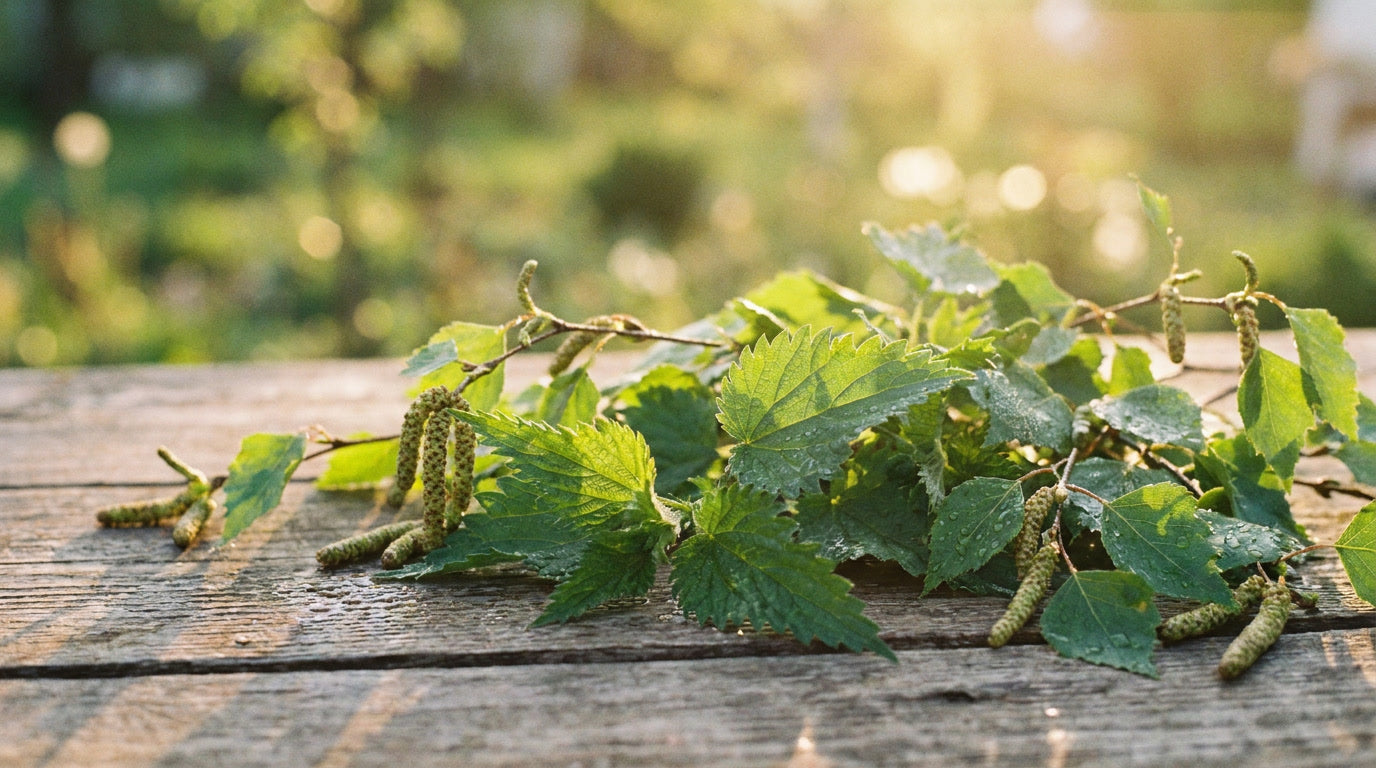
- Nettle (Urtica dioica): Known in monastic medicine for centuries, nettle is traditionally used as a “cleansing” and invigorating herb. As tea or extract, it is one of the most valued plants in European folk medicine for general well-being in cases of heaviness and tension.
- Birch leaves (Betula pendula): The slender birch is considered a symbol of renewal in Northern European natural medicine. Its leaves have been traditionally used since the Middle Ages and are historically known as gentle support for people prone to tissue tension and heaviness.
- Dandelion (Taraxacum officinale): Hildegard von Bingen already valued dandelion as a spring herb. Roots and leaves are traditionally used to support general well-being—especially known in natural medicine for liver and water balance for generations. BitterKraft Original
- Goldenrod (Solidago virgaurea): European goldenrod has been known in monastic and folk medicine since the Middle Ages as a diuretic herb. It is traditionally used for complaints associated with tissue and fluid imbalances.
- Horsetail (Equisetum arvense): Field horsetail, one of the oldest plants on earth, has been traditionally used in European folk medicine for centuries. Historically valued for its effect on connective tissue, it is a classic companion in natural medicine practice for water retention.
- Orthosiphon (Orthosiphon aristatus): The so-called Java tea from Southeast Asia has found a firm place in European phytotherapy. It is traditionally used and has been known in natural medicine practice for decades to support well-being in cases of heaviness and tissue tension.
What’s behind these plants?
Many of the mentioned herbs contain flavonoids, tannins, and essential oils—ingredients long known in phytotherapy. For example, birch contains flavonoids like hyperoside and quercitrin, and horsetail is rich in silica. These natural plant substances are part of the traditional knowledge passed down through generations—long before modern analytical methods could describe their exact composition.
Quality is crucial when selecting plants. Only herbs from controlled organic cultivation or carefully gathered wild herbs guarantee the purity and integrity of the natural plant substances. In monastic medicine tradition, fresh, carefully harvested herbs were especially valued—a principle that is gaining importance again in natural medicine today. all Bitterkraft products
Everyday rituals: how to sensibly integrate herbal support
An important principle of natural medicine is: continuity beats intensity. Those who rely on herbal support do well to understand it not as a one-time measure but as a fixed part of a conscious daily routine. Especially with lipedema, a chronic condition, regular, gentle support makes the difference—not short-term, high-dose intervention. Monastic medicine knew this: herbal rituals were embedded in the daily rhythm, prayer, and silence—as fixed anchors in the day.
A simple start is a mindful tea routine. A morning tea made from birch leaves or nettle, enjoyed calmly before the actual start of the day, can become a valuable ritual. What matters is not just the tea itself but the attitude behind it: conscious pausing, drinking without distraction, mindfulness for one’s own body. Hildegard von Bingen placed great importance on such rituals—for her, the way one consumes food and herbs was as significant as the remedy itself.
Regularity is the heart of natural medicinal support: gentle plant rituals practiced daily can support general well-being in the long term—far better than sporadic intensive measures.
Besides teas, herbal extracts and capsules have also proven effective, allowing consistent and practical intake. Especially for people with busy lives, high-quality plant extracts offer an uncomplicated way to integrate traditional herbal knowledge into modern daily routines. Pay attention to products with transparent origins and clear labeling of the plant parts used—leaves, roots, or seeds can differ significantly in their traditional use. Products for women's health
Tip from monastic medicine – the herbal cure as a ritual:
In monastic medicine tradition, so-called herbal cures were carried out at certain times of the year—especially in spring and autumn, when the body was considered particularly receptive according to Hildegard. A gentle spring herbal cure with diuretic plants over four to six weeks is still regarded in natural medicine as a valuable impulse for general well-being. Complementing this, Hildegard recommended movement in nature, light food, and sufficient sleep—a holistic approach that remains timeless.
Movement plays a crucial role in the holistic support of lipedema. Unlike the blood vessel system, the lymphatic system has no pump of its own; it depends on muscle movement to transport lymph fluid. Gentle forms of exercise such as water gymnastics, yoga, walks in nature, or trampoline jumping are especially valued by natural health practitioners. Combined with herbal support, this creates a comprehensive concept that supports the body on multiple levels. Sleep and relaxation products
Nutrition, gut, and liver: the triangle behind water balance
In natural medicine, an important principle applies: water retention is rarely an isolated problem. It is often closely linked to the condition of the gut, liver, and diet. The gut, as a central interface of the immune system, and the liver, as the body’s largest metabolic organ, also play a significant role for the lymphatic system. An overloaded liver, inflamed gut mucosa, or a sugar-rich diet can disrupt tissue balance—and promote water retention. Gut and digestion products
Hildegard von Bingen placed great importance on nutrition as the foundation of health. Bitter foods and herbs played a central role in her medicine—they were considered especially valuable for the “flowing” character of the body. Today, natural medicine knows that bitter substances, as found in dandelion, endive, radicchio, or bitter herbs, are traditionally known companions for a balanced metabolism. A diet rich in bitter substances, combined with plenty of fresh vegetables, high-quality plant oils, and sufficient fluids, is a basic natural medicine recommendation for people with lipedema. BitterKraft Original
A publication in the journal Phytomedicine (2020) points out that secondary plant substances like quercetin and rutin—found in herbs such as nettle and buckwheat—have traditionally been associated with the lymphatic system and are well known in natural medicine. Scientific research in this area is still developing.
Liver health deserves special attention when it comes to diuretic support. A well-functioning liver is essential from the natural medicine perspective for a healthy metabolism and stable body tissue. Plants like artichoke, dandelion, and milk thistle have been traditionally valued for centuries as liver companions—a knowledge that modern phytotherapy has adopted and further developed. Anyone wanting to support their body from within cannot ignore liver health. Liver products from Bitterkraft
The gut also deserves special attention in this context. A healthy gut flora, rich in diverse microorganisms, is closely linked to the immune system and inflammation processes in the body according to current natural medicine understanding. Since inflammation is a key feature of lipedema, a gut-friendly lifestyle—rich in fiber, fermented foods, and low in processed products—can be a valuable complementary measure. In natural medicine, a healthy gut is the basis for everything else. Immune system products
Gentle natural medicine as support—not a substitute for medical care
As valuable as traditional herbal knowledge is, it is important to clearly state the limits of herbal support. Lipedema is a serious, chronic disease that requires medical diagnosis and—depending on the stage—medical therapy. Lymphatic drainage, compression therapy, and possibly surgical interventions are established treatments that can be complemented but not replaced by herbal support. Anyone noticing symptoms of lipedema should definitely consult a doctor.
The strength of natural medicine lies in its complementary function: it can support general well-being, enrich daily rituals, and help perceive the body holistically. Herbal teas, plant extracts, and conscious nutrition are parts of a lifestyle that supports the body’s natural balance—as daily support, not a miracle cure. This humility is what distinguishes the best natural medicine: knowledge of the power of plants combined with respect for the body and its complex processes.
In this spirit, a final reference to Hildegard von Bingen: “Man is like a tree—if his roots are healthy, he blossoms.” This metaphor aptly summarizes the essence of natural medicine: it is not about suppressing symptoms but strengthening roots—through nutrition, movement, rituals, and the gentle power of plants. For people with lipedema, this approach can be a valuable complement on the path to more quality of life and well-being.
Herbal natural medicine is not a substitute for medical therapy—but it can support general well-being as daily accompaniment and enrich the relationship with one’s own body in a mindful way.


Leave a comment
This site is protected by hCaptcha and the hCaptcha Privacy Policy and Terms of Service apply.