






Those who wake up in the morning feeling heavy and bloated, who have dark circles under their eyes or shoes that suddenly feel too tight in the evening—know the feeling of a water balance that has gone out of whack. Especially in naturopathy, the water in the body is considered a mirror of inner harmony. Green plants, particularly those with a high chlorophyll content, have been valued for centuries when it comes to restoring balance to body and mind. But what exactly lies behind the vibrant green that nature so generously offers us—and why does this pigment hold such a special place in traditional healing?
The Green Gold of Nature: What Chlorophyll Really Is
Chlorophyll is much more than just a pigment. It is the molecular heart of every green plant, the chemical key with which plants convert sunlight into energy. Photosynthesis—the elegant process that transforms light, water, and carbon dioxide into living matter—would be unthinkable without chlorophyll. For humans, this means that with every green plant they consume, they are essentially taking in a piece of stored sunlight. Naturopathy has long embraced this insight, long before modern biochemistry decoded the molecule.
What many don’t know: chlorophyll and human hemoglobin—the red blood pigment—are surprisingly similar in their molecular basic structure. Both have a so-called porphyrin ring; while hemoglobin has an iron atom at its center, chlorophyll contains a magnesium atom. This structural kinship has fascinated generations of naturalists and led to the hypothesis that green plant foods have a special affinity for human blood and thus also for fluid regulation in the body. This idea can be found, in essence, in the writings of medieval naturalists, even though the term “chlorophyll” did not yet exist at that time.
What is behind chlorophyll?
Chlorophyll is a fat-soluble plant pigment that occurs in two main forms: chlorophyll a (blue-green) and chlorophyll b (yellow-green). For dietary supplements and green extracts, chlorophyllin is often used—a water-soluble, stabilized form derived from natural chlorophyll. Both forms are equally valued in traditional herbal medicine and modern naturopathy. Green leafy vegetables like spinach, kale, nettle, and parsley are among the richest sources of chlorophyll.
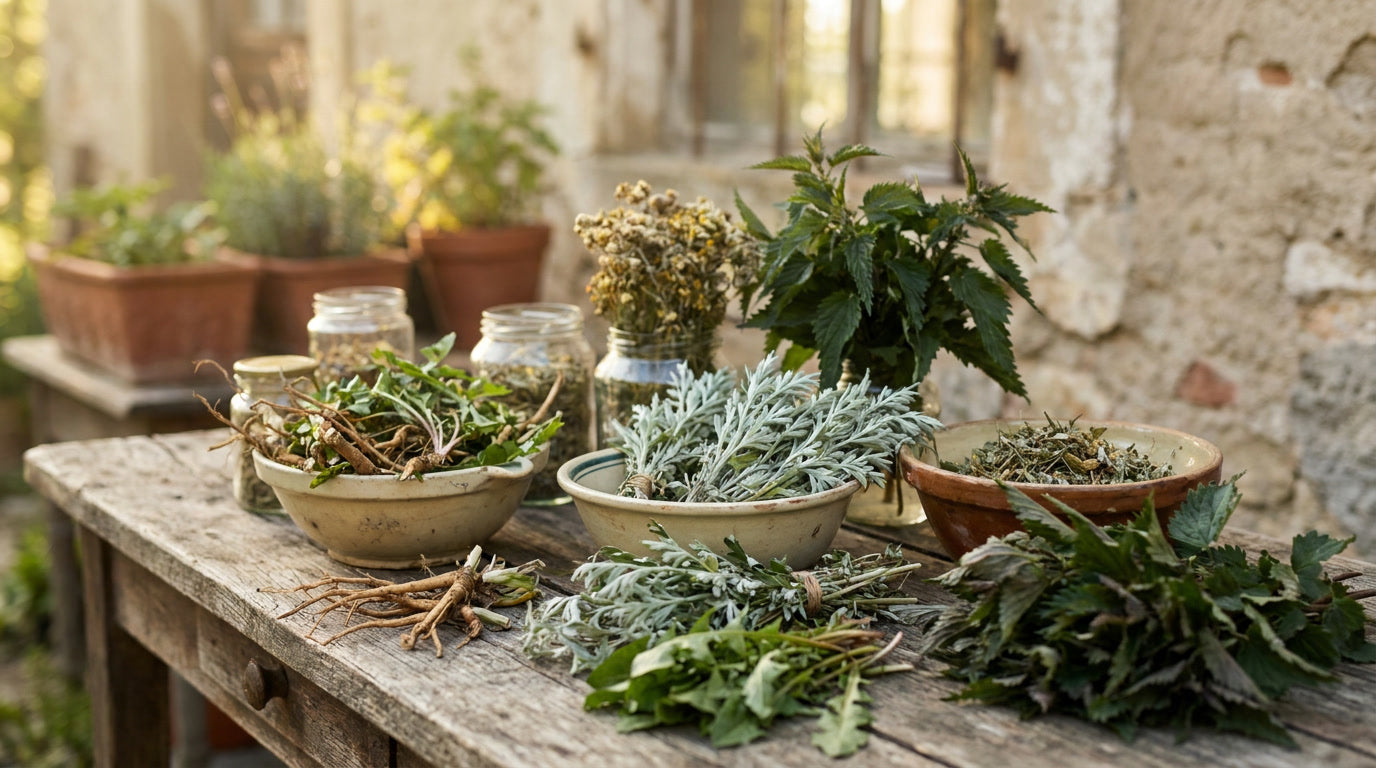
Plants that grow in full sunlight are especially rich in chlorophyll—the more intense the green, the higher the chlorophyll content usually is. Wild herbs that thrive without human intervention on nutrient-rich soils have traditionally been considered particularly valuable in naturopathy. Nettle, dandelion, ground elder, and wild spinach varieties were for centuries a fixed part of spring cleanses, during which the body was meant to be “flushed out” and revitalized after winter. Hildegard von Bingen products
Hildegard von Bingen and the Wisdom of Green Herbs
No figure has shaped European herbal knowledge as profoundly as Hildegard von Bingen (1098–1179). The Benedictine nun, mystic, and polymath from the Rhineland described the healing powers of hundreds of plants in her main works “Physica” and “Causae et Curae” with a precision and systematics that still impress today. The principle of “Viriditas”—the divine greening power—played a central role. For Hildegard, Viriditas was not only a botanical but also a spiritual concept: the enlivening, renewing force that flows through all living beings and gives the green of plants its special character.
“The greening power is the power of flesh and blood.” – Hildegard von Bingen, Causae et Curae (12th century). Hildegard understood the green of plants as a direct expression of vital life force that transfers to the human body and strengthens it in its natural order.
Hildegard’s understanding of water balance was holistic. She saw swelling, fatigue, and a general feeling of heaviness as signs of a disturbed balance—an excess of “moisture” that could be restored through proper nutrition and targeted herbal use. Green herbs and plants were at the top of her list. She especially valued parsley, which she praised for its invigorating properties, as well as nettle and fennel. These plants were used both in her monastery’s kitchen and in the care of the sick at the Rupertsberg monastery. Hildegard von Bingen products
What Hildegard intuitively recognized through observation aligns remarkably well with what modern botany describes about chlorophyll-rich herbs. Monastic medicine was not a blind tradition but a science refined over generations of observation. Those who incorporate green herbs into their daily routine today are continuing a long line of wise women and men who trusted nature and carefully passed on their knowledge. For Bitterkraft.com, this heritage is a constant inspiration. BitterKraft Original
Hildegard’s concept of “Viriditas”—the divine greening power—is one of the oldest European descriptions of what we today know as the revitalizing properties of chlorophyll-rich plants. Green herbs were an indispensable part of diuretic and spring cleanses in monastic medicine.
Chlorophyll-Rich Plants and Water Balance: What Tradition Teaches
The human body consists largely of water—about 60 percent of body weight in adults. This water is not evenly distributed but is in constant exchange between cells, intercellular spaces, blood vessels, and lymphatic channels. When this balance is disturbed, water can accumulate in tissues, showing as swelling, heaviness, or puffy eyes. In traditional naturopathy, certain green plants have long been used to support this condition and stimulate the natural flow of water in the body.
Particularly interesting in this context is the magnesium content of chlorophyll. Magnesium is an essential mineral that plays an important role in the body’s electrolyte balance. Electrolytes—minerals like sodium, potassium, and magnesium—significantly control how water is distributed in body cells and tissues. Green leafy vegetables and chlorophyll-rich herbs provide not only chlorophyll but also potassium and magnesium in significant amounts. This combination makes them a natural support for a balanced mineral status. Gut and digestion products
In many traditional healing systems—from European monastic medicine to medieval Arabic medicine to Ayurvedic practice—green plants and herbs were traditionally regarded as “diuretic” agents and used in spring and cleansing cures. Spring was always considered the best time to lighten the body after the long, heavy winter diet. Fresh wild herb salads, green soups, and herbal teas made from nettle or birch leaves were fixed parts of these seasonal rituals. Fasting products
The magnesium content of chlorophyll-rich plants plays a significant role in electrolyte balance—and thus in the natural balance of water in the body. This is one reason why green herbal cures have been a fixed part of spring care rituals for centuries.
These chlorophyll-rich medicinal plants are traditionally valued for water balance:
- Nettle (Urtica dioica): One of the best-known native medicinal plants, traditionally used for centuries as a “spring herb.” Nettle is rich in chlorophyll, potassium, and minerals and has long been associated in folk medicine with supporting water balance.
- Dandelion (Taraxacum officinale): Leaves and root of dandelion are deeply rooted in European herbal tradition. Historically, dandelion was used in spring cures and is known for its high potassium and chlorophyll content.
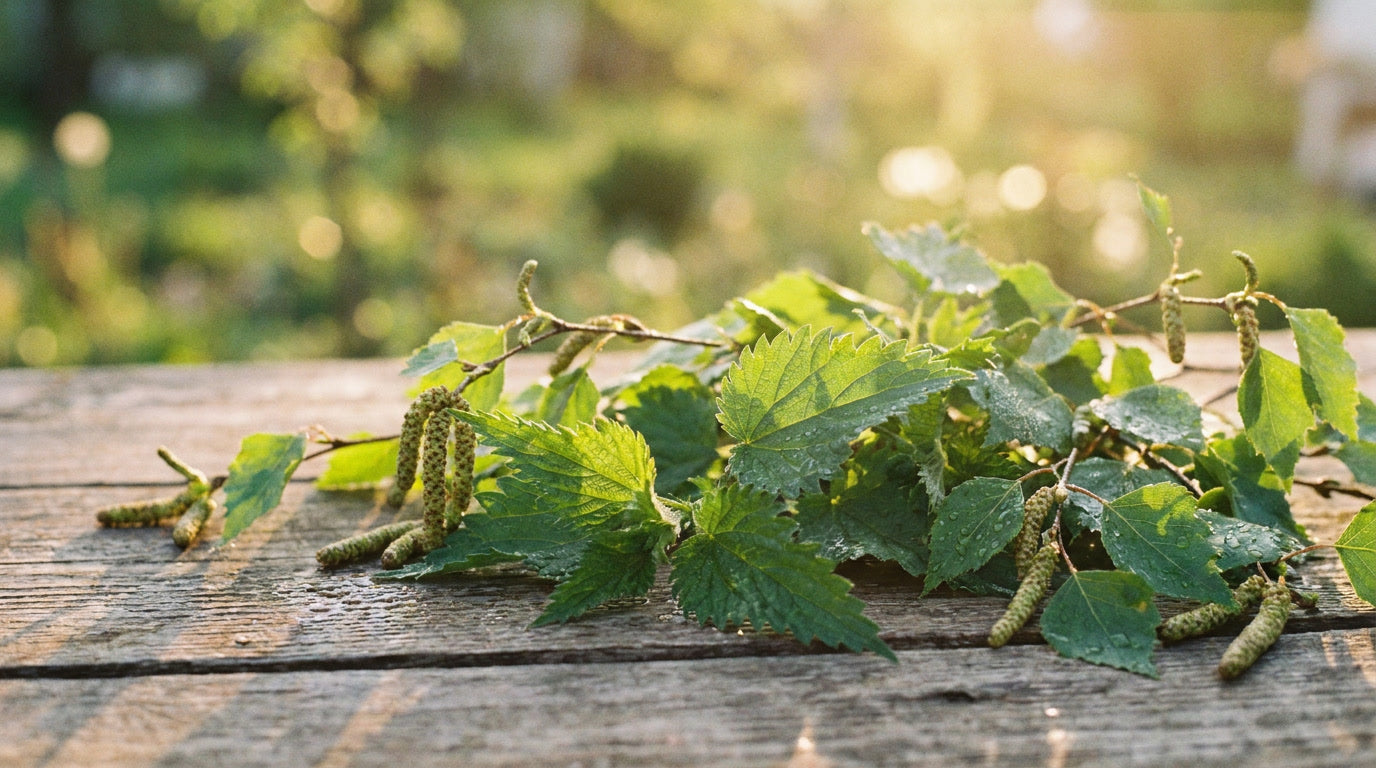
- Birch leaves (Betula pendula): Birch leaf tea is a classic folk remedy traditionally drunk in spring to support natural water balance. The young leaves contain flavonoids and are deep green and rich in chlorophyll.
- Parsley (Petroselinum crispum): Hildegard von Bingen already praised parsley as a valuable herb. It is one of the chlorophyll-richest culinary herbs and was a fixed part of herbal recipes in monastic medicine.
- Chlorella (Chlorella vulgaris): This microscopic freshwater alga is considered one of the chlorophyll-richest plants in the world. In modern naturopathy, it is traditionally used as a concentrated source of chlorophyll and minerals.
- Spirulina (Arthrospira platensis): Also a microalga with exceptionally high chlorophyll content. Spirulina has been used for centuries by indigenous peoples and is a valued component of green powder blends in today’s naturopathy.
Green Rituals in Everyday Life: How to Consciously Incorporate Chlorophyll
The good news is: chlorophyll is not an exotic substance that you have to laboriously obtain. It is found in every green food we eat—spinach on the breakfast plate, parsley on the soup, kale in winter vegetables, and wild herbs that can be picked by the wayside. The appreciation of these plants is deeply rooted in our culture, even if it is often forgotten in everyday life. Those who consciously integrate green plants into their daily routine connect to a practice of naturopathy that is thousands of years old.
A simple start is daily green tea or an herbal tea made from nettle and birch leaves—a combination traditionally recommended in folk medicine for spring. Those who prefer something more concentrated can reach for green juices or smoothies with wild herbs, spinach, and fresh herbs. Chlorella or spirulina powder can also be easily incorporated into morning routines: a teaspoon stirred into a glass of water, mixed with a little lemon juice, and the green ritual of the day begins. In monastic medicine, it was customary to adapt such rituals seasonally—especially in spring, when nature awakens anew after winter. Fasting products
Green rituals for everyday life—practical suggestions from naturopathy:
🌿 Morning green drink: A glass of water with a teaspoon of chlorella or spirulina powder as a daily start to the day.
🌿 Wild herb tea: Enjoy fresh or dried nettle and birch leaves daily for 4–6 weeks as a spring cure.
🌿 Green kitchen: Generously add parsley, cress, and fresh herbs to all meals—not just as decoration but as a conscious ingredient.
🌿 Seasonal herbal cure: Intentionally include a 2–3 week phase in spring and autumn where green herbs and wild plants are emphasized on the menu.
For those who want to follow the path of traditional naturopathy, it is also worth looking at high-quality dietary supplements made from concentrated green plant extracts. These can be a meaningful addition when everyday life leaves little room for fresh wild herbs or when one wants to specifically increase the density of chlorophyll and minerals. The quality of raw materials and gentle processing that preserves the delicate plant substances are crucial. all Bitterkraft products
The simplest and most sustainable way to bring more chlorophyll into everyday life is to consciously enhance every meal with fresh green herbs. What our ancestors did intuitively can today be implemented deliberately and enjoyably with good knowledge of naturopathy.
Chlorophyll as Part of a Holistic Naturopathy Practice
Chlorophyll and green plants are not a cure-all—that would be neither honest nor in line with sound naturopathy. What they are: a valuable, historically proven part of a holistic lifestyle that naturally supports the body. In the tradition of Hildegard von Bingen, nutrition was always part of the bigger picture: together with exercise, sleep, stress management, and conscious experience of the seasons. Green plants were one element—but a particularly beloved and valued one. Immune system products
Those interested in holistic support for their well-being will find in chlorophyll-rich plants a way to enrich their daily life with a piece of nature. The combination of chlorophyll, minerals like magnesium and potassium, and secondary plant compounds makes green herbs a multifaceted gift of nature. Adding instead of subtracting—that is the credo that Hildegard von Bingen also followed. She did not speak of prohibitions but of the joy of the right nourishment, of the pleasure of knowing and using nature.
A review article in the journal “Food Science & Nutrition” (2019) describes chlorophyll and its derivatives as “bioactive compounds with diverse nutritional properties” that have long been valued in traditional dietary practices worldwide. The authors emphasize the historical importance of green plant extracts in various healing traditions.
It is no coincidence that green is considered the color of life, renewal, and health in almost all cultures worldwide. Chlorophyll, which gives leaves and herbs their vibrant color, is in this sense a universal symbol—and at the same time a very concrete biochemical reality. Those who invite it into their lives follow a wisdom older than any science, yet continually confirmed and enriched by modern research. Combining the best of both worlds—that is the spirit in which Bitterkraft.com understands naturopathy. Hildegard von Bingen products


Leave a comment
This site is protected by hCaptcha and the hCaptcha Privacy Policy and Terms of Service apply.